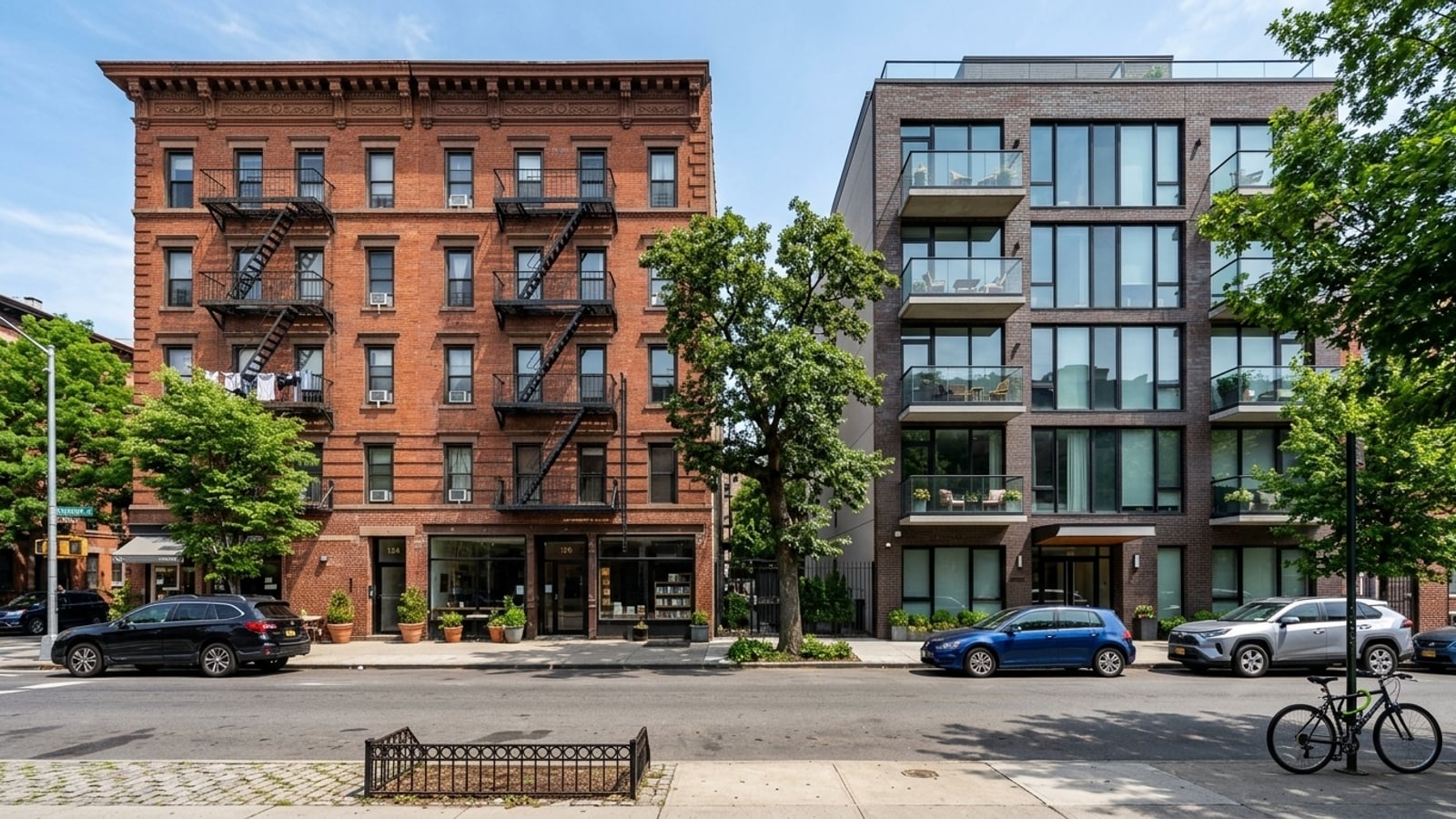
The current market is soft. Buyers have options, they are taking their time, and they are gravitating toward one kind of home above all others: move-in ready. Turn-key units photograph well, show full, and sell quickly. Units that look tired, dated, or simply unprepared do the opposite. They sit, they accumulate days on market, and they eventually require a price reduction.
That is the trap most sellers fall into. They list as-is to save money up front, the listing goes quiet, and the savings disappear inside the first price cut. The market does not punish you for spending on presentation. It punishes you for skipping it.
We built the Turn-Key Launch Method to solve exactly this problem. It is a repeatable, three-step system that takes a unit to market clean, staged, fresh, and priced to move. We are not running it as a one-time experiment. We have run it, we have the result to show for it, and we are now launching four more units with the same method this summer.
What the Turn-Key Launch Method actually is
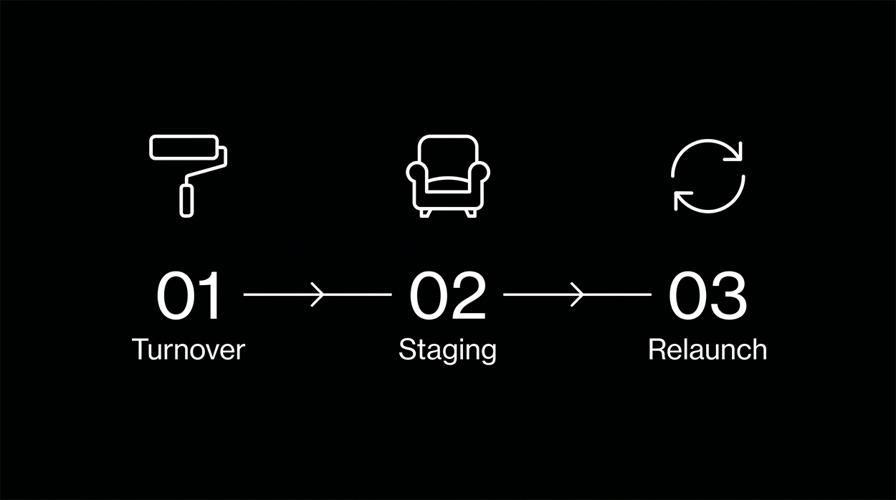
The method has three steps, and the discipline is in running all three in sequence rather than cutting one to save a few dollars.
Step one: Unit turnover. Once a unit is vacant, the work moves fast: a full deep clean, fresh paint throughout, and any repairs the unit needs to show well. The goal is to bring the space back to a clean, move-in-ready canvas. Here is how we run it, because we keep it clean. We coordinate the schedule and line up the vendors to keep things moving, but you engage each vendor directly and pay them at their cost, with no markup from us. You keep full visibility and control. We keep the timeline tight. This is the unglamorous step that makes every step after it work.
Step two: Professional staging. A clean, freshly painted unit is a strong start. A staged unit is what closes the gap between a listing buyers scroll past and a home they picture themselves living in. Staging makes the unit show full and consistently produces faster sales at stronger prices. Here is where we are different from most: we handle a meaningful portion of the staging in-house rather than paying full market staging rates. Staging a one-bedroom the conventional way starts around $5,000 a month, and a two-bedroom can easily run $10,000 to $15,000 a month. Because we do part of it ourselves, we keep staging well below those numbers.
Step three: The strategic relaunch. This is the step almost no one is willing to do. Before relaunching, we take the listing off the market for a reset period so it can come back online as a genuinely new listing with zero days on market. Then we relaunch with professional photography and either video or a 3D tour, all of which we cover at our own expense, at a compelling price, and a unit that is truly turn-key. A fresh listing, priced right, in well-presented condition is precisely what a slow market responds to. The buyers who were ignoring stale inventory show up for a product that looks new.
The proof: a recent Brooklyn one-bedroom
We recently executed this exact sequence on a one-bedroom, one-bathroom condo we listed in Brooklyn, priced just over $1 million. We keep the specific building and unit private until a deal closes, but the result speaks for the method.
Following the Turn-Key Launch Method, we received a full-price accepted offer within about a week of listing.
That did not happen by luck. It happened because the unit was clean, staged well, priced at market, and launched fresh. There was nothing for a buyer to negotiate against. No deferred maintenance, no worn finishes, no corners cut. It was a strong product at a fair price, and buyers responded the way buyers respond to those: immediately.
What the timeline looks like
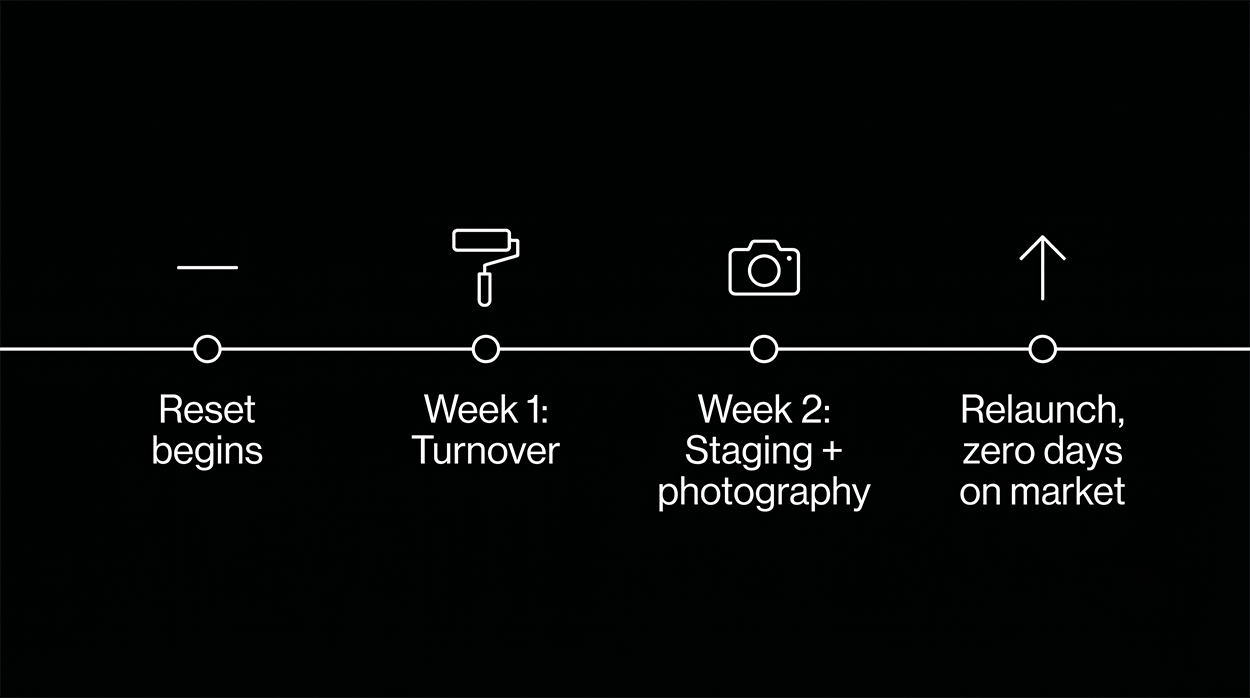
We run the method on a roughly two-week clock once a unit is empty. A representative sequence looks like this:
- Before the unit is empty: remove the existing listing to begin the reset period.
- Unit vacates: the space is now ours to prepare.
- Week one: turnover. Paint, deep clean, and any repairs the unit needs.
- Week two: staging installed, professional photography and either video or a 3D tour produced.
- Relaunch: the unit comes back online fresh, with zero days on market.
We treat that two-week clock as the target, and we move quickly to hold it. Two things can extend it, and we are honest about both. The first is approvals. The faster decisions get made, the faster we move. The second is condition. Sometimes a unit needs more than paint. One unit we are preparing now needs the marble surround around the tub to be replaced before it can show well. We plan for the unexpected, we coordinate the work, and we keep the sequence as tight as the unit allows.
The cost, honestly
The instinct in a soft market is to spend as little as possible. The Turn-Key Launch Method asks you to think about it differently, because the cost is value-driven, not a flat fee.
There is no single universal price, because an honest number depends on the unit and its condition. The work scales to what the space actually needs. What stays consistent is how the money is handled, and it is built to keep your cost down. For turnover and any repairs, you engage and pay the vendors directly, at their cost, with no markup from us. We handle a meaningful portion of the staging in-house rather than paying full market rates. And we cover professional photography and either video or a 3D tour at our own expense. Each of those is deliberate, and together they bring presentation costs in well below what a seller would pay assembling the pieces separately.
Whatever the figure lands at, the comparison is the same. A measured investment in presentation, set against a price cut on a seven-figure home that runs into the tens of thousands, plus the carrying cost of every extra month the unit sits. Run that math, and the decision makes itself.
The cost of waiting
It is worth being concrete about what happens when a unit goes to market unprepared, because this is the outcome the method is built to avoid.
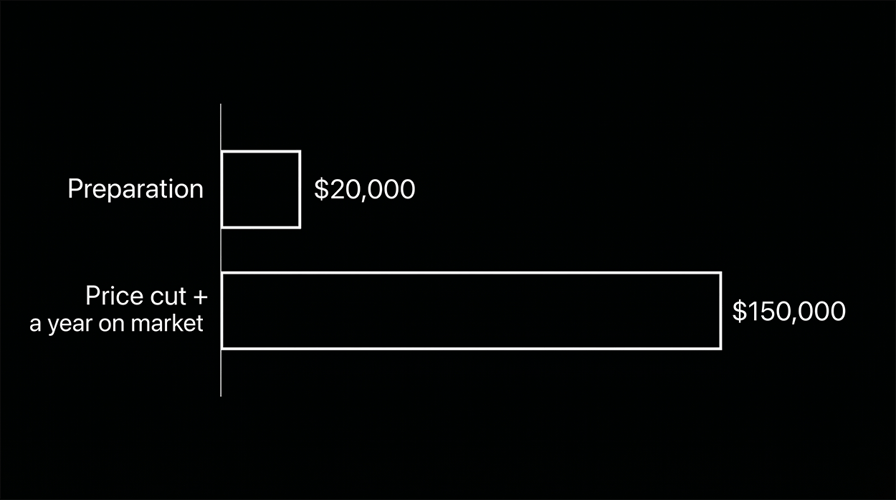
We once watched it play out. A two-bedroom came to market priced at $1.7 million, against our advice, with built-ins covering nearly every room that the owner was unwilling to remove. The work to reset it properly would have cost around $20,000 up front. Instead, the unit sat. A year later, now with another agent, the price had been cut to $1.55 million. And it still never sold. That $20,000 of preparation would have bought a clean launch. Skipping it cost a year of carrying costs, every opportunity that came and went over that year, and ultimately the sale itself.
That is the pattern in miniature. A listing that goes out tired, or comes back without a real reset, starts accumulating days on market. Showings slow. Buyers begin to wonder what is wrong with it, and that doubt shapes every offer that follows, when offers come at all. The preparation is the cheaper path. It only looks like the expensive one on day one.
Why Undivided is built to run this
A good idea is not the same as a working system. The reason the Turn-Key Launch Method delivers is that we run the entire process as one coordinated operation, and we run it repeatedly.
We coordinate the whole process end-to-end: the turnover and repair vendors, the in-house and partner staging, the photography and video or 3D tour, the timing of the reset, and the relaunch. A word on how that works, because we keep it clean. We run the coordination, not the checkbook. You engage the vendors directly and pay them at their cost, so there is no markup and full transparency. We do this as a courtesy to keep the project moving, but we do not take on the risk of a third party’s neglect. You approve the plan, and we hold the timeline. More importantly, this is not a tactic we tried once. That recent result is the proof of concept, and the four units we are launching with this method this summer are the system at scale. Each one follows the same sequence because the sequence works.
For sellers, that means a clean sale without the operational headache. For investors, it means a documented, repeatable method for protecting and realizing value on every unit you hold. For landlords approaching the end of a tenancy, it means a clear plan for converting a lease expiration into a strong sale rather than a vacant unit losing momentum on the market.
If you are thinking about selling
The best time to plan a Turn-Key Launch is before your unit is empty, not after it has been sitting. If you have a lease ending, a unit you have been meaning to sell, or an asset you want to reposition, the window to do this well opens the moment you start planning. We are launching four units with this method this summer, and we would be glad to talk through whether yours should be one of them.
We will assess your unit, map the timeline, and tell you honestly whether the method is right for your situation.
Reply to this, or book a call. Let’s talk about your unit and your timing.