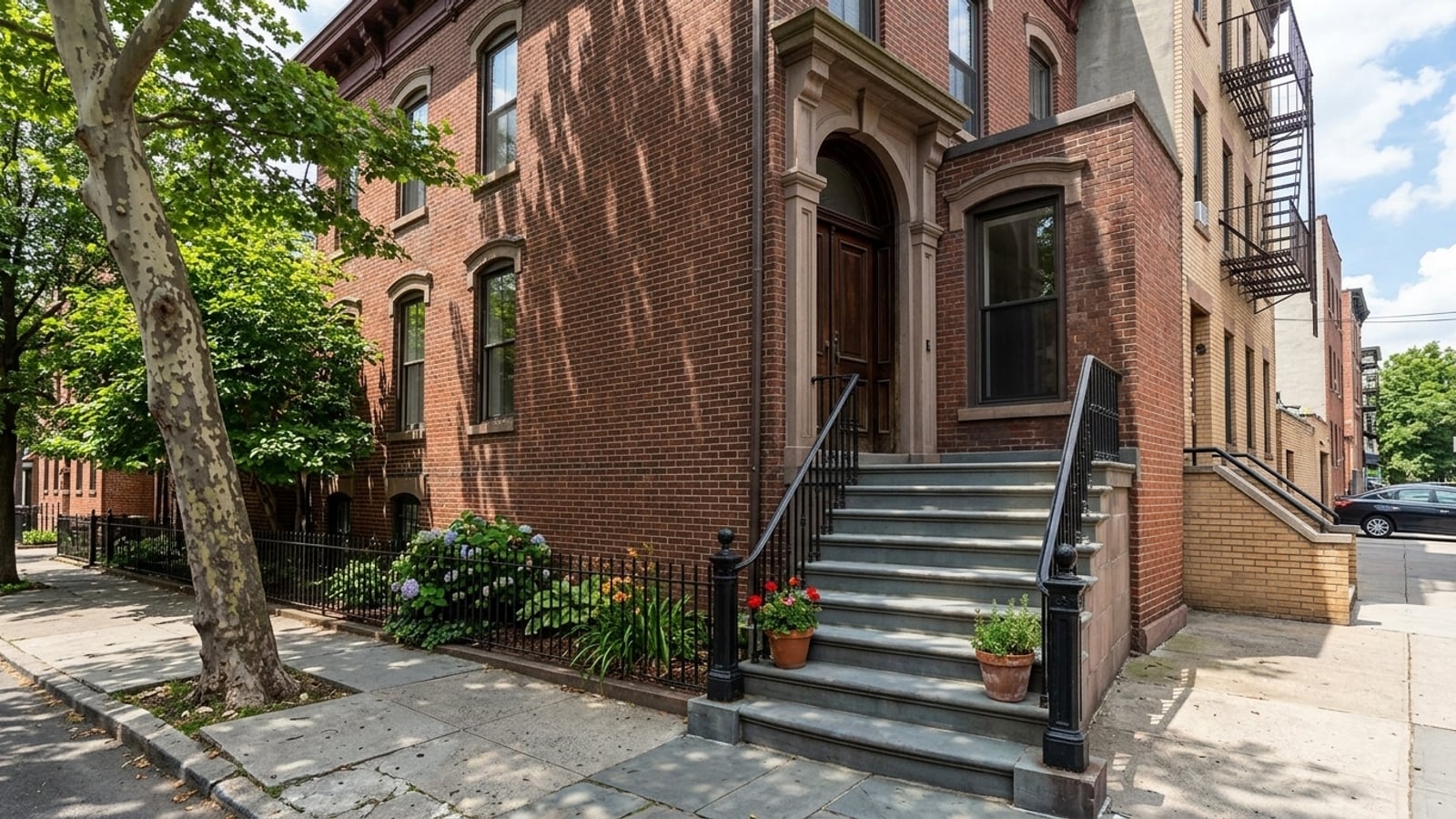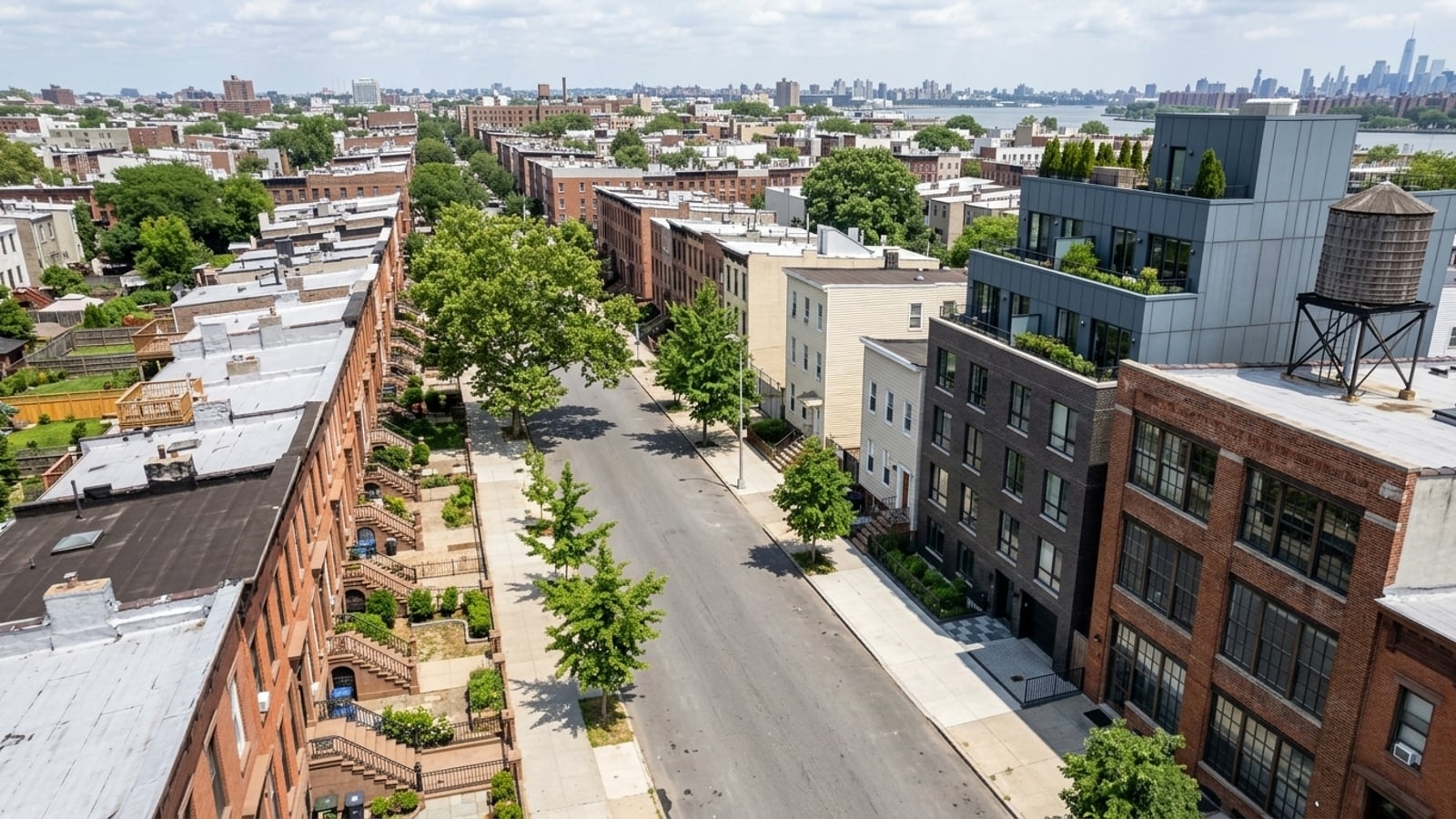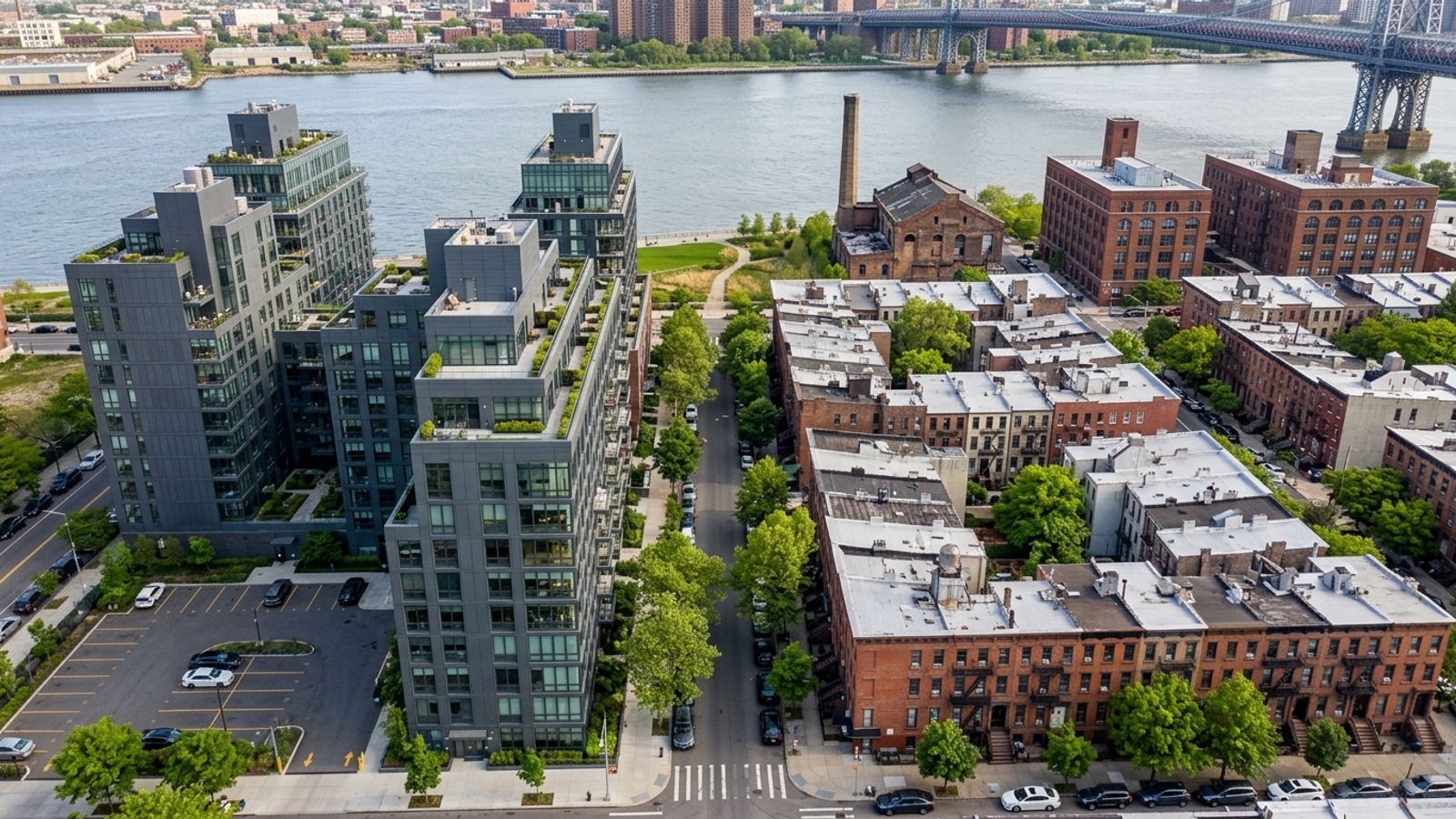
The median home sale price across Williamsburg currently sits around $1,874,000, with listings spending roughly 49 days on the market. If you're shopping the best neighborhoods in Williamsburg in Brooklyn, those numbers only tell part of the story - because where exactly you land within the area changes what you're looking at.
The housing stock, transit access, and price points shift as you move along the East River. Knowing how the market changes from north to south helps you target the right properties and stop wasting time on buildings that don't fit your situation.
Defining the Neighborhood Boundaries
Grand Street serves as the official dividing line between North and South Williamsburg - a legacy of 19th-century street numbering, where "North" streets lie above Grand Street and "South" streets lie below it.
That said, most agents and locals read the map a little differently in practice. Broadway has become the more functional dividing line, since recent development has pushed the northern character further south. Some residents go further and point to Division Avenue as the southern edge of the core neighborhood. It's worth knowing all three reference points, because the person selling you a condo and the city planner drawing the boundary aren't always looking at the same map.
Real Estate Prices and Property Types
Williamsburg's overall housing inventory recently hovered around 156 available homes, with a 3.5-month supply. Homes generally sell close to asking, averaging a 99.7% sale-to-list ratio - so don't count on negotiating much off the price.
Brokers will tell you the historical gap between the two sections has narrowed over the years. A noticeable price differential still exists once you cross Broadway and head further south, though.
North Williamsburg Housing Market
Properties in the northern section carry higher price tags, driven by newer condo developments. Data from NeighborhoodScout places the median real estate price in the 11249 zip code at approximately $2,850,000, which puts the northern section above roughly 98% of neighborhoods across New York State.
Expect a market dominated by modern high-rise buildings and luxury waterfront condos. If that's your product, you're in the right place. If it's not, keep reading.
South Williamsburg Housing Market
The southern section offers a wider range of property types and considerably more price volatility. NeighborhoodScout reports a median real estate price of around $1,730,000, while other snapshots have shown median sale prices closer to $1,182,000 or $1,299,000 - the spread itself tells you something about how varied the inventory is here.
On the accessible end, two-bedroom co-ops start around $375,000. On the other end, new construction around the waterfront - four-bedroom condos included - reaches up to $3 million. That's a wide range to sort through, but it also means there's more room to find something that fits your budget.
Transportation and Transit Access
Where you work dictates a lot about where you should be looking. Both sections of the neighborhood provide direct access to subway lines and the NYC Ferry system along the East River, but the specific lines available depend entirely on your proximity to either Grand Street or Broadway. Map your daily commute before you fall in love with a building.
Commuting from North Williamsburg
The northern section runs primarily on the L train at the Bedford Avenue station, located at Bedford Avenue and North 7th Street - the busiest subway station in Brooklyn outside of Downtown Brooklyn. If your life revolves around the 14th Street corridor in Manhattan, this is a meaningful convenience.
Residents on the northern and western edges can also reach the G train via Nassau Avenue or Metropolitan Avenue/Lorimer Street stations. The NYC Ferry stops at the North Williamsburg Landing near Bedford Avenue for water transit.
Commuting from South Williamsburg
Transit here centers on the J, M, and Z trains on the BMT Jamaica Line. The elevated Marcy Avenue station at Marcy Avenue and Broadway is the main hub, with a bus terminal at the Williamsburg Bridge Plaza. The Hewes Street station adds additional J and M service nearby. The G train serves the Broadway corridor at the southern edge, and the NYC Ferry operates from the South Williamsburg Landing.
The J, M, and Z connect you directly to lower Manhattan - a different corridor than the L, and not necessarily worse, just different depending on where you're headed.
Local Amenities and Waterfront Parks
Development has steadily moved down the East River, bringing new public spaces to the southern section. The waterfront is a major focal point for new construction and neighborhood infrastructure on both sides.
Domino Park is the defining amenity of what locals call the "Southside." Built on the site of the former Domino Sugar Refinery, this waterfront park anchors much of the newer inventory - including projects in the Domino and Wharf buildings - and has transformed the immediate blocks into a dense corridor of newer condos. If you're focused on the southern section, that park is going to come up in almost every conversation about the area, and for good reason. Factor it into your property comparisons.
Making Your Real Estate Decision
It comes down to budget and transit. The northern side commands a premium for L train access and established luxury condos, with median prices well past $2.5 million. The southern section gives you more varied housing options - from $375,000 co-ops to multi-million dollar waterfront units - and a trade-off to the J, M, and Z lines instead of the L.
Neither is the wrong answer. They serve different buyers.
Frequently Asked Questions
What is the difference in home prices between North Williamsburg and South Williamsburg?
The northern section is generally more expensive. The median price in the north is roughly $2.85 million, while the southern section has a median price ranging from $1.18 million to $1.73 million depending on the data source.
What types of properties are available in North vs South Williamsburg?
The north features a large concentration of modern luxury condos and high-rise waterfront buildings. The south offers a broader mix, including newer waterfront condos near Domino Park and more affordable options like two-bedroom co-ops.
How do commute times compare between North and South Williamsburg?
It depends on your destination. The north provides faster access to the 14th Street corridor in Manhattan via the L train at Bedford Avenue, while the south connects directly to lower Manhattan via the J, M, and Z trains at Marcy Avenue.
How do the local amenities, retail, and nightlife differ between North and South Williamsburg in Brooklyn?
The most notable difference is the concentration of newer waterfront infrastructure in the south. The southern section features Domino Park, built on the former Domino Sugar Refinery site, which anchors much of the recent development in that area.
What are the most common compromises buyers make when choosing South Williamsburg over North Williamsburg?
Buyers in the south often trade L train access for the J, M, and Z lines. In exchange for that transit shift, they gain access to a wider range of price points, including entry-level co-ops starting around $375,000.
Is North or South Williamsburg a better fit for first-time homebuyers looking to invest in Brooklyn, NY?
It depends on your budget. The southern section generally offers a lower barrier to entry, with co-ops available under $400,000, whereas the northern section's median price sits well above $2 million.