


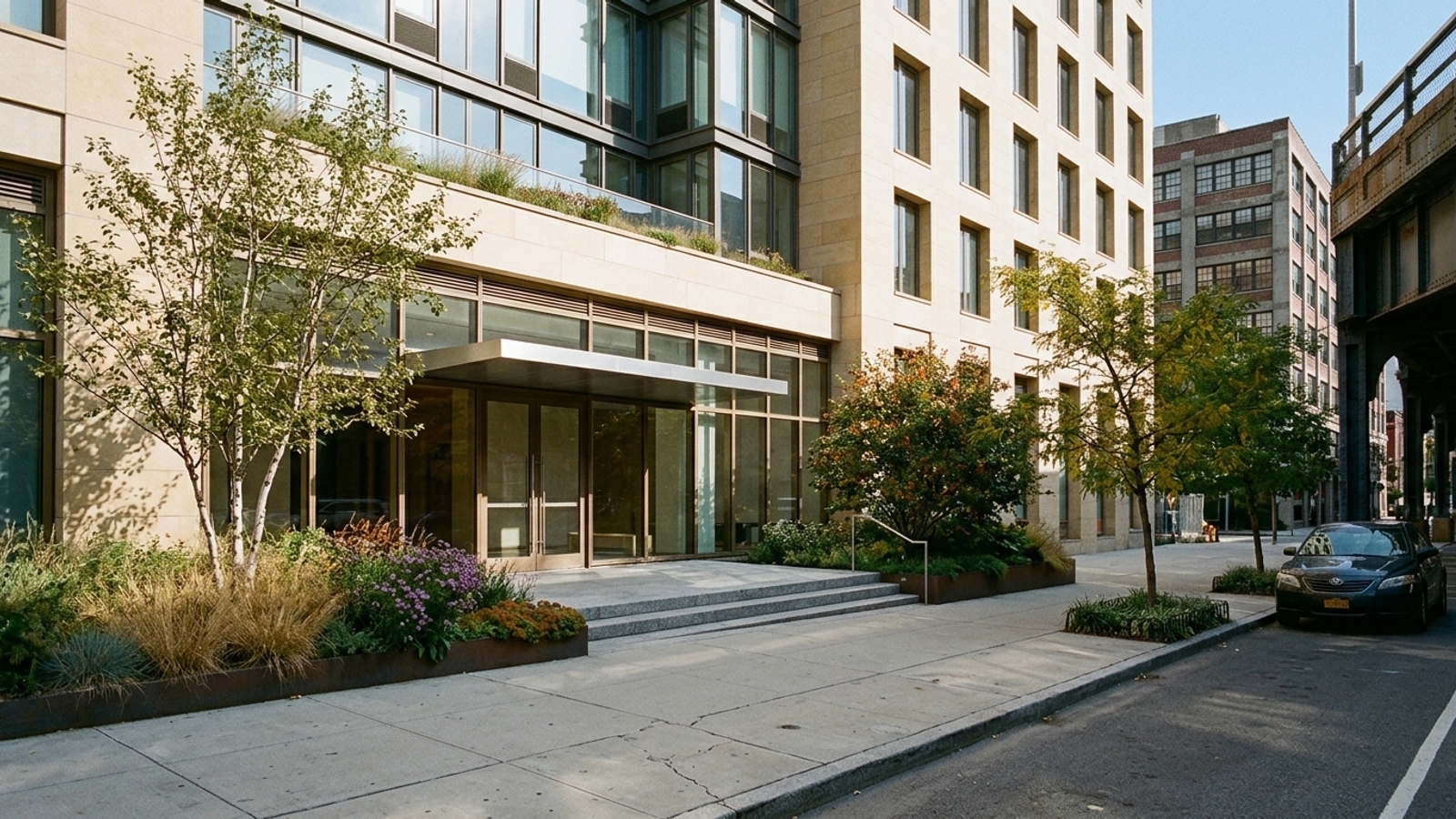
Buyers exploring the Hudson Yards, NY real estate market are shopping in a softening condo environment. Chelsea condos sit at roughly 5.1 months of supply, yet still closed at 99.2% of list price in the 90 days ending September 30, 2026.
That puts your negotiating room in time on market, sponsor concessions and price per square foot measured against Chelsea, not in offers far below asking. Market reports and listings usually group Hudson Yards into Chelsea, so this guide uses Chelsea condo figures as a labeled benchmark for Hudson Yards listings.
Key Takeaway
Hudson Yards is a new-development condo market sitting beside a Chelsea condo market where median sale prices fell 13.5% in the 90 days ending September 30, 2026, giving buyers room to negotiate on terms and time. If you want new construction and full amenities, start with Hudson Yards sponsor units and test every asking price against Chelsea's price per square foot. If you want a building with a resale history you can check, compare resale condos in West Chelsea.
Who This Guide Is For
You are weighing a condo purchase in or around Hudson Yards and need to judge whether asking prices are fair and where you can negotiate.
Hudson Yards Housing Market Overview
Hudson Yards is a planned development and special zoning district on the northwest edge of Chelsea. A City Planning Commission action establishing part of the district described it as bounded by West 33rd Street, Eleventh Avenue, West 30th Street and Twelfth Avenue. Those buying a home in Hudson Yards can review the available property types.
The development is known as the largest private real estate project in United States history. Its sales sit within the Chelsea condo segment, which fell harder than the area's all-homes median, down 8.4% year over year.
Is Hudson Yards a Buyer's or Seller's Market?
The broader Chelsea area had 238 condos for sale against 143 condo sales in the 90-day window ending September 30, 2026. That leans toward buyers. You can take your time, ask for closing credits and walk away if the terms don't fit your budget.
This is a Chelsea-wide reading. Inside a single Hudson Yards tower, the sponsor's unsold inventory can make the market feel very different. The highest units with clear views may not discount at all.
How to Read Chelsea Data for Hudson Yards
Chelsea medians blend older condo stock with brand-new towers, so a Hudson Yards unit can trade well above the neighborhood benchmarks. Ask the sponsor or listing agent for the current offering plan amendments and how many units remain unsold. Then pull building-level comparables from city sales records to check the exact price per square foot before you trust any neighborhood median.
Hudson Yards Home Prices
The median sale price for a Chelsea condo recently sat at $1,600,000. New units in Hudson Yards vary widely in size, so price per square foot gives you a much fairer way to compare listings.
The median price per square foot for a Chelsea condo is roughly $1,714. Take a hypothetical 1,100-square-foot two-bedroom asking $2,600,000. That works out to about $2,364 per square foot, roughly 38% above the Chelsea condo median.
Price per Square Foot
When a Hudson Yards listing asks for a significant premium over the Chelsea median, ask what that extra money buys. The difference usually comes down to floor height, river views, building amenities or tax abatement status.
Price per square foot ignores common charges and property taxes entirely. A unit with a lower price per square foot but high monthly charges can cost more each month than a pricier one.
How Sellers Are Pricing Right Now
Only 12.1% of Chelsea condos sold above list price recently, and most closed near their asking price even as median values fell. Sellers are discounting through list-price cuts and time on market rather than accepting lowball offers.
Check every listing's price history and days on market before you decide how far below asking to go. Expect bidding wars to be the exception: a newly listed unit priced correctly can still draw competing offers. Sponsors often prefer offering closing credits over a visible price cut on the record.
New Development vs Resale in Hudson Yards
Buying in a brand-new tower means purchasing from the developer, or sponsor, under an offering plan. The sponsor must file this plan with the New York State Attorney General before offering any unit. The plan must disclose all material information about the building's physical condition, the sponsor's identity and financial background, and the financing terms.
Use the buyer-leaning supply to ask the sponsor for credits, unit upgrades or covered transfer taxes. Before you commit, compare the developer's preferred-lender incentives against a cash offer or standard financing.
Buying a New-Development Condo from the Sponsor
In New York City, custom dictates that the seller pays the city and state transfer taxes on a resale. In a new-development transaction, sponsor purchase contracts customarily shift both of these transfer taxes onto the buyer, along with the sponsor's attorney fee.
Those extra fees push total new-development buyer closing costs higher, often to 4% to 6% of the purchase price. Early buyers can also face closing delays while the building finishes construction.
Buying a Resale Condo
A resale unit gives you a known building history: actual common charges, past sale prices and how the building has held up over time. You also skip sponsor-specific closing costs.
The trade-off is that you lose the negotiating advantage of a sponsor's unsold inventory, which can come with incentives a resale owner can't match. Any tax abatement clock on a resale unit has also already been running, so higher tax bills are closer than the current bill suggests.
Hudson Yards vs Nearby Neighborhoods
The Hudson Yards development sits right against established Manhattan neighborhoods with different housing styles. Moving a few blocks south or north changes the property types and the buying process, along with your property tax bill and monthly charges.
Hudson Yards vs West Chelsea
The High Line links these two areas. The park's northern end is at West 34th Street, next to the Hudson Yards campus. West Chelsea mixes newer boutique condos with gallery blocks and gives you a deep resale history to compare.
Fewer full-service towers means fewer large amenity packages, though. Small boutique buildings can also carry high common charges per unit.
Hudson Yards vs Core Chelsea
Core Chelsea offers older housing stock and a much larger share of co-ops. That means a different buying process, often requiring more cash down and a deeper financial review.
Co-ops bring board approval, stricter financing requirements and sublet limits. A buyer used to the flexibility of a Hudson Yards condo may find those rules restrictive.
Hudson Yards vs Hell's Kitchen
Hell's Kitchen lies directly north of the development, with a mix of older walk-up buildings and newer condos. It's a reasonable alternative if you're priced out of the newest glass towers. Don't assume it's cheaper, though: check recorded sales before you make an offer.
What It Costs to Own in Hudson Yards
Common charges, property taxes and closing costs set your actual cost of owning, and in this segment they vary widely from building to building. Before you sign a contract, ask the managing agent for:
- current common charges
- the building budget
- any planned special assessments
- whether the building has parking, whether spaces are sold or leased, and the monthly cost
Common Charges
Buildings with extensive amenities pass the cost of pools, fitness centers and full-time staff directly to owners every month, whether you use those spaces or not. Only the building itself can give you those figures.
Common charges can rise annually. Buildings can also levy special assessments for major repairs, so a low charge today is no guarantee of a low charge next year.
Property Taxes and Abatements
The New York City Department of Finance classifies condominiums as Class 2 property. It values them using an income capitalization method rather than comparable sales. Some buildings carry a 421-a tax exemption that temporarily lowers the tax burden.
The city's Property Benefit Lookup tool shows whether a property is currently receiving a 421-a exemption. When an abatement phases out, your taxes step up significantly, so budget for the unabated figure rather than today's bill.
Closing Costs and Transfer Taxes
New York State imposes a mansion tax on residential purchases of $1 million or more, starting at 1% and scaling up for higher-priced transfers. The city's Real Property Transfer Tax on an individual residential condo unit is 1.425% above $500,000.
On a sponsor purchase, these taxes stack with the sponsor's fees to add a substantial sum due at closing. Get a written estimate from your attorney before you sign the purchase contract.
How to Narrow Your Hudson Yards Search
Start with the trade-off in New development vs resale. Decide whether you need new construction with a full amenity package, or whether you'd trade it for a resale with a track record of sales and known common charges.
Next, compare the unit's price per square foot with the Chelsea median in Price per square foot. If it sits above that median, ask the listing agent to explain the gap with specific views, amenities or tax status. Ask your lender whether the building meets its condo approval requirements before you sign the contract.
Then confirm that your monthly budget can carry the common charges plus the property taxes once any abatement ends. Check that your attorney's closing-cost estimate, including any sponsor transfer taxes, fits what you can pay at signing. If you may rent the unit out later, read the condo bylaws for leasing rules and minimum terms.
Finally, weigh whether moving a few blocks south into West Chelsea or north into Hell's Kitchen changes the math. Watch days on market throughout your search. If a listing has sat past the 69-day Chelsea condo median, that's your strongest moment to ask for a price cut or a closing credit. Check school zoning yourself with the NYC Department of Education school search rather than relying on a listing's description.
Hudson Yards Housing Market Outlook
Buyer negotiating power here depends on the pace of new construction. The Hudson Yards rezoning plan provides for approximately 12,600 new housing units in a transit-oriented, mixed-use district permitting medium- to high-density development.
More sponsor units arriving on the market will keep the advantage with buyers, while slower delivery will tighten available supply. If you sell a unit here later, your asking price will compete with those new sponsor units.
At a Glance
These are Chelsea figures from Redfin, which does not report Hudson Yards separately. Use them as the adjacent benchmark.
- Chelsea condo median sale price: $1,600,000 (condos, 90 days ending 2026-09-30), down 13.5% year over year
- Chelsea all-homes median sale price: $1,694,525 (all homes, 90 days ending 2026-09-30), down 8.4% year over year
- Chelsea condo median price per square foot: $1,714 (condos, 90 days ending 2026-09-30); all homes: $1,708
- Chelsea condo median days on market: 69 (condos, 90 days ending 2026-09-30)
- Chelsea condo sale-to-list ratio: 99.2%, with 12.1% sold above list (condos, 90 days ending 2026-09-30); all homes: 99.0% and 12.5%
- Chelsea condo months of supply: 5.1, with 238 condos for sale (condos, 90 days ending 2026-09-30); all homes: 5.2 months, 265 for sale
- Chelsea homes sold: 143 condos out of 155 total (90 days ending 2026-09-30)
Hudson Yards Real Estate FAQs
Is Hudson Yards Expensive?
Recorded Hudson Yards condo prices are in the NYC Department of Finance rolling sales data. Compare their price per square foot with the Chelsea condo median.
What Are the ZIP Codes for Hudson Yards, NY?
Hudson Yards' primary ZIP codes are 10001 and 10018, within Manhattan Community District 4. Search by both ZIP code and building name, because portals may label the area Chelsea, Hudson Yards or Midtown West.
Is Hudson Yards Part of Chelsea?
Hudson Yards is a special zoning district and development on the edge of Chelsea, Hell's Kitchen and Midtown. Most listings and market reports group it with Chelsea.
What County Is Hudson Yards In?
Hudson Yards is in New York County, which covers all of Manhattan. Property taxes and the city transfer tax are set by New York City rather than a separate county government.
What Is It Like to Live in Hudson Yards?
Residents live beside the 7 train station at 34 St-Hudson Yards and the High Line's northern end, in a district still adding new residential towers.
How Far Is Hudson Yards from Times Square?
Times Square is one stop away on the 7 train. The ride from 34 St-Hudson Yards to Times Sq-42 St takes approximately three minutes.
Is Hudson Yards Close to Rockefeller Center?
Walking from the 34 St-Hudson Yards subway station to Rockefeller Center covers about 1.7 miles and takes roughly 32 minutes.
Is Hudson Yards Safe?
Check the NYPD CompStat reports for the precinct covering your building and compare year-over-year changes. Precinct boundaries cover a much larger area than the Hudson Yards development alone.
Sources
- Redfin: Data Center
- Wikipedia: Hudson Yards, Manhattan
- NYC Department of City Planning: Chapter 3
- NYC Department of Finance: Redacted Letter Rulings
- Tannenbaum Helpern Syracuse & Hirschtritt LLP: Real Estate Transfer Tax and Mansion Tax Rates
- NYC Open Data: Property Exemption Detail
- NYC Board of Education Retirement System: Class 2 Guide
- New York State Attorney General: You Buy Co-op or Condo
- Milton Coste: NYC Transfer Tax Buyer Seller Guide
- Rome2Rio: Hudson Yards to Times Square
- Rome2Rio: 30 Hudson Yards to Rockefeller Center
- The High Line: Rail Yard Preserve
- NYC Department of City Planning: Hudson Yards


