


The 34 St-Hudson Yards station on the 7 line opened in 2015 and brought rapid transit directly to Manhattan's far west side. Today, this area features some of the tallest residential towers in the city, built over an active rail yard.
Key Takeaway
Buying in Hudson Yards means buying a condo, and right now the advantage goes to buyers who target listings that have sat past the 69-day median for nearby Chelsea condos (90 days ending 2026-09-30). Start with the Hudson Yards towers if you want new construction and full amenities. If you'd rather have an established block and easier price comparisons, look at resale condos in West Chelsea along the High Line.
Who This Guide Is For
You are weighing a condo purchase in or right around Hudson Yards, deciding which building and block are worth the price, whether to buy new or resale, and how hard you can negotiate.
Hudson Yards Housing Market in 2026
Prices have come down in this condo market, but discounts at the table have not. Chelsea's median condo sale fell 13.5% in a year, yet units still closed at 99.2% of list (90 days ending 2026-09-30).
For the bigger picture, see Buying a Home in Chelsea, New York.
Your negotiating power comes from which listings you choose and from testing each tower's premium against the Chelsea price-per-square-foot median. Lowballing fresh listings rarely yields results here.
Prices Are Lower than a Year Ago
Sellers tend to adjust list prices before a sale rather than accept large cuts at the table. A fresh, well-priced listing gives you little room to work with, while an overpriced unit that has been reduced gives you more flexibility.
A falling median can reflect which units sold as much as falling values. Ask for building-specific closed sales before assuming a given tower is that much cheaper.
Why These Figures Cover Chelsea
The Redfin data reports Chelsea, the market Hudson Yards listings are compared against. That area takes in much of the Hudson Yards and West Chelsea condo stock. Condos dominate: 143 of 155 Chelsea sales were condominiums over the 90 days ending 2026-09-30. Other property types had too few sales to report a reliable median.
Hudson Yards' newest towers may trade above these broader medians, and no public median isolates the towers themselves. Before you commit, ask for closed condo sales from the last 6 to 12 months, by unit size, in the specific building and in Hudson Yards.
How Much Room There Is to Negotiate
About five months of supply puts this in roughly balanced-market territory, and only 12.1% of Chelsea condos sold above list recently. Bidding wars are the exception. On listings past the median days on market, you can reasonably ask for credits, a closing-date concession or a price cut.
The catch is that the best lines in the most popular towers can still draw multiple offers. Check each listing's time on market before deciding how hard to bid.
How to Narrow Your Search
First, decide whether you want a new full-amenity tower or would trade amenities for an established block with years of resale history. Tower buyers start with the Hudson Yards towers. Established-block buyers start with West Chelsea along the High Line or Southern Hell's Kitchen.
Next, settle whether you are buying from the developer or from an owner. Costs and negotiation differ, so read about buying from the developer or buying a resale condo before you tour.
If monthly costs rather than purchase price will decide what you can afford, review common charges, property taxes and closing costs first. If you are financing with a smaller down payment, an FHA loan or a loan above the conforming limit, check mortgages and financing before you choose a building, because some new buildings won't qualify.
What Is Hudson Yards?
The 2005 rezoning turned an industrial rail-yard footprint into a dense residential and commercial district. Its buildings have different ownership structures and construction timelines than the surrounding blocks.
Built over a Working Rail Yard
The towers sit on structural steel platforms over the active LIRR West Side Yard, where Long Island Rail Road trains are still stored.
Development on the Eastern Rail Yard is structured through long-term MTA ground leases rather than fee-simple sales at the outset, so you don't automatically own the land beneath the building. Have your attorney confirm in the offering plan whether the unit is fee simple or subject to a ground lease.
Construction Still Underway on the West Side
The Western Rail Yard, west of 11th Avenue, is a separate and later phase. A proposal sought to modify the 2009 site plan to allow a roughly 5.7-million-zoning-square-foot project across three sites, including another platform over the active yard. The City Council approved an amended, primarily residential rezoning in 2025.
Units facing west or near 11th Avenue may live with years of construction noise and changing views. Ask what's approved for construction in front of the unit's windows before you fall for a floor plan.
Where to Buy in and Around Hudson Yards
The choice comes down to new-tower amenities inside the Hudson Yards footprint or established blocks to the south and north with deeper resale history.
Hudson Yards Towers
If you want a new full-amenity condo with the 7 train at the door, start here. You pay a premium for full-service buildings directly above shops, plazas and the 34 St-Hudson Yards subway station.
Carrying costs in amenity-heavy towers tend to be the steepest part of the monthly bill, and the public plaza draws large crowds of visitors. Ask whether amenities carry separate fees or memberships.
West Chelsea Along the High Line
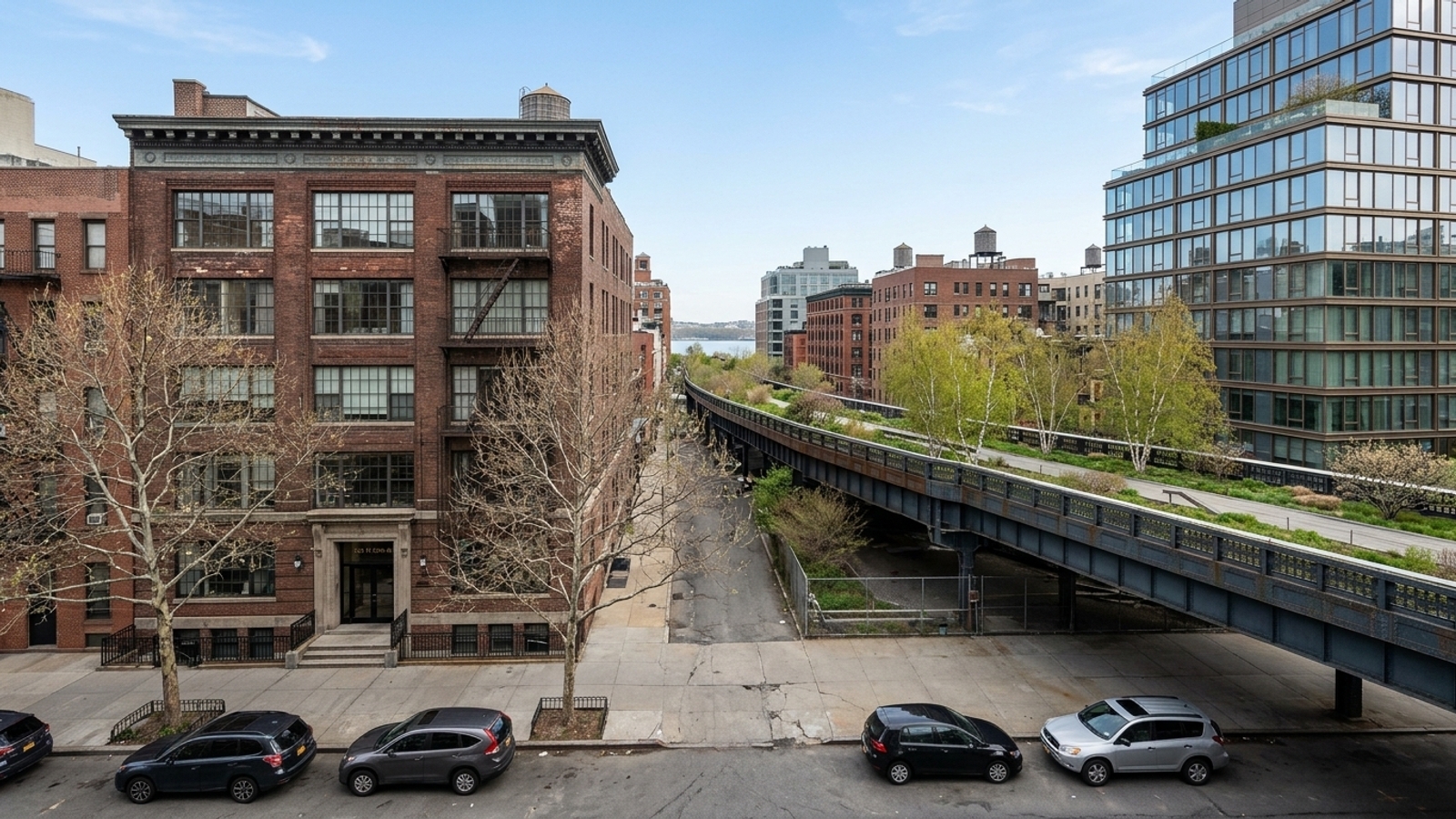
If you want an established block where asking prices are easy to check against neighbors, West Chelsea is worth a close look. Its galleries and condo buildings sit between 10th and 11th Avenues. The High Line runs on a former freight rail line and ends at West 30th Street, at the 30th Street Hudson Yards ramp. The Chelsea data applies most directly here, making overpriced units easier to spot.
High Line foot traffic is heavy on weekends, and blocks near 11th Avenue can be a long walk to the subway. Time the walk from the building to the nearest station before making an offer.
Southern Hell's Kitchen
If you want more building types to compare, including co-ops, look north of Hudson Yards. The West 37th to 42nd Street blocks mix older walk-ups and co-ops with newer condo infill, which suits buyers willing to evaluate pricing building by building.
Blocks near the Lincoln Tunnel approaches and the Port Authority Bus Terminal carry heavy traffic. Tour the area at rush hour before you commit.
New Development vs Resale
Buying a never-lived-in unit from a developer involves different paperwork and fees than buying from an individual owner, and the cost gap can be substantial. Confirm the specific financial details with your real estate attorney before you draw any conclusions.
Buying from the Developer
The sponsor sells under an offering plan filed with the New York Attorney General. Under state regulations, purchaser deposits must be held under a mandatory escrow agreement, with the deposit typically capped as a special-risk disclosure item above 10% of the offering price. Negotiation with a developer often takes the form of concessions, such as closing credits or paid common charges, rather than direct price cuts.
In many sponsor sales, the buyer is made responsible for the developer's New York City and New York State transfer taxes, plus the sponsor's attorney fee, on top of the purchase price. Ask who pays them before you compare a sponsor unit with a resale, because the gap can be wider than it looks.
Buying a Resale Condo
Resale prices can be checked against recorded sales in the city's ACRIS database. The condo board's right of first refusal is usually a formality, so approval is smoother than at a co-op.
A resale may compete with unsold sponsor units in the same building. The seller may also have paid more than today's market supports, which can slow agreement. Go in with recent closed comps in hand.
Co-Ops Near Hudson Yards
Co-ops are mostly found in older Chelsea and Hell's Kitchen buildings rather than the Hudson Yards towers. With no reliable median, pricing depends entirely on building-specific comparable sales. Buying one requires board approval and a thorough financial disclosure package.
A co-op board can reject a buyer for any lawful reason, and many buildings limit subletting. Before you get attached to a unit, ask for the down payment minimum, the sublet policy and the recent board approval timeline.
What It Costs to Buy in Hudson Yards
In amenity-heavy buildings, monthly expenses can narrow your purchasing power faster than you'd expect. Review these figures with your attorney and lender early, not after you've signed a term sheet.
Price per Square Foot
The Chelsea condo median price per square foot sits at $1,714 (based on 143 condo sales). For illustration only: a 1,000-square-foot condo at this median runs about $1.71 million. Use this benchmark to see how far a Hudson Yards tower's asking price sits above the neighborhood standard, which blends older resales with new buildings.
Closing Costs
New York imposes a progressive mansion tax on residential purchases of $1 million or more, rising to 3.9% on purchases of $25 million or more. For illustration only: on the Chelsea condo median sale price of $1.6 million, the mansion tax rate is 1%, adding $16,000 to your closing costs.
Buyers financing their purchase also pay a mortgage recording tax. On a $1.28 million loan, the effective borrower rate is 1.925%, adding roughly $24,640. In a sponsor sale where you pay the transfer taxes, add tens of thousands more.
Common Charges and Property Taxes
Monthly carrying costs often decide affordability in a full-service tower more than the purchase price. You can verify a unit's current property tax bill and abatement status on the NYC Department of Finance property search. If an abatement is phasing out, the bill can rise each year.
Ask the managing agent for current common charges, the building budget and any planned assessments before you run your numbers.
Mortgages and Financing
Most Hudson Yards purchases require a jumbo loan because prices easily exceed the conforming loan limit. Condominiums are generally easier to finance than co-ops, though lenders still review the building's financial health.
A newer building with many unsold units may not meet a lender's presale or owner-occupancy requirements. Before signing a contract, ask your lender whether the building meets conventional or jumbo condo requirements. If you're using an FHA loan, check the HUD lookup.
Steps to Buy a Home in Hudson Yards
New York real estate contracts are drafted and negotiated by attorneys, not real estate agents, and attorneys complete due diligence before any binding agreement is in place.
Get Preapproved and Hire a Real Estate Attorney
Your attorney reviews the offering plan or building financials and negotiates the contract. Attorney availability can set the pace of the deal, so hire one before you make an offer. Having a jumbo preapproval ready strengthens your position with sellers.
Shortlist Buildings and Request the Financials
Narrow your list to two or three buildings and request budgets, common charges and recent sales data for each. Financial packages from sponsors can be long and slow to arrive, so ask for them before scheduling second showings. Confirm school assignment by address on the NYC DOE Find a School lookup, since a neighborhood name doesn't tell you the zoned school.
Make an Offer and Sign the Contract
An accepted offer is not binding in New York until both sides sign a contract, which usually happens after attorney due diligence. Until then, the seller can accept another buyer, so move quickly through the review once you've decided. At signing, your deposit goes into an escrow account.
Close on the Unit
Closing involves the board's waiver of its right of first refusal on a resale, a final walkthrough, and paying your closing costs and taxes. For new development, the closing date depends on the building receiving its temporary certificate of occupancy, and those dates can slip. Ask your attorney what the contract allows if the closing is delayed.
At a Glance
- Condo median sale price, Chelsea: $1,600,000, down 13.5% year over year (90 days ending 2026-09-30)
- All homes median sale price, Chelsea: $1,694,525, down 8.4% year over year (90 days ending 2026-09-30)
- Condo median price per square foot, Chelsea: $1,714; all homes: $1,708 (90 days ending 2026-09-30)
- Median days on market, Chelsea condos and all homes: 69 days (90 days ending 2026-09-30)
- Sale-to-list ratio, Chelsea condos and all homes: 99.2% (90 days ending 2026-09-30)
- Share sold above list, Chelsea: 12.1% of condos, 12.5% of all homes (90 days ending 2026-09-30)
- Months of supply, Chelsea: 5.1 for condos, 5.2 for all homes (90 days ending 2026-09-30)
- Active inventory, Chelsea: 238 condos, 265 homes of all types (90 days ending 2026-09-30)
- Homes sold, Chelsea: 143 condos out of 155 total sales (90 days ending 2026-09-30)
Hudson Yards Home Buying FAQs
Is Hudson Yards in Chelsea or Midtown?
It sits between West Chelsea to the south and Hell's Kitchen to the north. The Hudson Yards rezoning area spans generally from West 30th Street to West 41st Street between Eighth and Eleventh Avenues. Listing sites label addresses inconsistently, so check the street address rather than the neighborhood tag.
What Is the Hudson Yards ZIP Code?
The primary ZIP code is 10001, a Manhattan ZIP code that also includes Chelsea and Koreatown.
Is Hudson Yards Expensive?
The Chelsea median sale price across all home types was $1,694,525, down 8.4% from a year earlier (90 days ending 2026-09-30). The newest towers often trade above that median, so gauge pricing from closed sales in the specific building.
How Much Does a Studio or One-Bedroom Cost in Hudson Yards?
It depends on the building, because the market data doesn't break out prices by bedroom count. Look up closed sales of the same unit size in that building in the city's ACRIS database.
How Far Is Hudson Yards from Penn Station?
The 34th Street-Hudson Yards station, terminal of the 7 line, sits at 34th Street and 11th Avenue. From there it's a short subway ride or about a 15-minute walk east to Penn Station, which matters if you commute on the LIRR, NJ Transit or Amtrak.
Is Hudson Yards Safe?
The NYPD 10th Precinct serves Chelsea, Clinton/Hell's Kitchen South and the Hudson Yards neighborhoods. Compare its CompStat figures year over year, and visit the block at different times of day before you decide.
Can I Rent Out My Hudson Yards Condo on Airbnb?
Not as a whole-apartment rental for fewer than 30 days. Under NYC Local Law 18, short-term rental hosts must register with the Mayor's Office of Special Enforcement before renting, and owners still can't rent out an entire apartment for fewer than 30 days. Building bylaws may also ban short-term rentals or set leasing minimums, so check the building's rules before buying.
Sources
- Redfin: Data Center
- Manhattan Borough President: Western Rail Yard Recommendation
- Federal Railroad Administration: Record of Decision
- MTA: Hudson Yards Bond Offering
- NYC Department of City Planning: Neighborhood Explorer
- Wikipedia: 34th Street-Hudson Yards station
- NYC Parks: The High Line
- Reed Corp: NYC Mansion Tax Rates
- NYC311: Real Property Transfer Tax
- NY Attorney General: Escrow Regulations
- NYPD: 10th Precinct
- NYC311: Short-Term Rental Registration


