


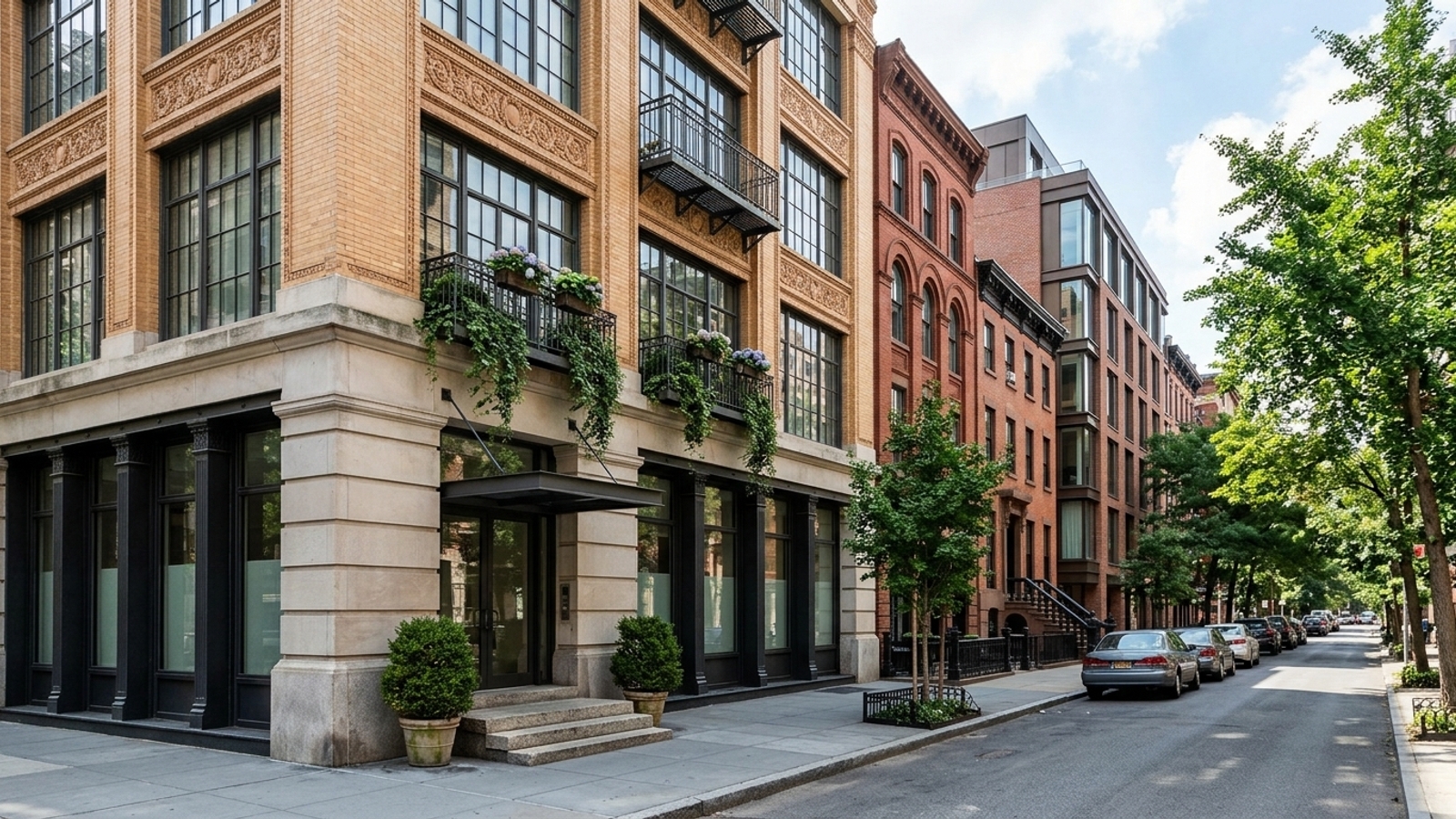
The Flatiron District sits inside Manhattan's Ladies' Mile Historic District, designated in 1989 and covering 440 buildings across 28 blocks.
Key Takeaway
New construction in the Flatiron District is a short list of landmark conversions led by the Flatiron Building residences at 175 Fifth Avenue, so wanting a new unit means wanting a specific building. If price and negotiating room matter more, start with resale condos. They took a median 83 days to sell in the 90 days ending September 30, 2026, which gives you time to compare buildings and press on terms.
Who This Guide Is For
You're weighing a new-development condo in the Flatiron District against a resale condo nearby and need to know what each costs and how much room you have to negotiate.
What New Development Looks Like in the Flatiron District
Flatiron's new development is a handful of landmark office-to-condo conversions, not a building pipeline. In the Ladies' Mile Historic District, the Landmarks Preservation Commission must review exterior alterations, new construction and demolition before work can proceed. That makes ground-up towers rare and leaves historic office and loft buildings as the main source of new homes.
The condo market around these conversions is slow and balanced. There were 5.2 months of supply in the 90 days ending September 30, 2026, and condos closed at exactly 100% of the list price. Only 3.8% of condos sold above asking during that window. Your negotiating room comes from time, inspection requests, closing dates and concessions, not a large discount.
Of the 28 recent home sales in the area, 26 were condos. That makes the condo numbers the benchmark for pricing any new unit.
New Condo Developments in the Flatiron District
The Flatiron Building Residences at 175 Fifth Avenue
The 1902 Flatiron Building, long an office tower, is being converted into condo residences. The New York State Attorney General accepted the condominium offering plan for filing in September 2025, with an effective date of April 2026. The conversion creates 38 residential condominium units, along with three commercial and 38 storage units.
Pricing in the filed plan ranges from roughly $10.95 million for a three-bedroom unit to $50 million for a five-bedroom unit. Sales launched in fall 2025, and full completion and occupancy are expected later in 2026.
The triangular footprint produces unusual layouts and narrow points, and landmark rules limit exterior changes such as windows. You'll pay a premium for the address, and your closing waits on the sponsor finishing work and receiving a certificate of occupancy.
Flatiron House
Flatiron House sits at 39 West 23rd Street and consists of two buildings connected by a shared central garden. Developed by Anbau Development with COOKFOX Architects, the project contains 44 residences priced between $1.98 million and $13 million.
Individual units have planted and irrigated Juliet balconies, and the shared garden connects the two buildings.
The catch is that in a new, smaller building, the first-year budget is a projection with no operating history. Common charges can rise once real costs are known.
Other New Condo Buildings in and Near Flatiron
NoMad, immediately to the north, has more new residential activity than Flatiron itself. Marketing materials often stretch neighborhood boundaries, so a building sold as "Flatiron" may sit in NoMad, Chelsea or Gramercy. That affects which comparable sales can justify its price, so test it against sales on its own blocks.
New Construction vs Resale Condos in the Flatiron District
A new unit costs you flexibility on price and more cash at closing. A resale unit costs you new systems and finishes.
Why Buy a New-Development Condo
Buying new gives you pristine systems and finishes and a building with no history of deferred maintenance. If you buy early in the sales cycle, you get a choice of line and floor plan before the best layouts are gone.
What you give up: sponsor prices tend to be firm while units are selling well, and the transfer taxes covered below often shift to you. The real premium is higher than the sticker difference.
Why Buy a Resale Condo
The median price per square foot for all homes and condos in the area was $1,604 in the 90 days ending September 30, 2026. That is your benchmark for testing any sponsor's asking price. Resale buildings give you real financials, actual board minutes and a track record of how the building operates.
With homes sitting on the market for months, you can negotiate closing timing, repairs or included items with an individual seller. What you give up: older loft conversions can come with aging systems and special assessments.
Costs to Plan for on a Flatiron Condo
Closing costs differ depending on whether you buy a resale unit or a new unit from a sponsor. These taxes and fees are due at closing and generally can't be rolled into a standard mortgage. The rates below come from official city and state tax schedules.
Transfer Taxes in a Sponsor Sale
In a standard resale, the seller pays the New York City and New York State transfer taxes. In a sponsor sale, the offering plan often shifts them to the buyer. For a condo at the $1,960,000 median, the NYC Real Property Transfer Tax rate of 1.425% and the base NYS transfer tax of 0.4% add roughly $35,770 to the buyer's closing costs.
Who pays is set by the offering plan and contract, not by custom. Before comparing prices, ask whether your contract requires you to pay both transfer taxes and the sponsor's attorney fees.
Mansion Tax
New York State imposes an additional mansion tax of 1% on residential purchases where the consideration is $1 million or more. For NYC purchases of $2 million or more, a graduated supplemental tax applies on top, raising the combined rate in brackets up to 3.9%.
On the median-priced condo above, the flat 1% mansion tax adds another $19,600 to the buyer's closing costs. It applies to new and resale purchases alike, so it doesn't narrow the gap between them.
Common Charges and Property Taxes
New buildings publish projected common charges and property taxes in their offering plans. Resale buildings have established budgets you can review.
Some conversions carry tax abatements that phase out over time. Ask whether an abatement applies, when it phases out and what taxes look like afterwards. Then use the offering plan's projected common charges and real estate taxes to work out your monthly costs.
How Buying from a Sponsor Works
The developer, known as the sponsor, sets the terms in an offering plan accepted for filing by the state Attorney General. Those terms govern your deposit and your move-in date. Have a real estate attorney review the plan and contract.
Read the Offering Plan and Its Amendments
The offering plan discloses the projected budget, how unit square footage is calculated, the sponsor's obligations and the closing conditions. Plans run to hundreds of pages, and amendments record price changes, units sold and changed terms as the project progresses.
Before making an offer, ask the sponsor's sales office for the full offering plan and its most recent amendment, not just the original plan.
Deposits, Escrow and Closing Dates
Under New York law, sponsors of NYC condominium offerings must hold all deposits and down payments in a special escrow account or secure them with alternative security, such as an irrevocable letter of credit or surety bond. The funds remain the purchaser's property until the plan is consummated or the unit closes.
No one may legally occupy a building until the NYC Department of Buildings has issued a Certificate of Occupancy or Temporary Certificate of Occupancy. Ask which one the building has and what the expected closing window is.
Your closing date depends on the sponsor's construction schedule. If you're selling another home or your lease ends on a fixed date, a delay can leave you paying for two places at once.
Financing a New-Development Condo
Lenders review the building itself, including how many units are sold or in contract. Early in sales, some lenders limit loans in a building with few units sold, which can mean a larger down payment or fewer loan options.
Ask your lender early whether it will lend in the specific building at its current sales level. If you plan to use an FHA loan, check the building's status on HUD's condo approval search rather than assuming it qualifies.
Flatiron District Housing Market Outlook
The median sale price for all homes in the neighborhood rose 7.6% year over year in the 90 days ending September 30, 2026, based on 28 sales. Over the same window, the median condo price jumped 32%, based on 26 condo sales.
That condo jump likely reflects which units closed during the window, possibly including larger apartments or new-development units, rather than every apartment gaining a third in value. Judge each unit on its own price per square foot. Further pricing details are available in our Flatiron District housing market breakdown.
How to Narrow Your Flatiron Search
If you need a brand-new unit, start with the new condo developments above. If a renovated resale would do, start with why to buy a resale condo. If you aren't sure your budget can absorb transfer taxes and the mansion tax on top of the purchase price, run the numbers in the costs section before touring sponsor units.
If you must close by a fixed date, read the deposits, escrow and closing dates section, because new buildings close on the sponsor's schedule. A resale condo is easier to time. If you're financing with a small down payment, check the financing section first, because lenders look at how much of a new building has sold.
If you want a landmark address and brand-new finishes and can live with a sponsor-set closing date, start with the Flatiron Building residences at 175 Fifth Avenue. You can test its price per square foot against the area median.
If you want room to negotiate on closing date, repairs or terms, start with resale condos. Sellers there have had time on the market, though you should still plan on paying close to asking.
If you want to keep cash for closing as low as possible on a purchase near $2 million, start with resale condos, because the seller customarily pays the transfer taxes. In a sponsor sale, the buyer often pays them on top of the mansion tax.
At a Glance
- Median sale price, all homes: $1,969,448 (90 days ending 2026-09-30; based on 28 sales)
- Median sale price, condos: $1,960,000 (90 days ending 2026-09-30; based on 26 condo sales)
- Year-over-year change in median sale price, all homes: +7.6% (90 days ending 2026-09-30; based on 28 sales)
- Year-over-year change in median sale price, condos: +32% (90 days ending 2026-09-30; based on only 26 condo sales, so read it with caution)
- Median price per square foot, all homes and condos: $1,604 (90 days ending 2026-09-30)
- Median days on market: 79 for all homes, 83 for condos (90 days ending 2026-09-30)
- Sale-to-list ratio, all homes and condos: 100% (90 days ending 2026-09-30)
- Share sold above list price: 3.7% of all homes, 3.8% of condos (90 days ending 2026-09-30)
- Months of supply, all homes and condos: 5.2 (90 days ending 2026-09-30)
- Homes for sale: 47 total, 45 of them condos (90 days ending 2026-09-30)
Flatiron District New Development FAQs
Where Is the Flatiron District in Manhattan?
The Ladies' Mile Historic District designation report places the area roughly from 15th Street to 24th Street and from Park Avenue South to west of Sixth Avenue. Neighbors include NoMad, Chelsea, Gramercy and Union Square.
Is the Flatiron District Safe?
Most of the district falls within the NYPD's 13th Precinct, which publishes weekly CompStat reports showing year-over-year changes by category, so check that data for the streets you're considering.
What Is the Flatiron District Known For?
The area is known for the 1902 Flatiron Building and its historic loft and office architecture. The Flatiron Building anchors the Ladies' Mile Historic District.
Which Subway Lines Serve the Flatiron District?
The 23rd Street station is served by the N, Q, R and W trains at the Broadway and Fifth Avenue entrance, with separate 23rd Street stations further west for the F, M, C and E trains. The 14th Street-Union Square station complex is a major hub served by the 4, 5, 6, L, N, Q, R and W trains.
Are Most Homes in the Flatiron District Condos or Co-Ops?
Condos account for nearly all recent sales, and co-op sales were too few to report. Condos generally allow easier subletting and have no board approval of buyers' finances, but check each building's rules.
Can You Rent Out a Flatiron Condo as a Short-Term Rental?
New York City's Local Law 18 requires hosts of stays under 30 days to register with the Mayor's Office of Special Enforcement. The host must be the permanent occupant, be present during the stay and follow guest limits. Condo bylaws may also restrict rentals, so ask the managing agent before listing a unit.
Sources
- Redfin: Data Center
- New York State Attorney General: Real Estate Finance Bureau
- 6sqft: Flatiron House
- Wikipedia: Ladies' Mile Historic District
- NYC Landmarks Preservation Commission: Flatiron Building Designation
- NYC Department of Finance: Real Property Transfer Tax
- New York State Attorney General: Escrow Regulations
- NYC Department of Buildings: Certificate of Occupancy
- HUD: Condominiums Search
- Wikipedia: 14th Street-Union Square station
- NYC Office of Special Enforcement: Registration Rules and Laws


