The median sale price for homes in Williamsburg, NY sits around $1,740,000 as of the summer of 2026. If you're exploring this section of Kings County, you're looking at roughly 186 available homes - everything from converted industrial lofts to brand-new waterfront high-rises.
That's a wide range, and the neighborhood doesn't behave like a single market. Properties here spend about 43 days on the market before selling, and with 4.6 months of supply, you have some room to think - but not unlimited time. The part of Williamsburg you target matters as much as your budget does.
How Williamsburg is Laid Out
The neighborhood runs from the East River on the west to Varick Avenue on the east, with Nassau Avenue as the northern border and Flushing Avenue closing it off to the south. It's a substantial footprint for Brooklyn.
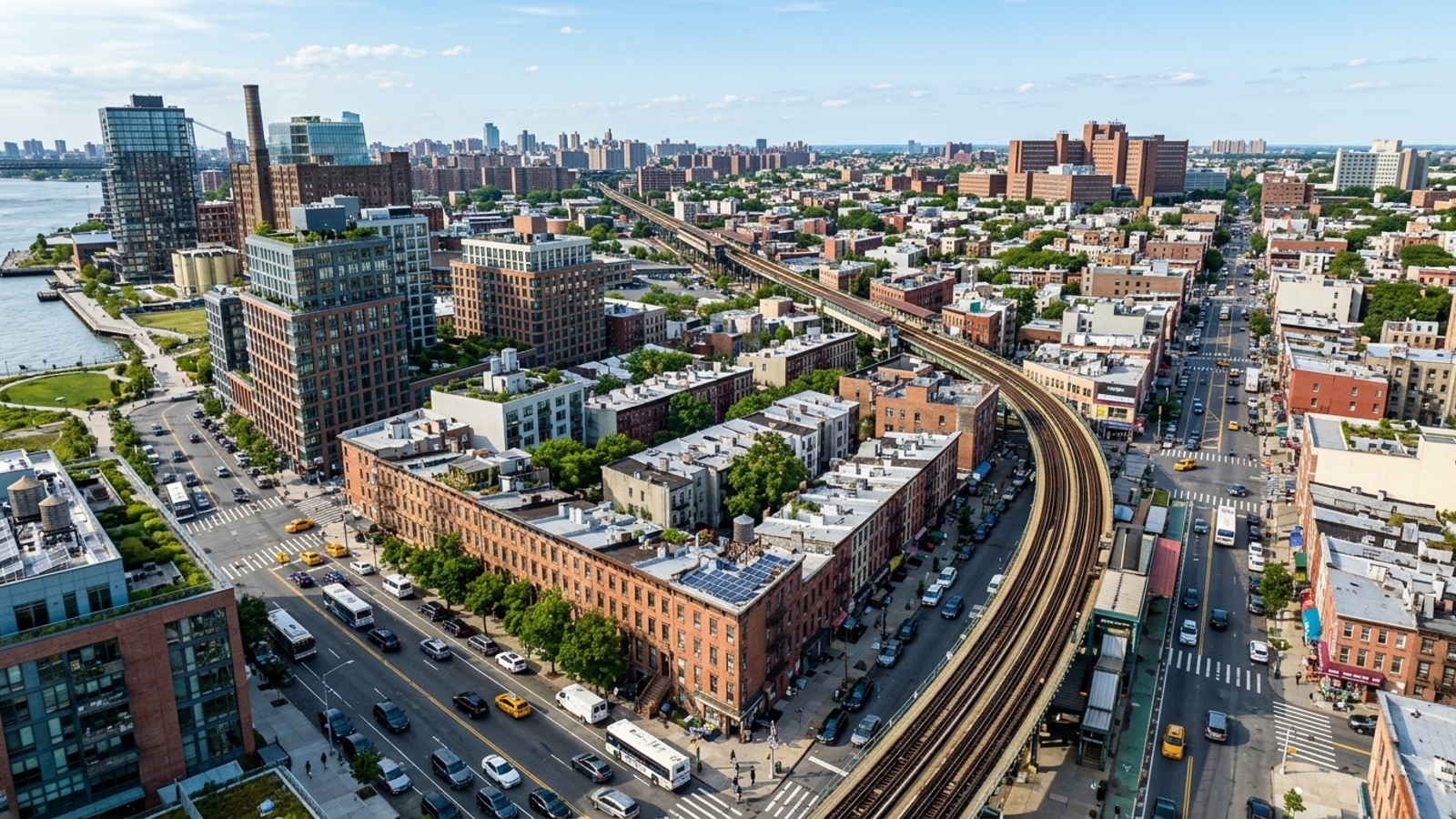
Listings divide this area into three sub-markets: North, South, and East. That distinction isn't just geographic shorthand - each section has a different dominant property type, so your search will naturally narrow depending on whether you want a modern condo or an older attached row house. Where the property sits also determines how you'll get around, since access to the L train, the Williamsburg Bridge, and the BQE varies considerably across those three zones.
Defining the North, South, and East Boundaries
South Williamsburg is generally bounded by Division Avenue to the north, Broadway to the northeast, Flushing Avenue to the south, and the East River to the west. Transit here leans on bridge access and local bus routes.
East Williamsburg sits west of the Queens neighborhoods of Maspeth and Ridgewood. Its boundaries run roughly from Newtown Creek and Meeker Avenue down to Flushing Avenue or Grand Street, with the BQE forming its western edge and Bushwick Avenue marking the east.
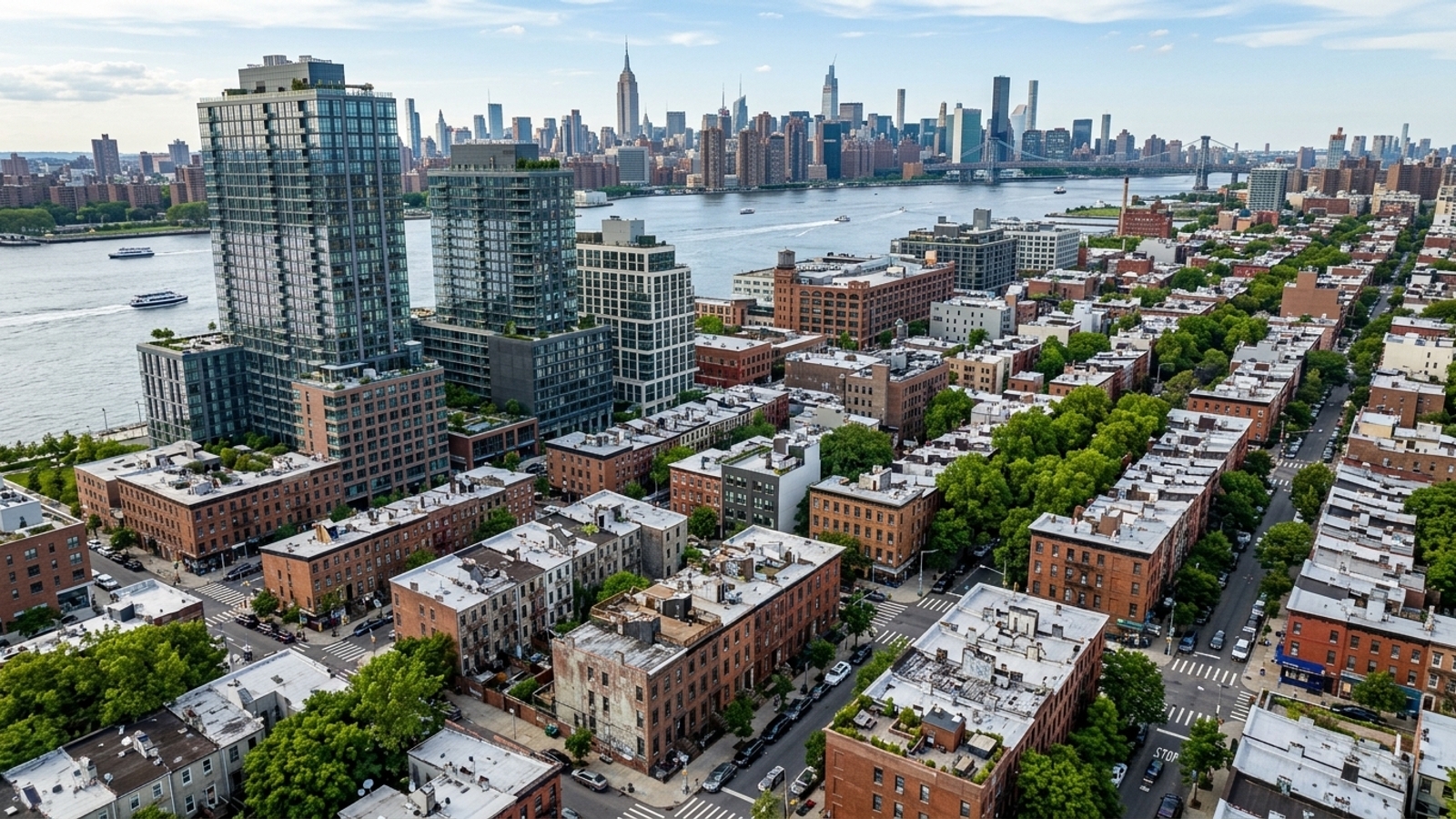
North Williamsburg doesn't have a single, universally agreed-upon boundary in city records, but it generally covers the waterfront blocks north of Division Avenue - and it holds the bulk of the newer East River developments.
Kings County and City Context
Williamsburg is part of New York City and sits within Kings County. The market here moves on its own logic, separate from Manhattan's pricing trends.
Brooklyn's overall cost of living runs about 65% above the national average, and home prices in the borough land roughly 182% above the national median. Those numbers explain a lot about what you're seeing in the listings.
Housing Types and Property Styles
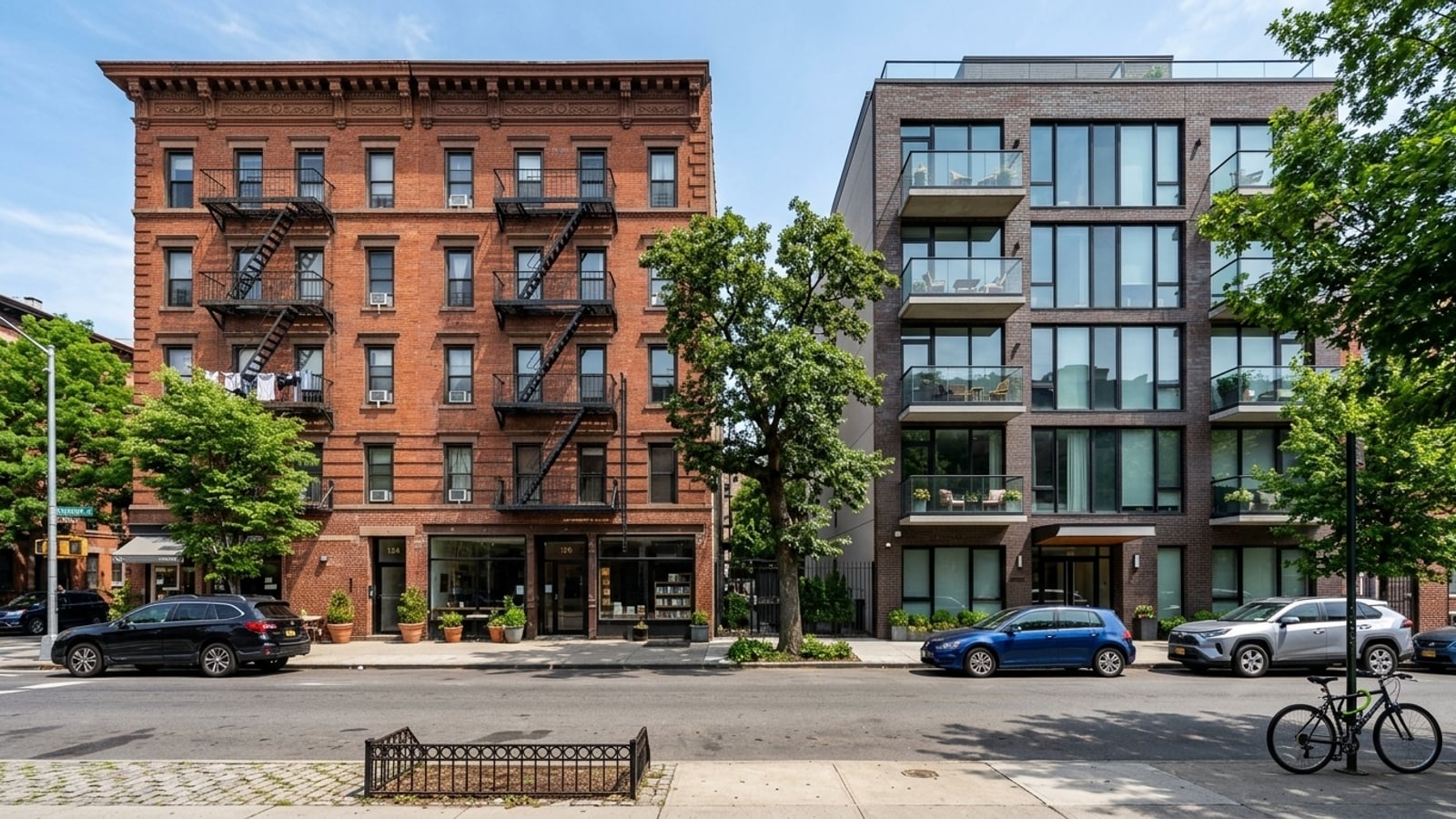
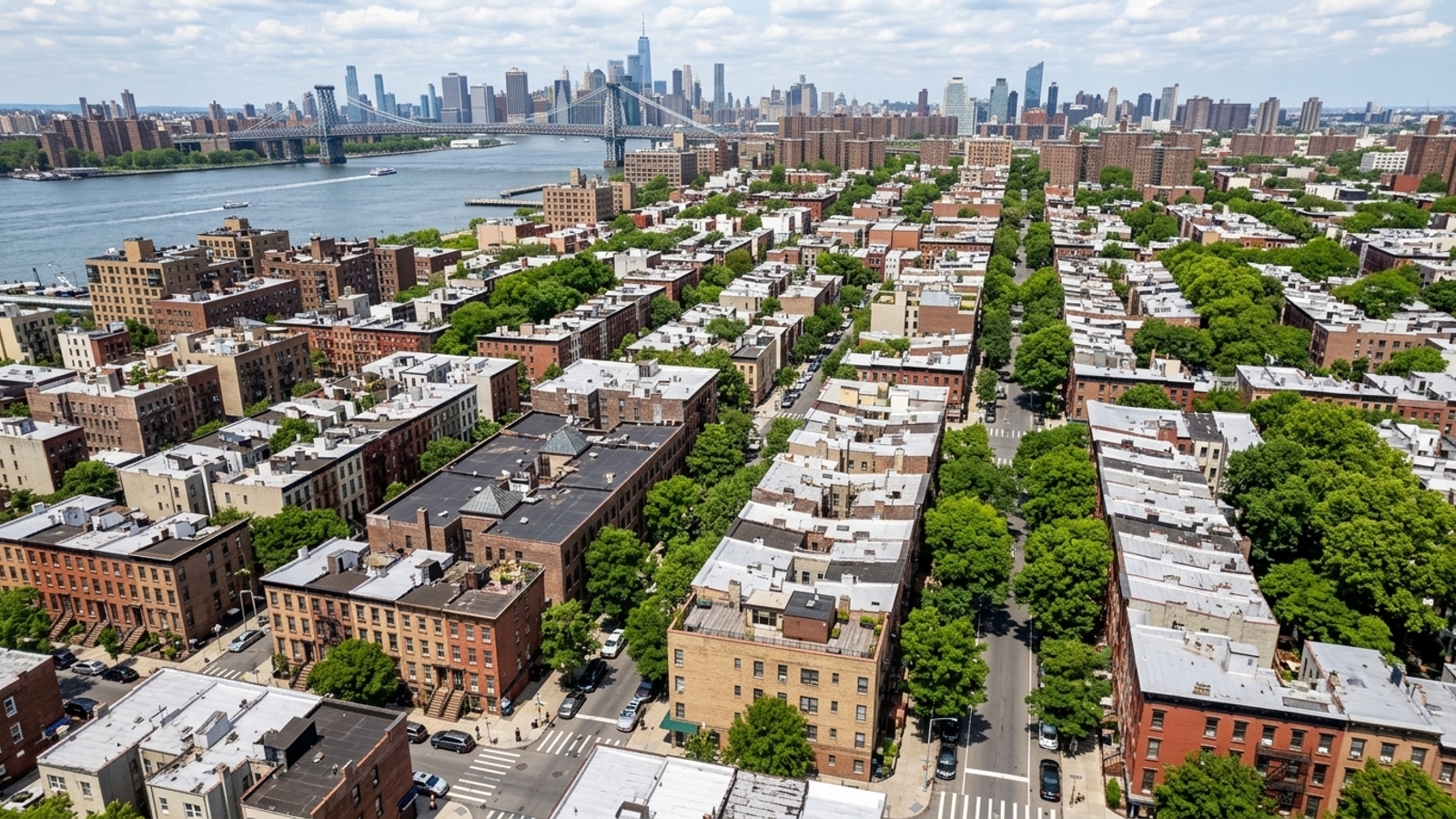
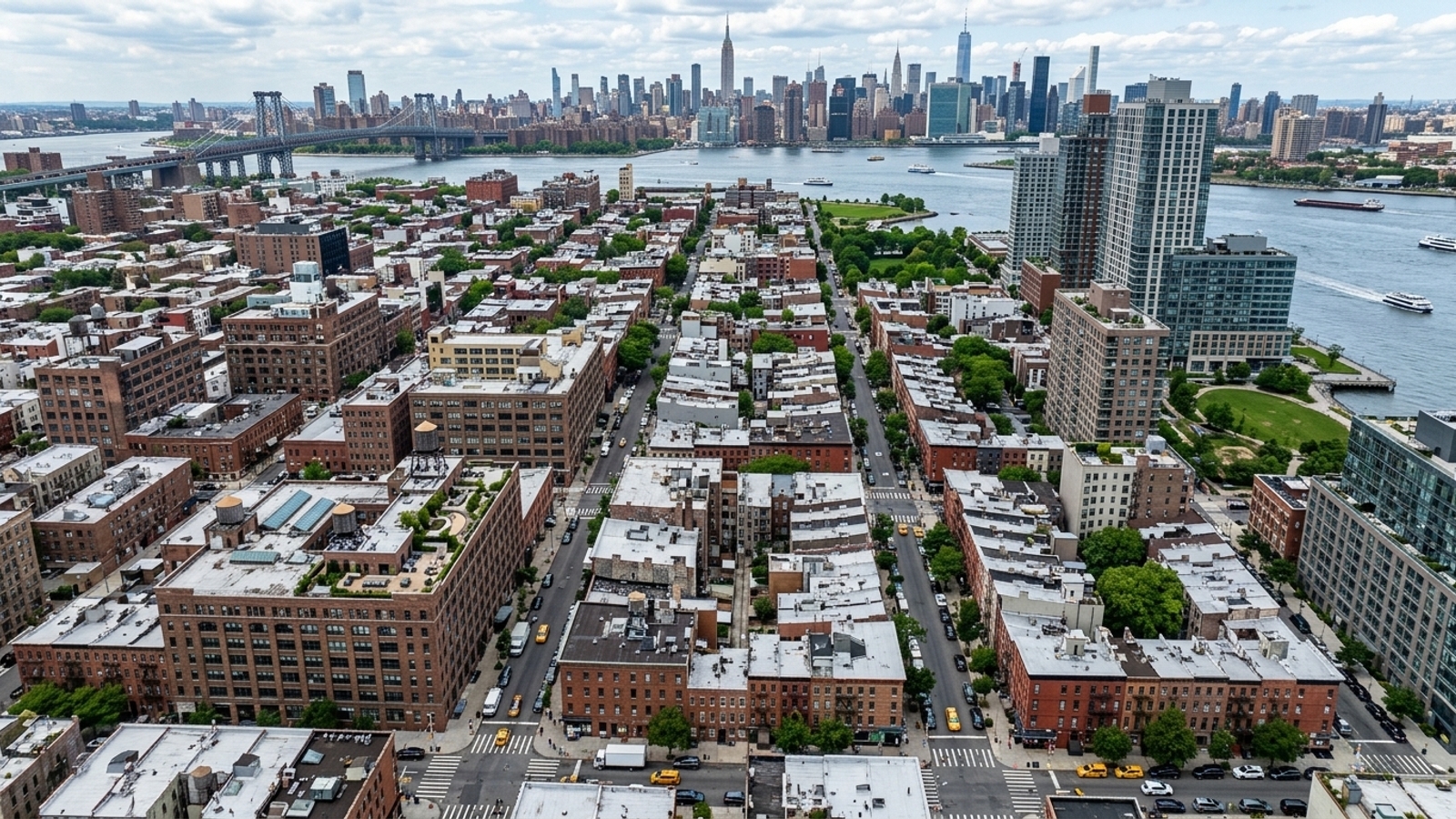
There's a clear split in Williamsburg's housing stock: established low-rise buildings inland, and modern towers concentrated near the water. About 123 homes sold in a single month across the area in recent data - a mix of both categories.
The type of property you buy shapes your monthly costs in ways the purchase price alone won't tell you. Condos carry common charges. Co-ops come with maintenance fees. Townhouses skip those building-level costs but put every exterior repair and structural issue squarely on you.
Most of what's available falls into one of those two camps: older attached structures further from the river, or new construction close to it. Your budget and your tolerance for building-life versus independent ownership will point you toward one side or the other.
Townhouses and Walk-Up Buildings
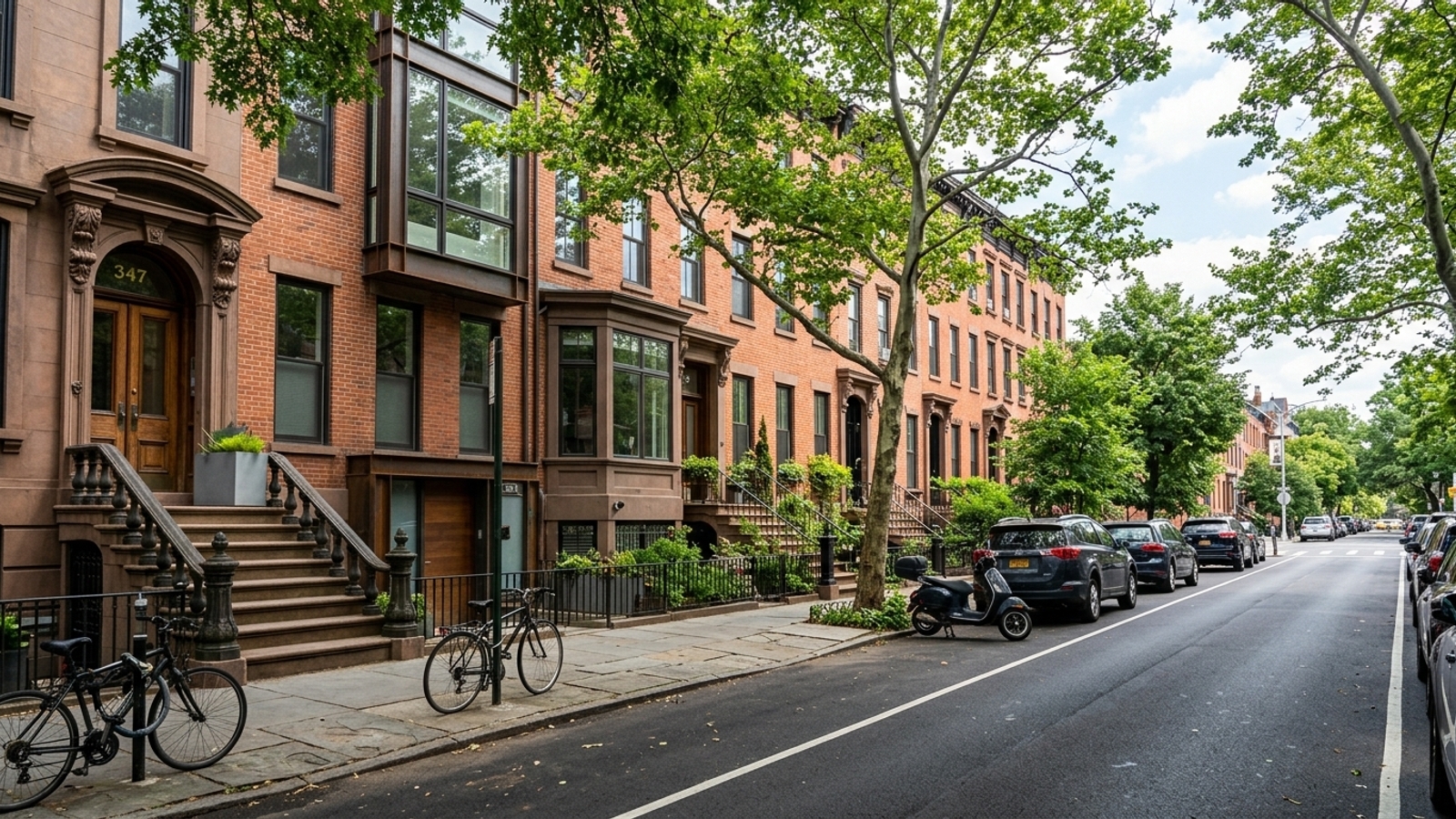
Move away from the East River and you'll find row houses and attached townhouses dominating the streetscape. These properties tend to offer more interior square footage than a typical apartment, often with historic architectural details worth preserving.
Many of these homes date back several decades, so budget accordingly for potential renovation work. If you're open to a multi-family structure, buying a townhouse also gives you the option to occupy one unit and rent the others.
Condos and New Construction
The waterfront blocks are where the modern condo buildings and high-rises concentrate. Doormen, fitness centers, rooftop terraces - that's the package you're buying into.
You'll pay a premium for the location and the finishes. Before you sign a contract in any new building, pull the financial statements and review the reserve funds. A well-located condo in a poorly managed association is a problem that compounds over time.
Profiles of the Main Sub-Areas
The Williamsburg-wide median sits at approximately $1,740,000, but that number smooths over real differences between sub-areas. Where the property is located determines both the price range and the kind of home you'll actually be choosing from.
Don't search the whole neighborhood at once. A hunt for a renovated loft and a hunt for a new high-rise condo will take you to completely different blocks. The breakdowns below give you a starting point for each section.
North Williamsburg
North Williamsburg is the waterfront-facing section, and it leans hard toward modern condos and new development. The tallest residential buildings in the neighborhood are here, along with the Manhattan skyline views that come with them.
McCarren Park proximity and East River ferry access drive values in this section. If you're buying here, expect elevator buildings with monthly common charges as the norm rather than the exception.
South Williamsburg
South Williamsburg runs older and lower-rise than the northern blocks. Established row houses are the dominant housing type, and large-scale condo developments are scarce compared to what you'll find to the north.
The section sits just south of the Williamsburg Bridge, which puts lower Manhattan within reach without requiring the L train. If a single-family or multi-family townhouse is what you're after, this is where you'll find more of them.
East Williamsburg
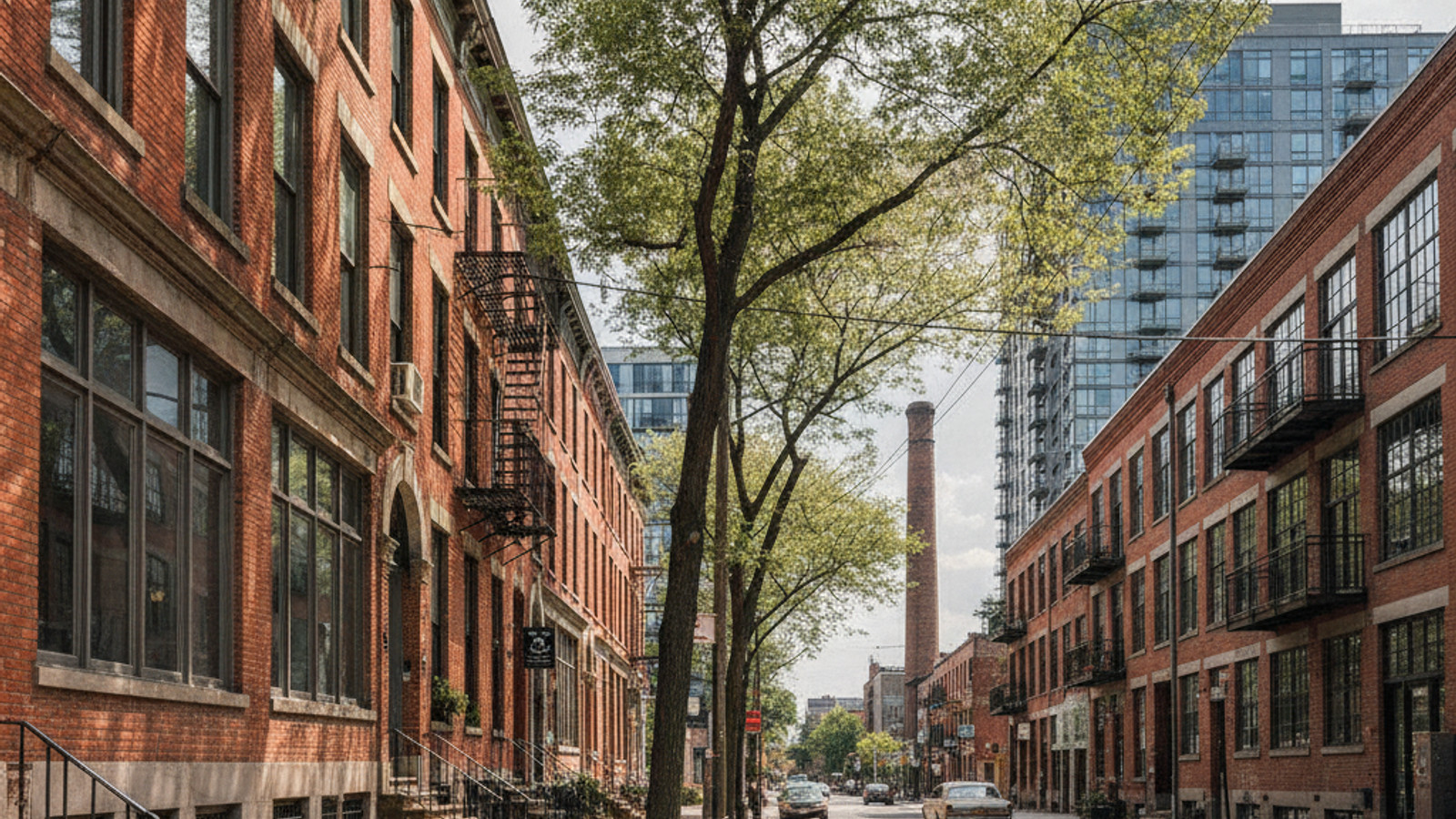
East Williamsburg is loft country - spacious converted industrial spaces and renovated row houses, further inland from the river and bordered by the BQE. Historic sales data from early 2025 showed a median sale price of around $1.0 million in this specific section, with properties generally trading between $800 and $1,000 per square foot.
The industrial-to-residential conversions here give you layouts you won't find in the newer waterfront buildings. That's either a feature or a drawback depending on what you're looking for.
Local Factual Data for Buyers
Two things buyers often check last but should check early: police precinct coverage and school district boundaries. Williamsburg is served mainly by the NYPD's 90th Precinct.
For crime statistics, the NYPD Crime Statistics landing page is your best resource. The department's CompStat 2.0 portal and the 90th Precinct's specific page both provide downloadable precinct-level reports - go to the primary source rather than a summary.
School District Boundaries
Williamsburg falls primarily under the New York City Department of Education's Community/Geographic School District 14, which covers Williamsburg, Bushwick, Bedford-Stuyvesant, and Greenpoint.
Properties in the eastern sections of Williamsburg near the Bushwick border may fall into District 32 instead. Don't assume - use the specific property address to verify district placement against the official city zoning maps before you close.
Frequently Asked Questions
What is the difference in property values and lifestyle between North Williamsburg and South Williamsburg?
It comes down to housing type. North Williamsburg is dominated by modern condos and new waterfront development; South Williamsburg is primarily older, established row houses. Property values in the north generally carry a premium tied to new construction and East River proximity.
Where are the most affordable micro-neighborhoods to buy a home in Williamsburg, Brooklyn?
East Williamsburg tends to offer lower entry prices than the waterfront sections. Data from early 2025 showed properties there trading at a median of roughly $1.0 million - well below the broader Williamsburg median of $1.74 million. You'll find renovated row houses and lofts, not new high-rises.
Which part of Williamsburg is considered the most family-friendly for buyers with children?
Fair Housing laws prohibit designating any neighborhood as more or less suited for families. Buyers focused on park access often look at properties near McCarren Park in North Williamsburg; those who want more interior square footage tend to look at multi-story row houses in South and East Williamsburg. All sections are served by NYC DOE District 14 or District 32.
Which areas of Williamsburg offer the most reliable subway commute into Manhattan?
Proximity to the L train is the main variable. Properties in North and East Williamsburg sit closer to the primary L train stations along the northern corridor. South Williamsburg residents more often rely on bus routes or the Williamsburg Bridge to get into Manhattan.
Are there specific flood zone risks or insurance costs to consider when buying on the Williamsburg waterfront?
Yes. Properties directly along the East River in North Williamsburg frequently sit in designated flood zones. Factor flood insurance into your monthly carrying costs before you commit to a waterfront purchase - it's not a small line item.
Is East Williamsburg considered the same neighborhood as Williamsburg proper when comparing real estate prices?
East Williamsburg is a distinct sub-area with its own pricing trends, though it's part of the broader Williamsburg market. The overall Williamsburg median sits around $1.74 million; East Williamsburg properties have historically traded lower, with recent data showing a median around $1.0 million.