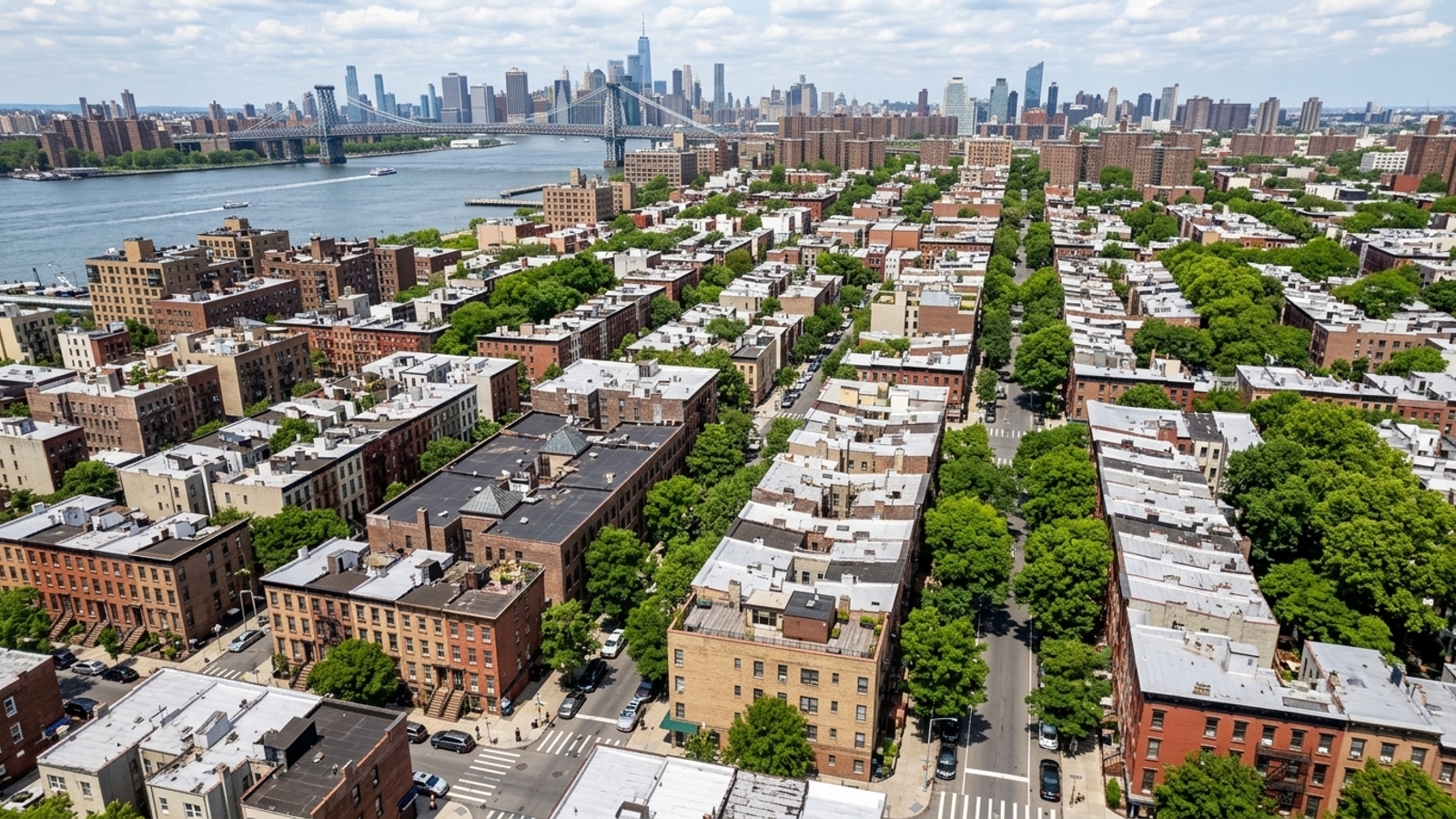
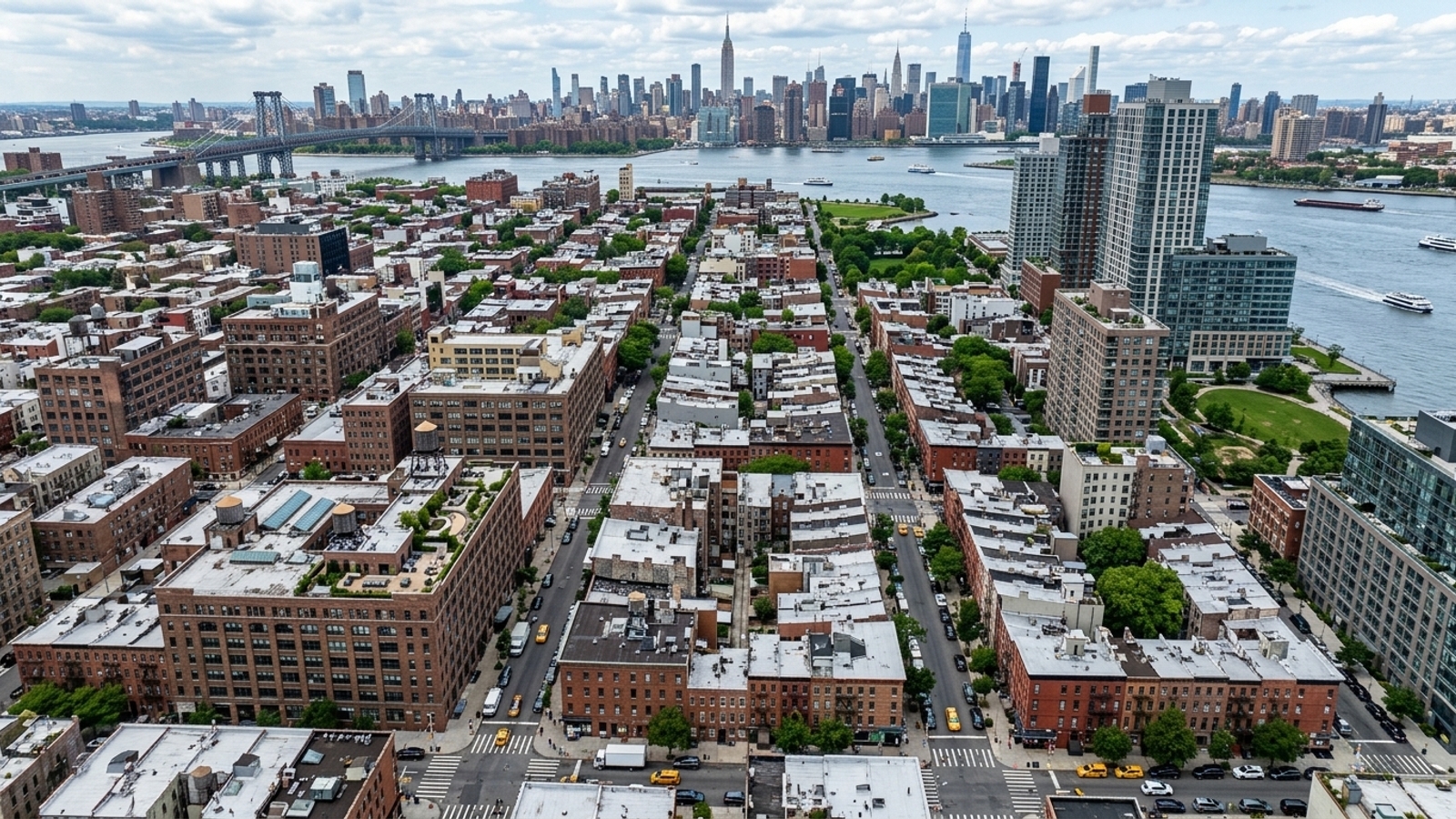
Williamsburg, NY sits 5 to 7 miles from Midtown Manhattan - close enough that buyers treat it as an extension of the city rather than a true commute. Under normal traffic conditions, you're looking at 15 to 20 minutes across the river. That proximity alone explains why this slice of Brooklyn draws the kind of demand it does, though buyers should still weigh the pros and cons of living in Williamsburg, Brooklyn.
The median home sale price recently hit roughly $1.74 million as of 2026, and the current inventory of about 186 homes runs the full range from modern waterfront condos to historic townhouses. Neither end of that spectrum is cheap.
Location and Layout of Williamsburg, NY
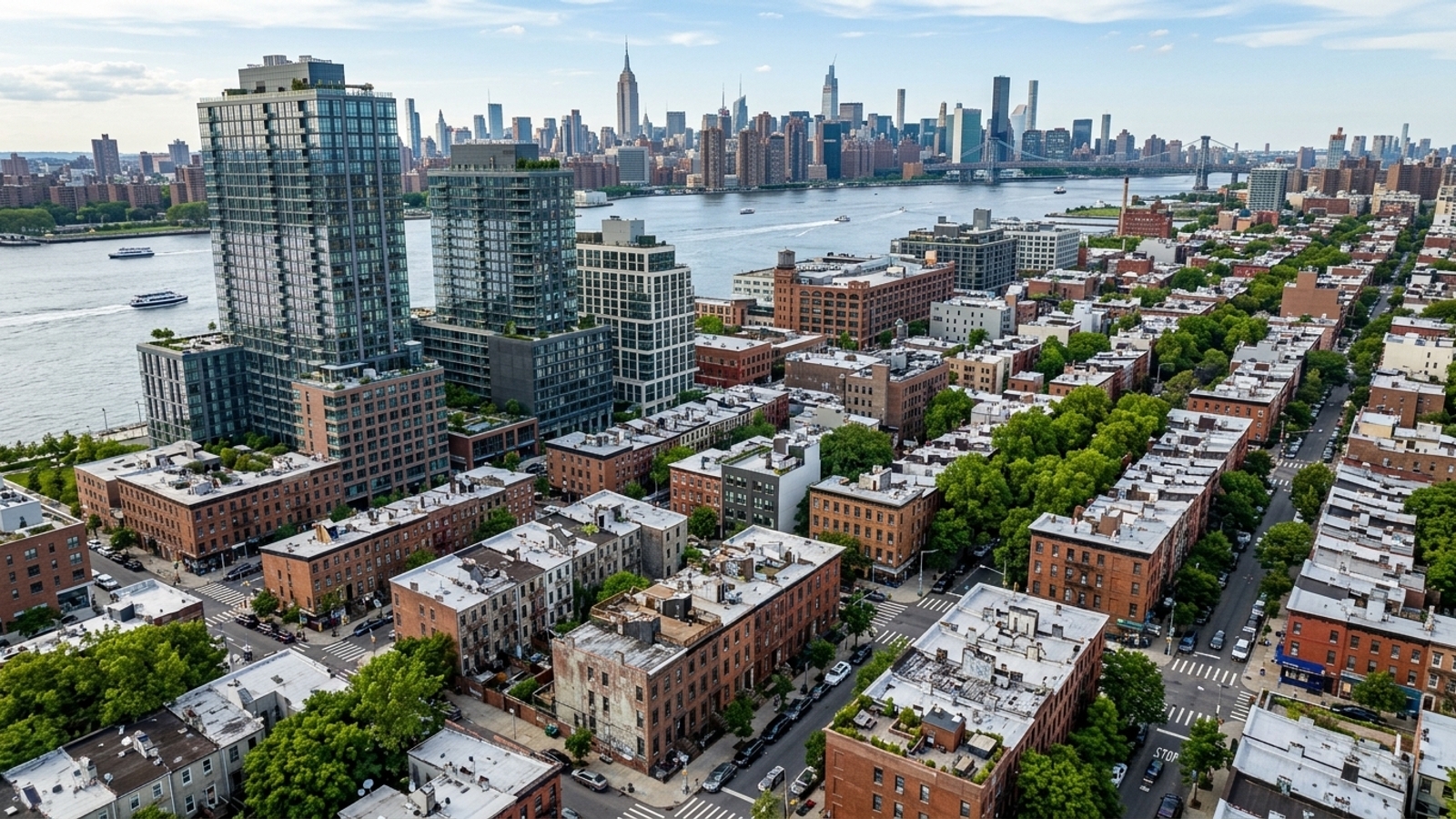
Williamsburg runs along the East River in Kings County, directly across from Manhattan. It functions as a major transit hub for the borough and sits within the broader New York City metropolitan area - which means the infrastructure around it is built for volume.
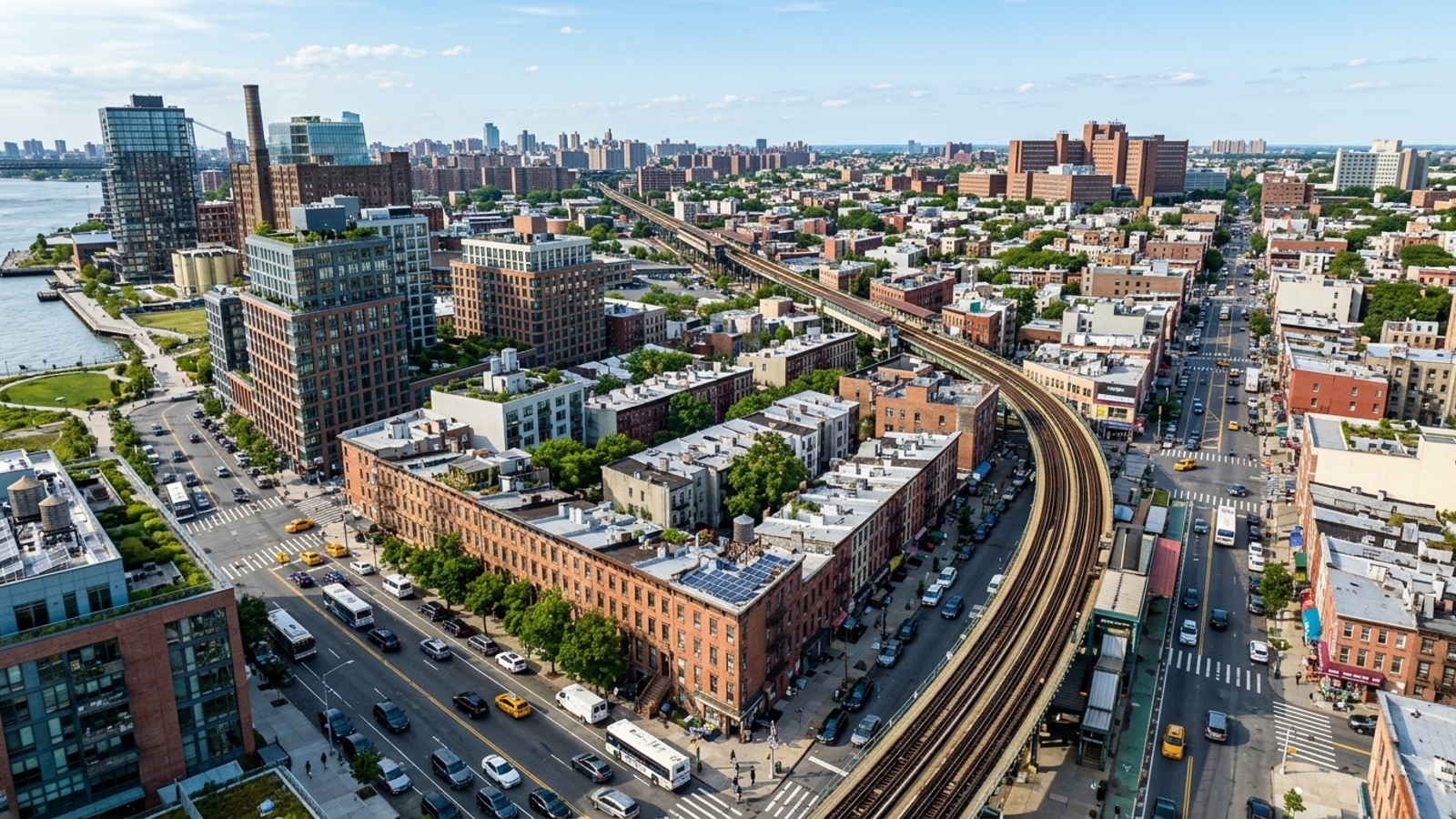
The footprint is just over two square miles, but don't let that fool you. A population density of roughly 69,440 people per square mile, based on the 2010 Census, means every one of those square miles is working hard. You get residential buildings stacked next to commercial storefronts, and the streets reflect it.
Kings County Details and Commute
Living here means you're in Kings County, which shares its boundaries with the borough of Brooklyn. Getting around relies on the subway, ferries, and the Williamsburg Bridge - most residents use all three depending on the day and the destination.
Public schools fall under New York City Geographic School District 14, with parts of the neighborhood extending into District 32. Charter options include Williamsburg Collegiate Charter School and Success Academy Charter School-Williamsburg, both operating within those district limits.
Local ZIP Codes and Boundaries
The primary ZIP codes are 11206, 11211, and 11249. East Williamsburg expands that further to include 11237 and a portion of 11222.
These aren't interchangeable. The character shifts noticeably as you move from the waterfront developments facing the East River toward the industrial-turned-residential blocks further inland - same ZIP code, different neighborhood entirely.
What to Expect When Living in Williamsburg, Brooklyn
People come here for the density of options - dining, retail, transit - and the fact that most daily errands don't require a car. Walkability is the baseline, not a selling point.
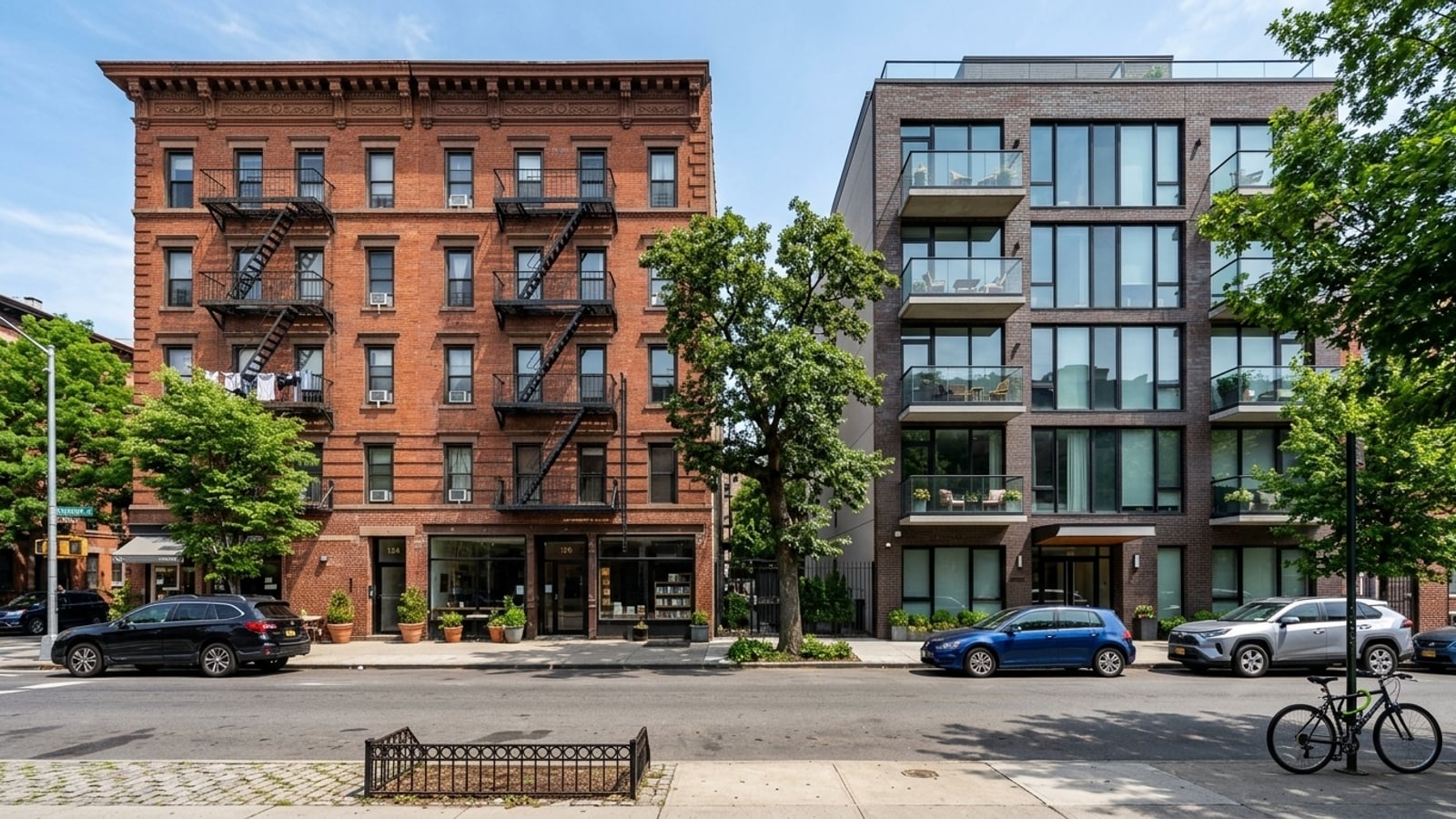
The housing stock reflects two eras living side by side. High-rise developments and low-rise historic buildings occupy the same blocks, which means you can choose between an amenity-heavy condo tower and an older multi-family walk-up within a few streets of each other. What you give up in one, you gain in the other.
Pros and Cons for Residents
The proximity to Manhattan and the sheer volume of local amenities are the obvious draws. The waterfront parks give you outdoor space with direct views of the city skyline, which isn't nothing when you're living in a dense urban neighborhood.
The cost is the honest counterweight to all of that. Prices and rents are among the highest in Brooklyn, and the density that makes the neighborhood work also means crowded trains and busy streets during peak hours. You're not getting a quiet block.
Neighborhood Atmosphere and Features
Bedford Avenue is the commercial spine - it runs 10.2 miles through several Brooklyn neighborhoods, and the stretch around North 7th Street is the beating heart of Williamsburg, packed with restaurants and shops at almost every turn.
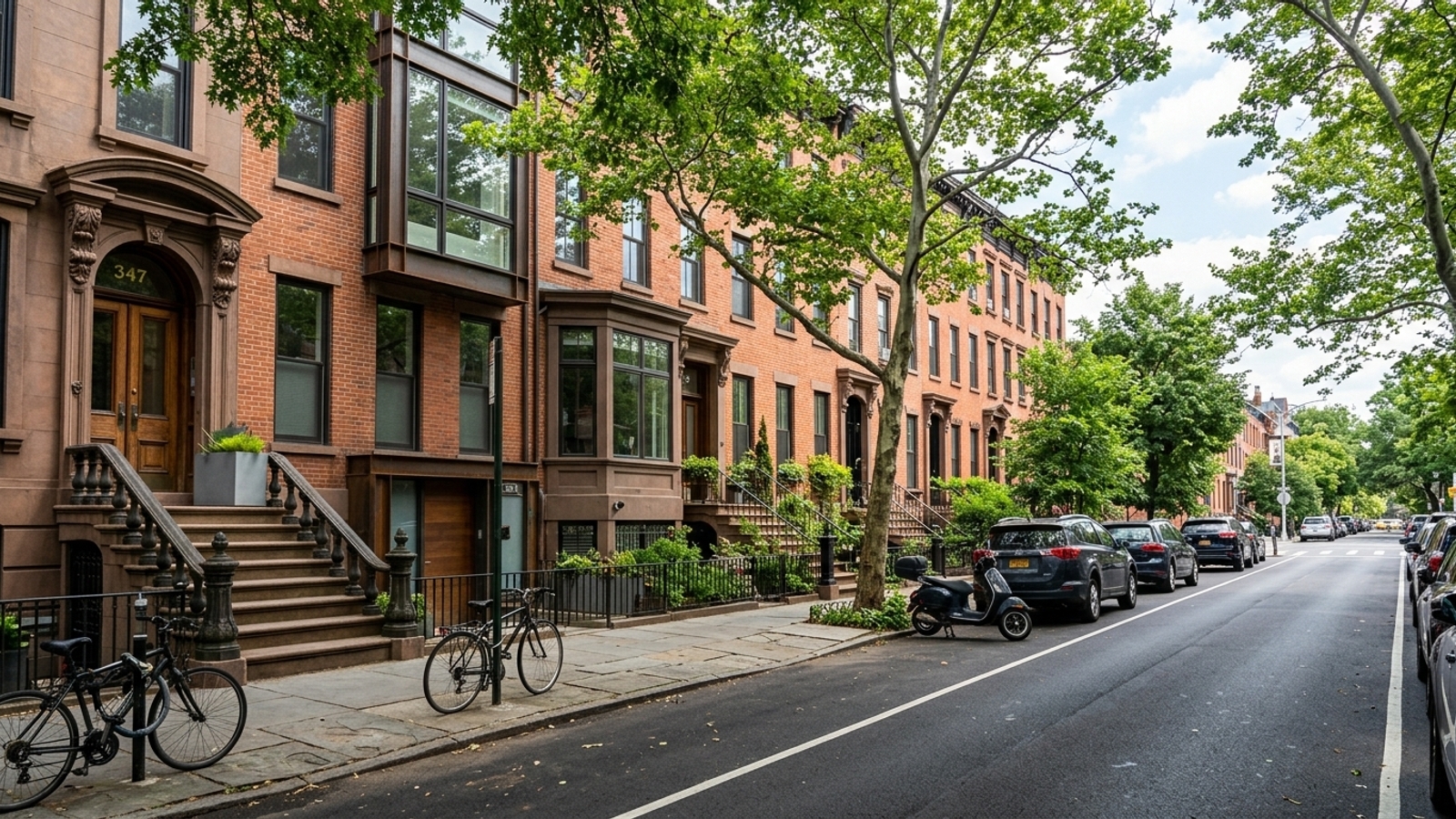
The waterfront tells a different story: modern glass towers, landscaped piers, a cleaner edge to everything. Move inland and the buildings get older, the masonry heavier, and the mix of residential and light industrial starts to show. Both have their appeal, depending on what you're after.
Cost of Housing and Everyday Expenses
The median sale price as of mid-2026 is approximately $1.74 million. Homes are moving at a median of 43 days on market, sellers are getting an average of 99.7% of list price, and roughly 17.5% of homes are closing above asking. That's a competitive market, not a soft one.
There's currently about 4.6 months of housing supply available, with inventory hovering around 186 listings. The range runs from studio apartments to multi-story townhouses, but the median tells you where the weight of the market sits.
Home Prices and Property Taxes
Condo units tend to price closer to $1.6 million, depending on the building and its amenities - still well below the overall median, but HOA dues can close that gap quickly. Factor those monthly carrying costs in before you fall in love with a number on a listing sheet.
Kings County carries a median effective property tax rate of approximately 0.69%, which is lower than the New York State average of 1.76% to 1.90%. That sounds like a break until you account for the home values underneath it - the median annual tax bill still lands between $6,000 and $6,900.
Renting an Apartment
Average monthly rents in 2026 run from $4,200 to $5,521. That's a shift from 2025, when the median asking rent was about $4,750. The options range from updated loft spaces to newer luxury high-rises, and moving into most of them means coming in with first month's rent, a security deposit, and sometimes a broker's fee.
Precinct Coverage and Sub-Neighborhoods
Williamsburg is covered by the NYPD's 90th and 94th Precincts, which divide the neighborhood into distinct geographic zones. If you want the current picture on local crime statistics, go directly to the precinct reports - they're the right source for that.
The neighborhood itself breaks into several recognized sub-sections, each with its own housing character and commercial mix. Knowing those boundaries makes a property search considerably more focused.
Police Precincts and Services
The 90th Precinct covers the southern and eastern portions of the neighborhood. The 94th handles the northern section, including the busier commercial corridors and waterfront parks.
Both precincts run community council meetings where residents can raise local issues. For anything specific to public safety, contact the precincts directly - that's the most reliable way to get current information.
Distinct Areas to Consider
Northside and Southside are the two most recognized areas. Southside goes by "Los Sures" locally and carries a mix of historic architecture and newer infill developments. East Williamsburg sits between the East River, Kent Avenue, Flushing Avenue, and Newtown Creek. South Williamsburg leans toward multi-family buildings and local retail strips - a slightly different residential feel than what you get on the Northside.
Dining, Shopping, and Local Amenities
Bedford Avenue is the main retail corridor, and the blocks around North 7th Street pack in independent boutiques, national retailers, and everyday service providers. Grocery stores, pharmacies, specialty shops - most of it is walkable from the majority of apartments in the neighborhood.
The dining options run from casual slice shops to high-end waterfront restaurants. That commercial density is a real factor in what drives housing demand here, and it's not hard to see why once you spend a day walking the blocks.
Restaurants and Cafes
Hundreds of dining establishments line Bedford Avenue and the cross streets of the Northside, from long-standing local diners to newer culinary concepts. Coffee shops turn up on nearly every corner, serving the commuter crowd and the remote workers in equal measure. The waterfront adds dining venues with outdoor seating and skyline views for when you want something a little different.
Retail and Entertainment
Retail runs from clothing boutiques and vintage stores to modern showrooms, most of them occupying ground-floor commercial spaces in residential buildings - which keeps the streetscapes active rather than dead at the sidewalk level. Live music and events run through local venues year-round, and the parks offer running paths, sports fields, and ferry terminals for residents who want to stay in the neighborhood on a day off.
Planning a Scouting Trip to Brooklyn
If you're touring homes, staying in the neighborhood is worth doing. It lets you test the commute to Manhattan, walk the streets at different times of day, and develop a real feel for whether the Northside, Southside, or East Williamsburg actually suits you - something no amount of online research replicates. Touring during the week gives you a realistic read on traffic and transit crowding; weekends show you what the retail and dining activity actually looks like.
Where to Stay Near the Neighborhood
Boutique hotels operate within the 11211 and 11249 ZIP codes, particularly near the waterfront and Bedford Avenue - which puts you within walking distance of the buildings and open houses you'll want to see. If those are booked, nearby Manhattan or Downtown Brooklyn both work. The L train and the East River Ferry drop you directly into the center of Williamsburg, so the access is straightforward either way.
Frequently Asked Questions
How much does it cost to buy a condo or townhouse in Williamsburg, Brooklyn?
It depends on the property type, but the overall median sale price is approximately $1.74 million. Condos often price around $1.6 million, while large townhouses can sell for much more.
What are the main differences between buying in North Williamsburg versus South or East Williamsburg?
The Northside features heavy commercial activity around Bedford Avenue and modern waterfront towers. South Williamsburg and East Williamsburg offer a mix of older multi-family buildings and light industrial spaces bounded by Flushing Avenue and Newtown Creek.
Are there still tax abatements available for new construction condos in Williamsburg, NY?
It depends on the specific building and when it was constructed. Buyers should review individual property listings to see if an abatement applies, as Kings County's median annual tax bill generally runs between $6,000 and $6,900.
Do I need to worry about flood zones and extra insurance when buying near the Williamsburg waterfront?
Yes, properties located directly along the East River may sit in designated flood zones. Buyers should verify the flood map status of any waterfront condo to determine if additional insurance is required.
How reliable is the subway commute from Williamsburg to Manhattan for daily workers?
The subway is a primary transit option, and the commute to Midtown Manhattan typically takes 15 to 20 minutes under normal conditions. Riders depend on lines like the L train, though rush hour trains can be crowded.
How does the real estate market in Williamsburg compare to neighboring Greenpoint?
Williamsburg generally commands higher median prices and features more large-scale condo developments. While both areas share Kings County's 0.69% median effective property tax rate, Williamsburg offers a denser commercial footprint along Bedford Avenue.