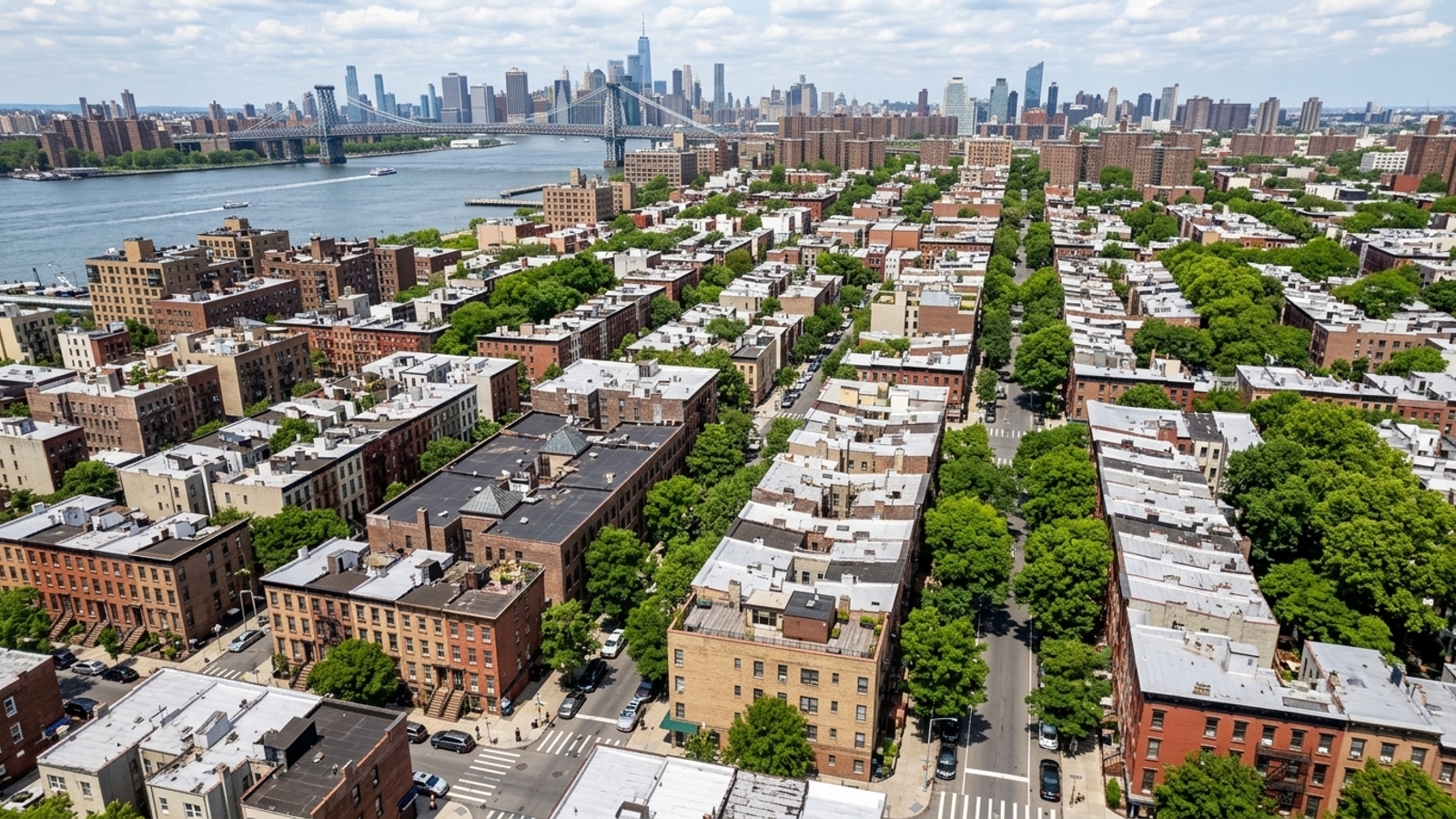
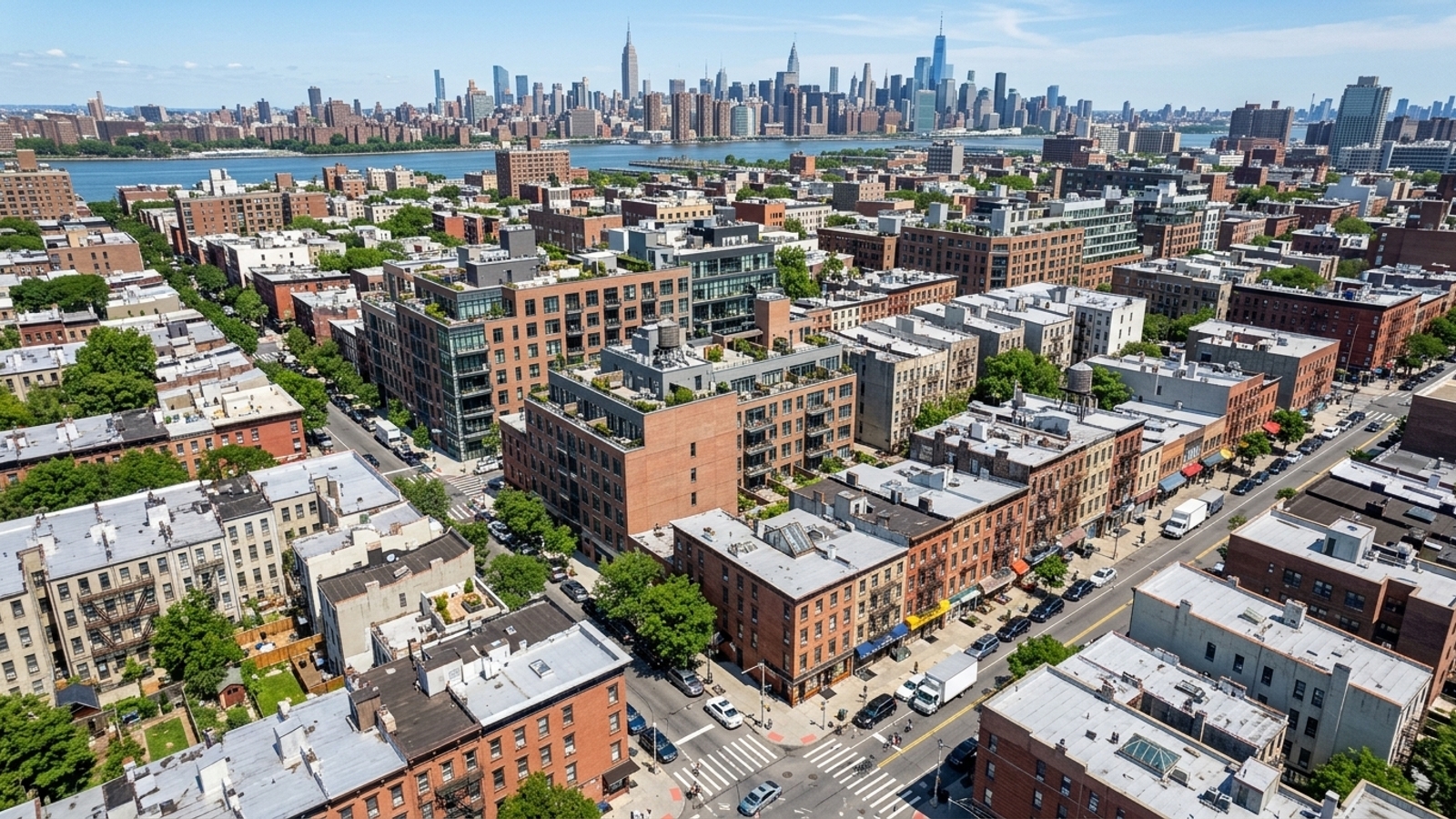
The median sale price in Williamsburg sits around $1,741,000, with homes spending roughly 43 days on the market before closing. Those numbers get buyers' attention - but the questions that follow are usually about the neighborhood itself. Buyers weighing the pros and cons of living in Williamsburg often start with its history. How did it get here? What are those massive brick buildings along the waterfront? Why does the old bank still have an "h" at the end of "Williamsburgh"?
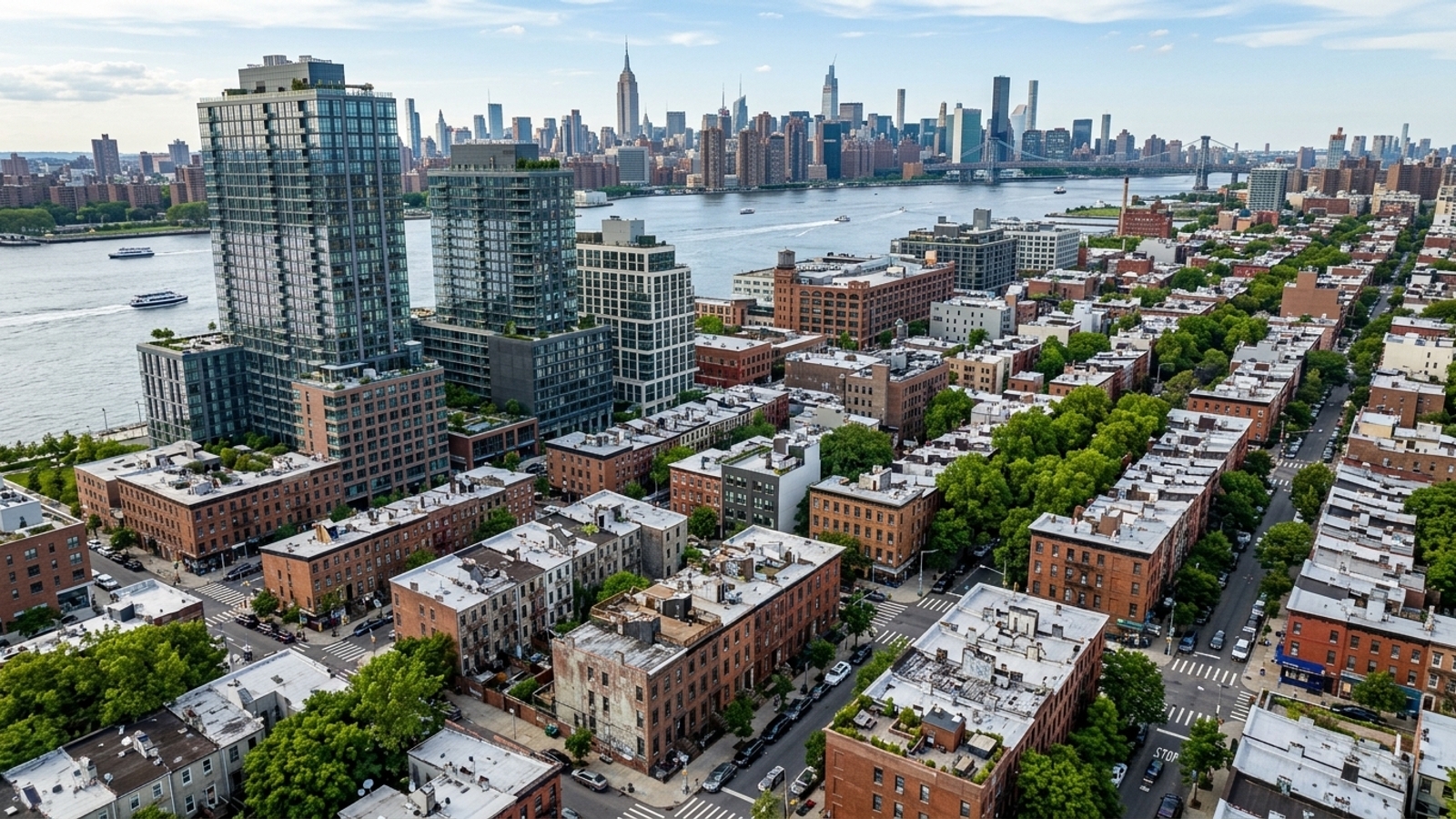
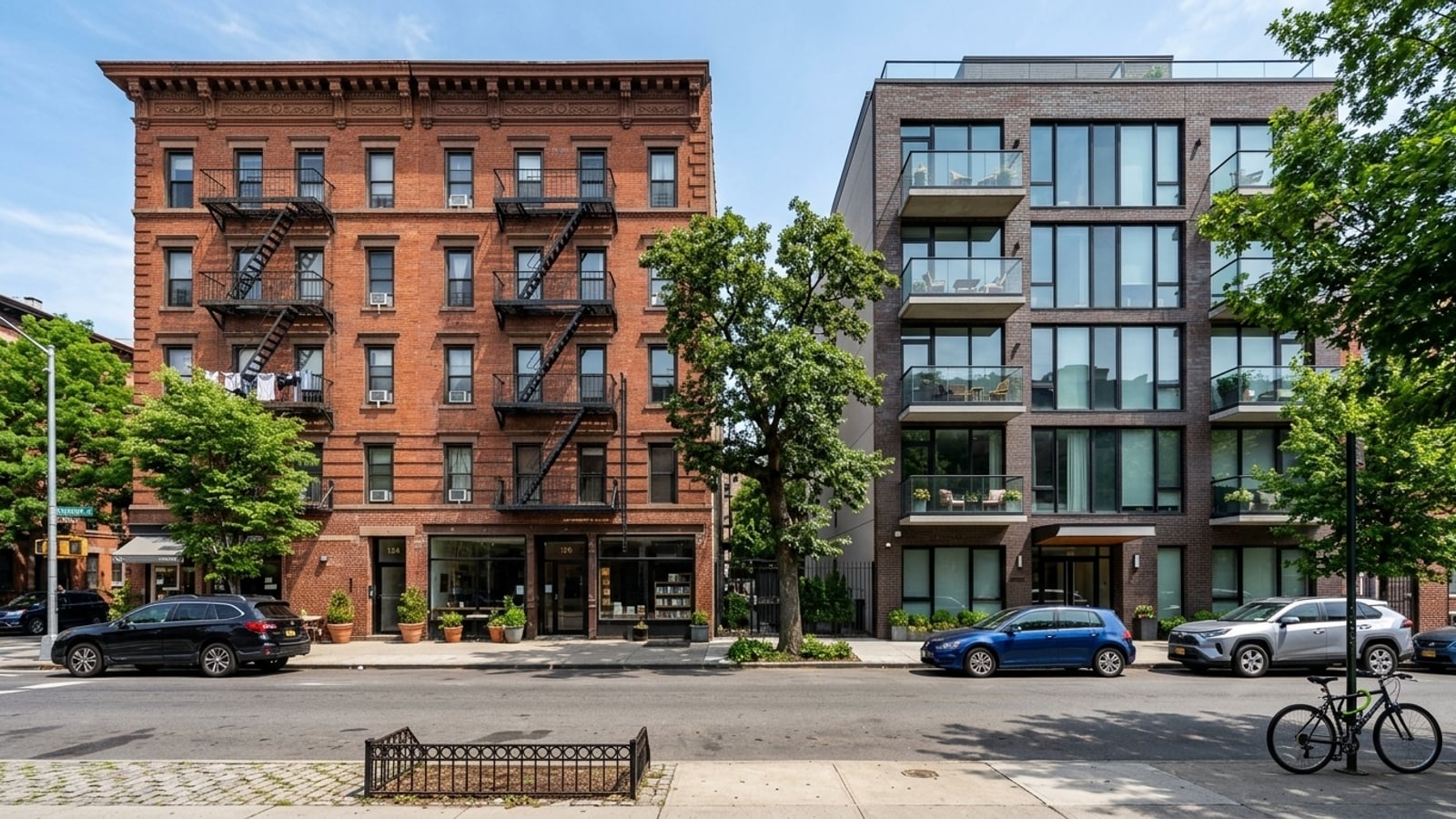
The area was settled as part of Dutch Bushwick in the 17th century and has been reinventing itself ever since. What you'll find today is preserved historic architecture sitting directly alongside modern development - sometimes on the same block, sometimes in the same building. This history gives you a sharper eye for what you're actually buying.
Williamsburg at a Glance: Facts and Foundations
It starts with a ferry. In 1802, Richard Woodhull purchased land and launched a local ferry service connecting this quiet agricultural tract to Manhattan. That single decision turned a backwater into a waterfront hub almost overnight, pulling in population growth and commercial investment faster than anyone had planned for.
Two centuries of evolution followed - industrial booms, artistic rebirths, waves of new residents - and yet the original street grid is still largely intact. You'll feel that logic in the layout when you're walking blocks. Modern new builds frequently incorporate 19th-century structural elements, and that's not an accident. It's the neighborhood asserting its own bones.
City, Town, or Neighborhood?
Williamsburg is a neighborhood within the borough of Brooklyn - not a standalone city or town, though it didn't start that way. The Village of Williamsburgh was formally incorporated in 1827. By 1851 it had grown into its own city, and then, just a few years later, the City of Brooklyn annexed it. The local government structure shifted several times through the 19th century as the population kept expanding.
That compressed arc - village to city to annexed neighborhood in under three decades - tells you something about how fast this place grew.
Location and County Lines
Williamsburg sits entirely within Kings County, NY, along the East River, facing the eastern edge of Manhattan. The waterfront position shaped its early shipping industry and still drives premium values today.
Kings County and the borough of Brooklyn are coterminous - they share the exact same geographic boundaries. So any property you purchase here falls under Kings County jurisdiction for taxes, public records, and local services. That's worth keeping straight when you're pulling records.
Sub-Neighborhood Divisions
Listings commonly break the area into three sections: North Williamsburg (Northside), South Williamsburg (Southside), and Central Williamsburg. The central section runs from Union Avenue to Bushwick Avenue and Woodpoint Road, roughly bounded by Grand Street to the south and Metropolitan Avenue to the north.
Each subsection has its own architectural character and its own inventory mix. Don't assume one tells you much about the other.
The Origin of the Name
Williamsburg is named after Colonel Jonathan Williams - military engineer, first superintendent of West Point, and grandnephew of Benjamin Franklin. Richard Woodhull brought him in to survey the land in the early 1800s, and when Williams finished laying out the early street grid, Woodhull named the settlement in his honor.
The original spelling included an "h" at the end. You'll still see "Williamsburgh" on the facades of several historic buildings in the area - it's not a typo.
The Early Surveyor
Colonel Williams came to the project with serious engineering credentials, and his connection to Benjamin Franklin gives the neighborhood's founding an unexpectedly prominent family tree. The organized grid he produced is what allowed rapid residential and commercial development to follow once the ferry service was running.
The layout didn't happen by accident. It was designed to grow.
Settlement and Timeline
The Village of Williamsburgh was formally incorporated in 1827. Population grew steadily through the early 19th century, pushed along by the ferry connection and expanding local industries. By 1851 the growth was sufficient to support cityhood, and Williamsburg incorporated as a city - though that status lasted only a few years before the City of Brooklyn annexed the municipality in 1854 and 1855.
Short-lived independence, long-lasting consequences.
Transition to Modern Inventory
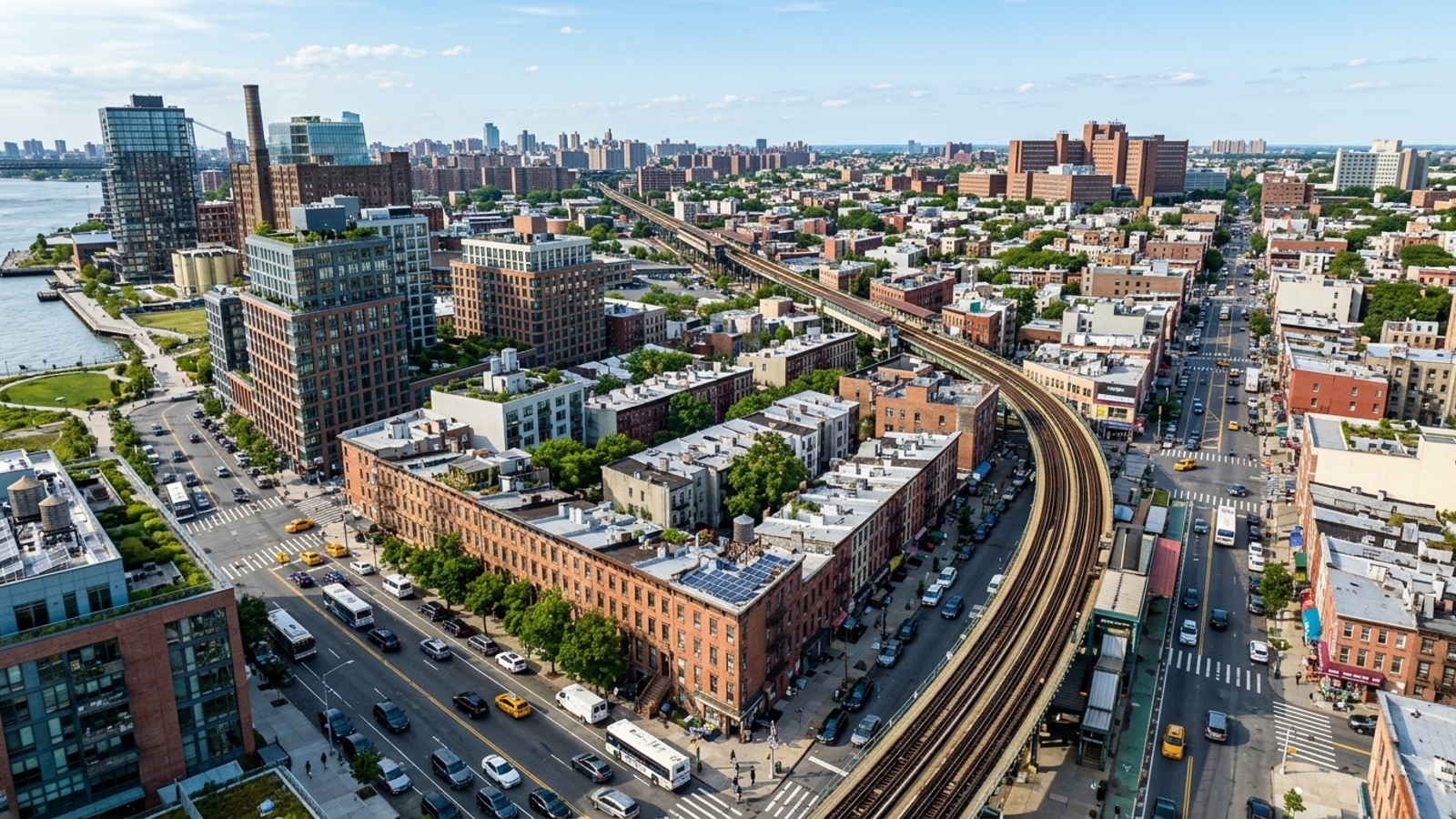
After annexation, the area industrialized heavily. Factories and warehouses lined the waterfront, producing the large brick structures that still define much of the skyline. A significant number of those industrial spaces have since been converted into residential lofts - and with current local inventory sitting at roughly 186 available homes, those historic conversions remain a meaningful slice of what's actually on the market.
Historic Landmarks and Museums
The Kings County Savings Bank Building at 135 Broadway was designated a NYC Landmark in 1966 and listed on the National Register of Historic Places in 1980. It now houses the Williamsburg Art & Historical Center. A short walk away, the Williamsburgh Savings Bank Building at 175 Broadway stands as another major landmark from the same era.
Two banks. Two landmarks. Both still anchoring the same stretch of Broadway they've occupied for well over a century.
The City Reliquary
The City Reliquary is a not-for-profit community museum in Williamsburg built around permanent displays of NYC artifacts and rotating community collections. It's not a typical history museum - it connects visitors directly to the past and present of New York City through the kinds of objects that don't usually end up behind glass anywhere else. For buyers trying to get a feel for the neighborhood's civic identity, it's worth an hour of your time.
Local Culture and Claims to Fame
Peter Luger Steak House has been here since 1887, when it opened as a German café and billiards hall. Zagat named it the best steakhouse in New York City for 28 years in a row. That's the kind of institutional gravity that doesn't move.
The broader culinary picture ranges from upscale dining to tacos to diverse street food - a mix that draws buyers who want walkable variety without driving to it.
Notable Residents
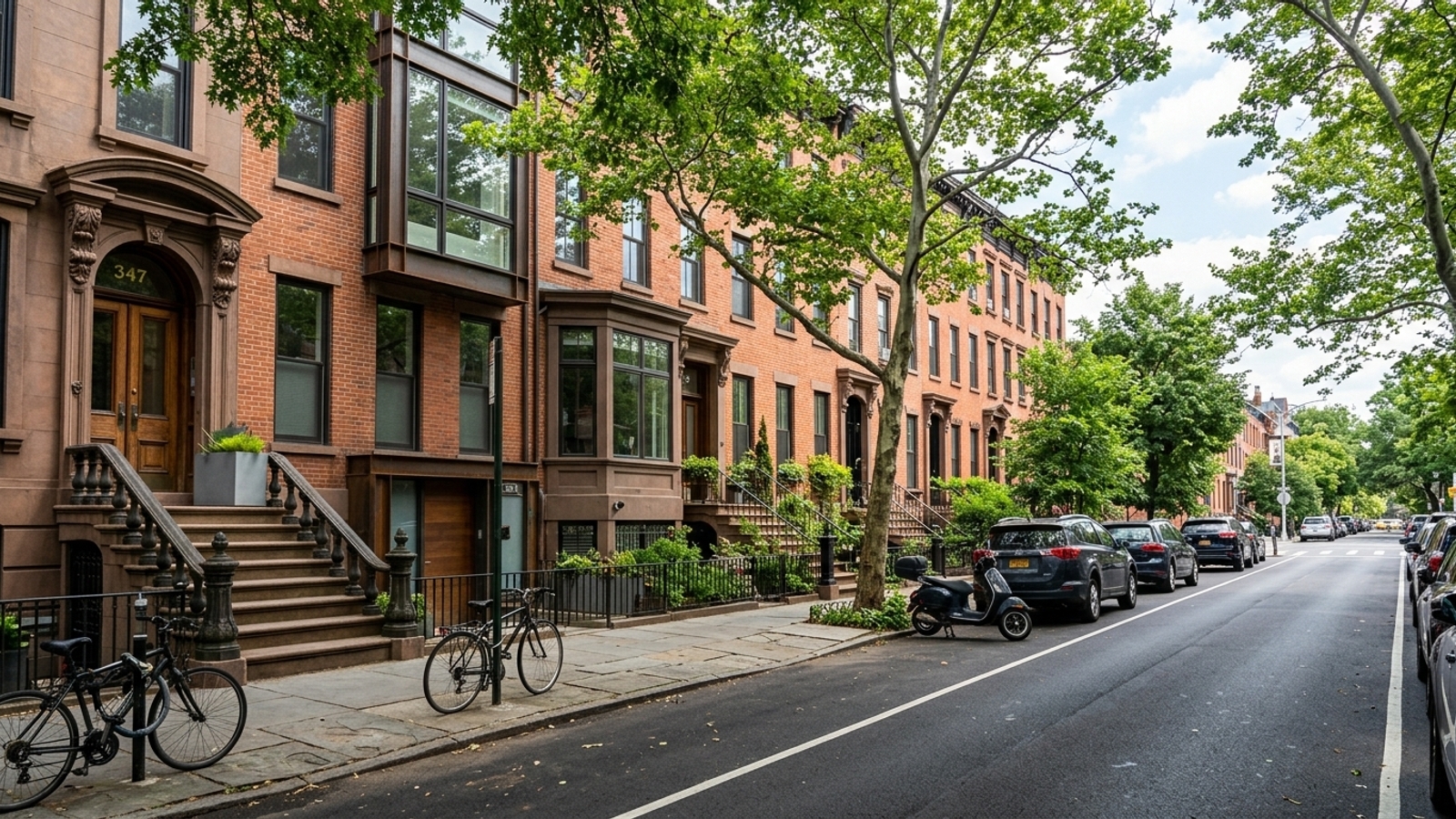
Author Henry Miller is the most prominent resident associated with Williamsburg's Fillmore Place Historic District. He lived there and described the street in one of his novels. That literary history layers onto the neighborhood's modern identity in ways that still show up in how people talk about the area - and, sometimes, in how properties in designated historic districts are priced.
Frequently Asked Questions
Do historic district designations in Williamsburg in Brooklyn, NY restrict how I can renovate a property?
Yes. Properties in areas like the Fillmore Place Historic District are subject to specific preservation rules governing exterior renovations. Before you plan any facade changes, you'll want to review local guidelines - not after you've already started drawing up plans.
How did the 2005 waterfront rezoning history impact long-term property values in Williamsburg?
It depends on the specific location, but broadly, waterfront rezoning opened the door to new residential development on former industrial parcels, shifting them toward high-density housing. The current median sale price of around $1,741,000 reflects where that long-term trajectory has landed.
What historical era were the famous converted industrial warehouse lofts in Williamsburg built?
Most of those industrial spaces went up in the late 19th and early 20th centuries, following Williamsburg's annexation by Brooklyn in the 1850s. The factories that defined the waterfront for generations are the same buildings that now show up as residential lofts in current listings.
Does the heavy industrial history of Williamsburg mean buyers should require specific environmental testing before closing?
Yes. Decades of manufacturing along the waterfront left a complex environmental footprint, and when you're purchasing a former industrial property, environmental testing is a reasonable and common part of due diligence. Review environmental reports before you close, not after.
How does the historical development of East Williamsburg compare to the Northside for buyers looking at neighborhood character?
It depends on the specific block. North Williamsburg (Northside) saw earlier waves of waterfront industrialization followed by recent luxury development. Other sections followed different paths and offer different architectural styles and types of available homes. Don't assume the character carries across the whole neighborhood uniformly.
Where can real estate buyers find the oldest surviving housing stock, like 1800s wood-frame houses, in Williamsburg in Brooklyn, NY?
Older housing stock is scattered throughout the neighborhood, including areas near the historic Fillmore Place. Development started around 1802, and some early structures survived the area's industrial expansion. You'll want to work with an agent who knows Kings County history well enough to point you to the right blocks.