Buyers targeting the Flatiron District in New York, NY, face a block-by-block search. The neighborhood is compact, but the building types range from 19th-century loft conversions to new-construction towers with full services.
The right location balances space, transit access, and carrying costs. With a median condo price hovering just under the mansion-tax threshold, the immediate surroundings of each address dictate which listings deserve an in-person tour.
Key Takeaway
There is no single best part of Flatiron. Start with the Ladies' Mile loft blocks if you want prewar space and ceiling height, or with the Madison Square Park blocks if park frontage matters more. Either way, you are buying in a slow, condo-driven market where only 3.8% of condo sales closed above list, so you have room to compare buildings and negotiate.
Who This Guide Is For
You are weighing a condo or co-op purchase in or near the Flatiron District and deciding which blocks and building types to tour first.
Flatiron District Housing Market Right Now
Flatiron is effectively a condo-only market, with condos making up 26 of the 28 sales in the 90 days ending September 30, 2026. The 32% jump in the condo median sale price rests on those 26 sales, which mostly reflects which specific units sold rather than values rapidly accelerating. Don't let that percentage push you into overpaying.
Buyers aren't currently bidding against each other for most units. Condos sit for a median of 83 days on the market, and the area holds 5.2 months of supply. That gives you time to ask for concessions or negotiate on listings that have lingered.
The data below comes from Redfin and should be used as a directional guide rather than financial advice.
At a Glance
- Median sale price, all homes: $1,969,448 (90 days ending Sept. 30, 2026; based on 28 sales)
- Median sale price, condos: $1,960,000 (90 days ending Sept. 30, 2026; based on 26 sales)
- Change in median sale price vs. a year earlier: all homes +7.6%, condos +32% (90 days ending Sept. 30, 2026; small samples of 28 and 26 sales, so treat as directional)
- Median days on market: all homes 79, condos 83 (90 days ending Sept. 30, 2026)
- Sale-to-list price: 100% for all homes and condos (90 days ending Sept. 30, 2026)
- Share sold above list: all homes 3.7%, condos 3.8% (90 days ending Sept. 30, 2026)
- Months of supply: 5.2 for all homes and condos (90 days ending Sept. 30, 2026)
- Active inventory: 47 homes, of which 45 are condos (90 days ending Sept. 30, 2026)
- Median price per square foot: $1,604 for all homes and condos (90 days ending Sept. 30, 2026)
Where the Flatiron District Begins and Ends
The Flatiron District sits within Manhattan Community Board 5, though its exact boundaries depend on who you ask. The city-designated Ladies' Mile Historic District covers an irregular area from roughly 15th Street to 24th Street, between Park Avenue South and west of Sixth Avenue, encompassing about 440 buildings across 28 blocks.
Real estate listings frequently stretch the Flatiron name to cover addresses in neighboring NoMad, Gramercy, and Union Square. Confirm where a building sits before committing to a viewing.
The area breaks into three distinct sections: the Madison Square Park blocks at the north end, the Ladies' Mile Historic District across the central and western avenues, and the Union Square and Park Avenue South edge along the southern and eastern borders.
Parts of the Flatiron District Compared
The Flatiron District's housing stock shifts noticeably from one avenue to the next, dictating the types of units available. Your search will look different depending on whether you prioritize historic architecture, park views, or transit access.
Because inventory is concentrated in condos, your decision comes down to the building's era and its immediate surroundings. The profiles below outline the trade-offs across the district's three main sections.
Ladies' Mile Historic District blocks
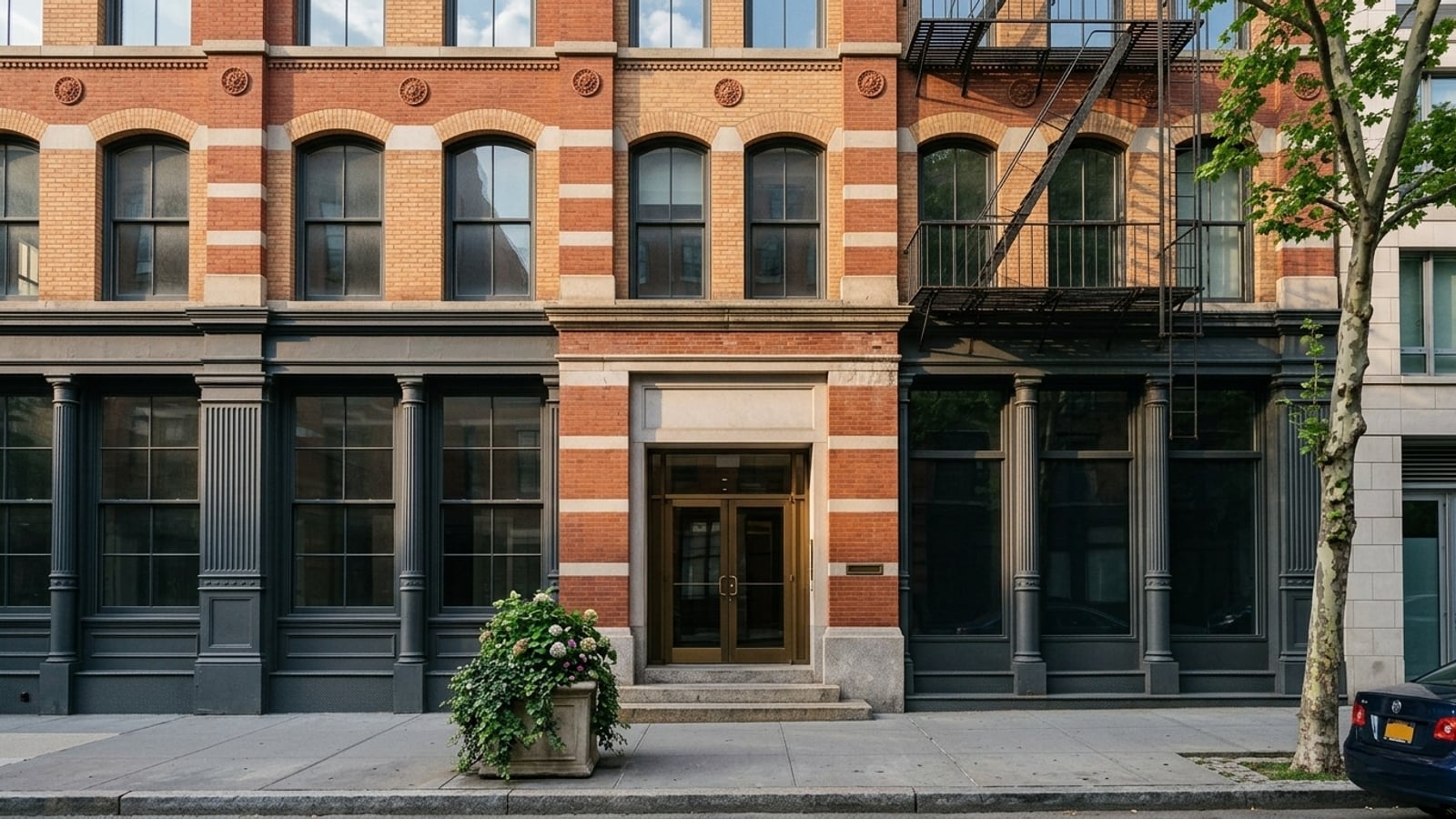
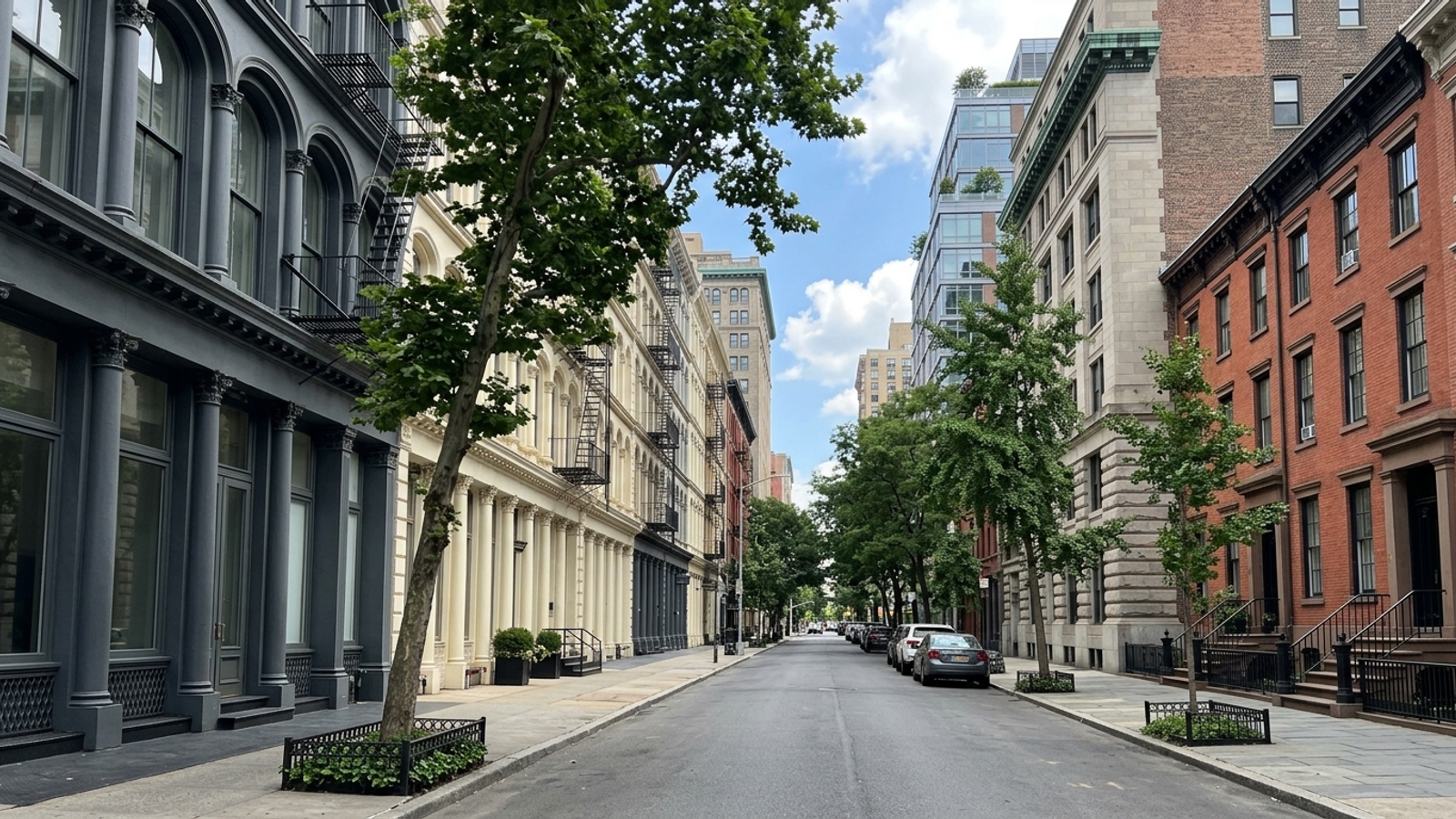
The Ladies' Mile Historic District is designated by the NYC Landmarks Preservation Commission, named for the 19th-century department stores that lined it. The housing stock here consists primarily of converted commercial and department-store buildings. These loft condos and co-ops typically offer high ceilings and large windows, which suits a buyer who wants volume over modern amenities.
The long time on market for condos gives you room to conduct the extra due diligence older conversions require.
The downside is that landmark status means exterior work, such as replacing windows or altering facades, needs Landmarks Preservation Commission approval. Ask the managing agent for the building's permit history and any planned facade, window, or elevator work before you go further.
Madison Square Park blocks
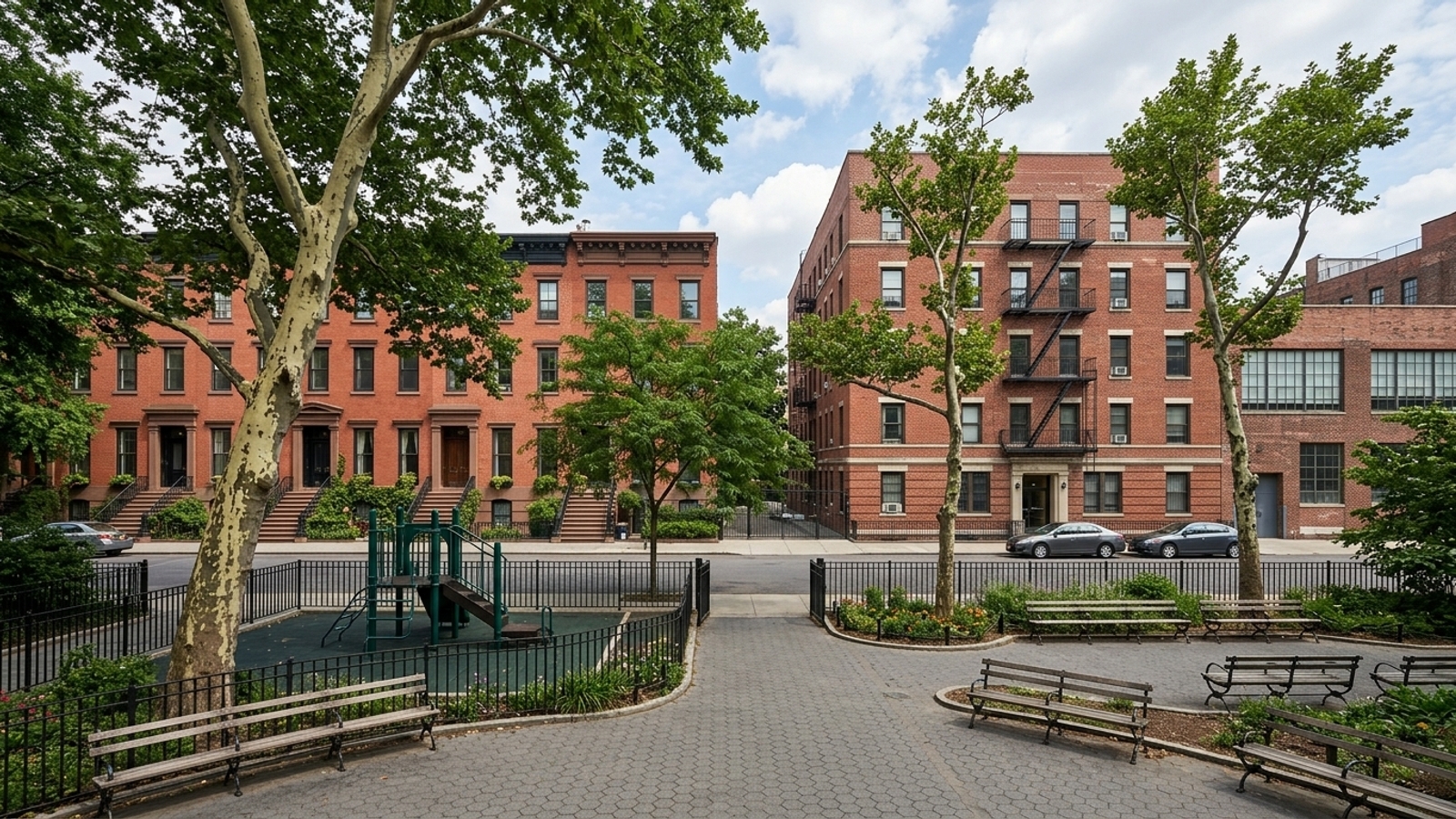
Madison Square Park serves as the district's front yard at its north end. This area blends into NoMad, where park-facing units and newer condo towers are concentrated. The blocks immediately surrounding the park suit buyers who want green space steps from their front door.
The plaza and blocks around the Flatiron Building draw steady visitor foot traffic, so this is a busy section. Park frontage also usually carries a premium. In any building you tour, compare the asking price per square foot of park-facing and interior units against the district median listed above.
Union Square and Park Avenue South edge
The 14 St-Union Square station serves multiple subway lines, making this edge well connected. The Union Square Greenmarket operates year-round on Monday, Wednesday, Friday, and Saturday on 17th Street and Union Square West. If your commute or travel schedule is the priority, this is where to start.
These are also the busiest blocks in the district: station crowds, greenmarket days, and Park Avenue South traffic are constants. Visit any building you're considering at evening rush hour and on a greenmarket day before making an offer.
Condos, Co-ops, and Loft Conversions
Condos dominate the Flatiron market, accounting for 45 of the 47 active listings in the 90 days ending September 30, 2026. Co-op sales fell under the 10-sale floor during this period, so condos will be the vast majority of what you see during your search.
The co-op inventory you do find comes with board package requirements, minimum down payment limits, and sublet policies. Ask for those rules upfront. Condos bypass the board approval process, but the trade-offs shift depending on the building's age: loft conversions offer volume but often feature older systems and fall under landmark rules, while newer condo buildings provide full services and modern amenities at higher carrying costs. Ask the managing agent for current common charges, the unit's real estate tax bill, the reserve fund balance, and any planned assessments.
What a Flatiron Home Costs
Dividing the condo median by the price-per-square-foot median implies a footprint of roughly 1,220 square feet. Because these medians come from different sales and the condo figure rests on just 26 transactions, treat that as a rough guide. Compare any listing's price per square foot to that benchmark before deciding it's well priced.
New York City's mansion tax is tiered, starting at 1% for purchases between $1 million and just under $2 million, then jumping to 1.25% at that threshold. That matters here: a price at or slightly over the threshold raises the buyer's rate on the entire purchase price, so negotiating a $2.02 million ask below it saves more than the price cut alone.
Closing costs also include the NYC Real Property Transfer Tax, which is 1% on residential sales of $500,000 or less, rising to 1.425% when the price exceeds $500,000. In new-development buildings, ask whether the sponsor requires the buyer to pay these transfer taxes. Condominiums and cooperative developments sit in Tax Class 2, so ask for the unit's current property tax bill. Have your closing attorney confirm all mansion-tax, transfer-tax, and closing-cost figures for your specific price.
Schools and Safety Data for the Flatiron District
The Flatiron District falls within Manhattan Community Board 5, which lists the 13th Precinct as one of its police precincts. You can pull precinct crime data from NYPD CompStat 2.0 and compare it year over year to review local incident reports.
School assignment depends on the exact address and changes over time based on district lines and enrollment. Check school assignment for the specific address with the NYC DOE school search rather than relying on neighborhood boundaries.
How to Narrow Your Flatiron Shortlist
A few pointed questions will focus your search faster than browsing the full inventory.
- Do you want prewar loft volume or a newer building with full services? Prewar points you to the Ladies' Mile Historic District blocks; newer points you to the Madison Square Park blocks and the "Condos, co-ops, and loft conversions" section.
- Is reaching the most subway lines from your door the priority? Start with the Union Square and Park Avenue South edge.
- Is your budget near the mansion-tax tier? Read "What a Flatiron home costs" before setting a price ceiling, because that tier changes your closing math.
- Are you open to a co-op? Read "Condos, co-ops, and loft conversions" first. Co-op sales were too few to show in the data, and board approval adds steps.
If you'd like help comparing specific buildings, Mukul "Micky" Lalchandani can pull recent sales for them.
Flatiron District Real Estate FAQ
What neighborhood is the Flatiron Building in?
The Flatiron Building anchors the north end of the district facing Madison Square Park. The surrounding neighborhood took its name from this structure.
Is the Flatiron District expensive?
The median sale price for a condo sits at $1,960,000, with a median price per square foot listed in the At a glance section above. A median-priced purchase here triggers New York City's mansion tax, which adds to your closing costs.
Is the Flatiron District nice?
A city historic district covers much of the area, Madison Square Park sits at its north end, and the 14 St-Union Square station sits at its south edge. Nearly all recent residential sales were condos. Visit your target blocks at different times of day to decide if the setting works for you.
Sources
- Redfin: Data Center
- NYC Landmarks Preservation Commission: Ladies' Mile Historic District Map
- NYC Landmarks Preservation Commission: Permits and Making Alterations
- Architectural Trust: Ladies' Mile Designation Report
- GrowNYC: Union Square Greenmarket
- Benjamin Taylor: Understanding the New York State Mansion Tax
- Sishodia: Do I need to pay transfer taxes
- NYC Department of Finance: Landlords, Co-ops, and Condos
- Wikipedia: Manhattan Community Board 5