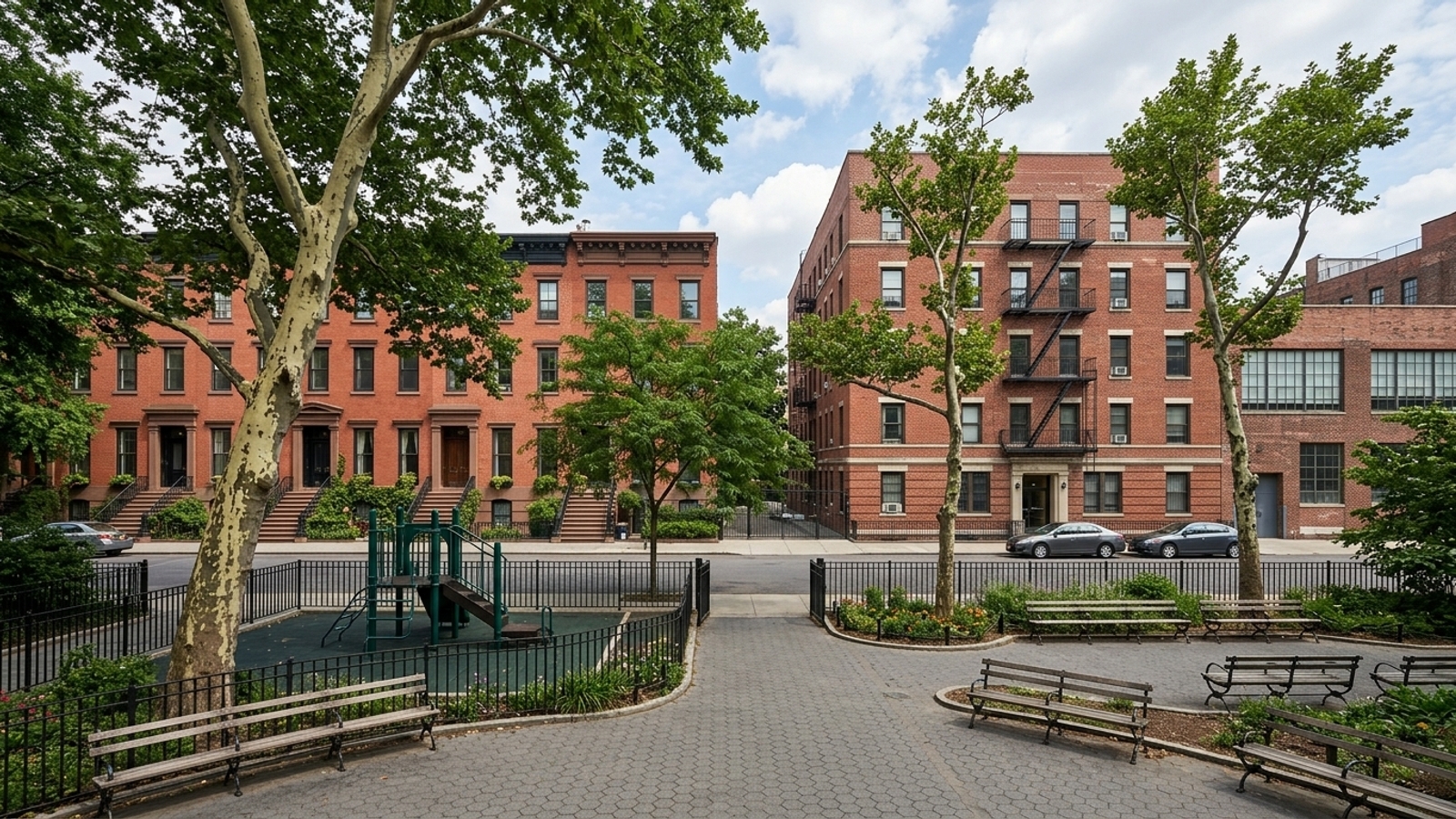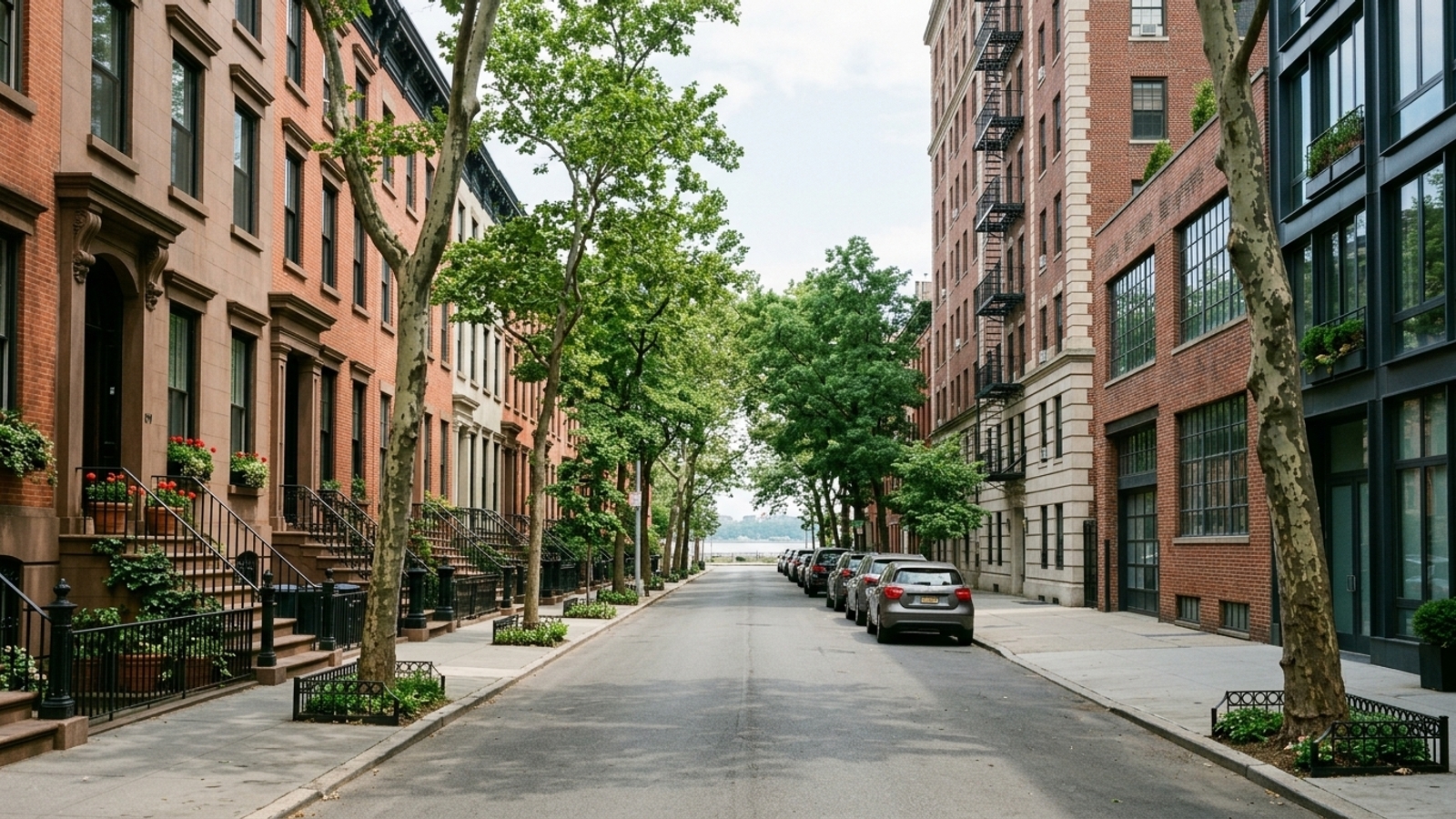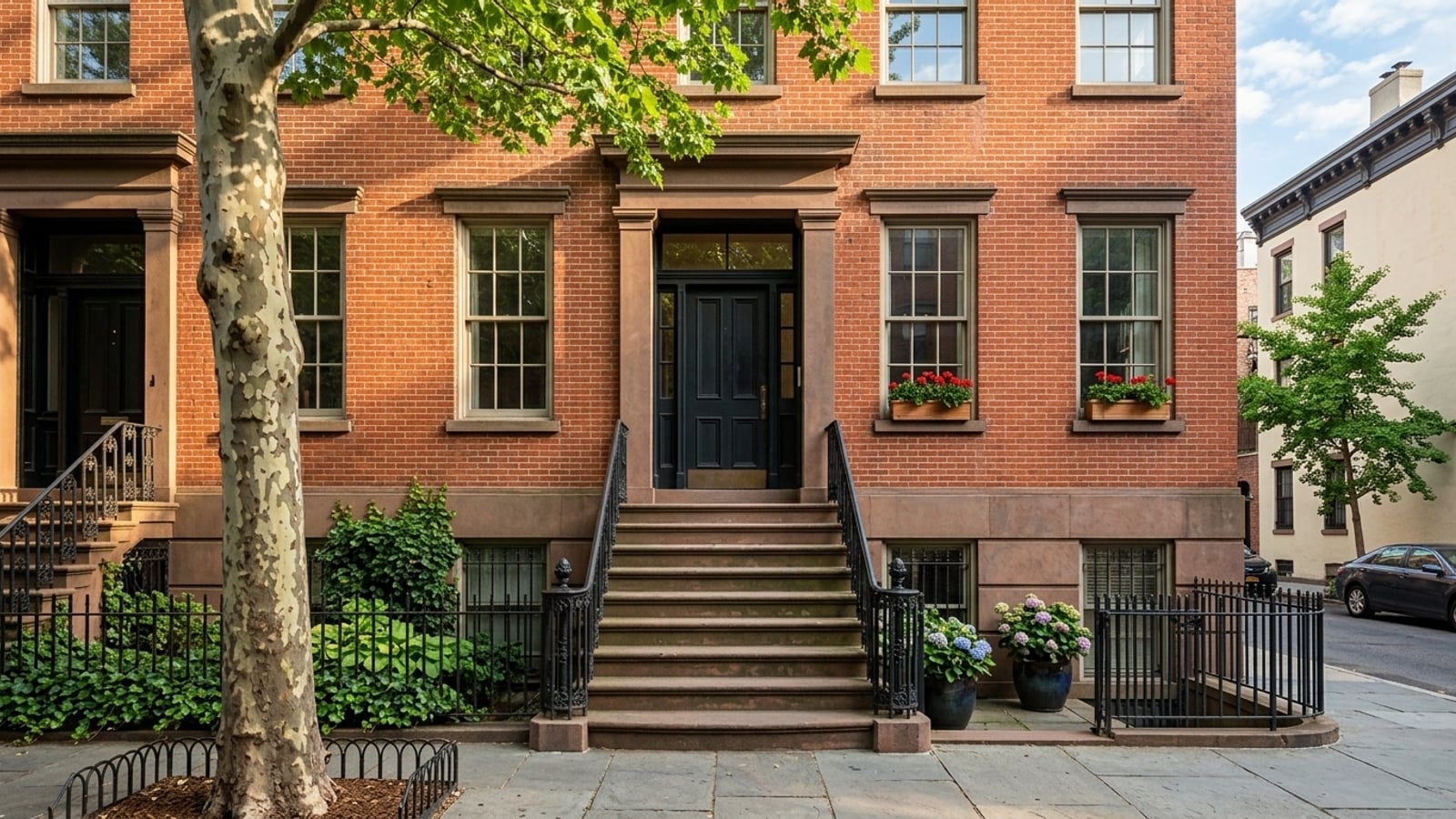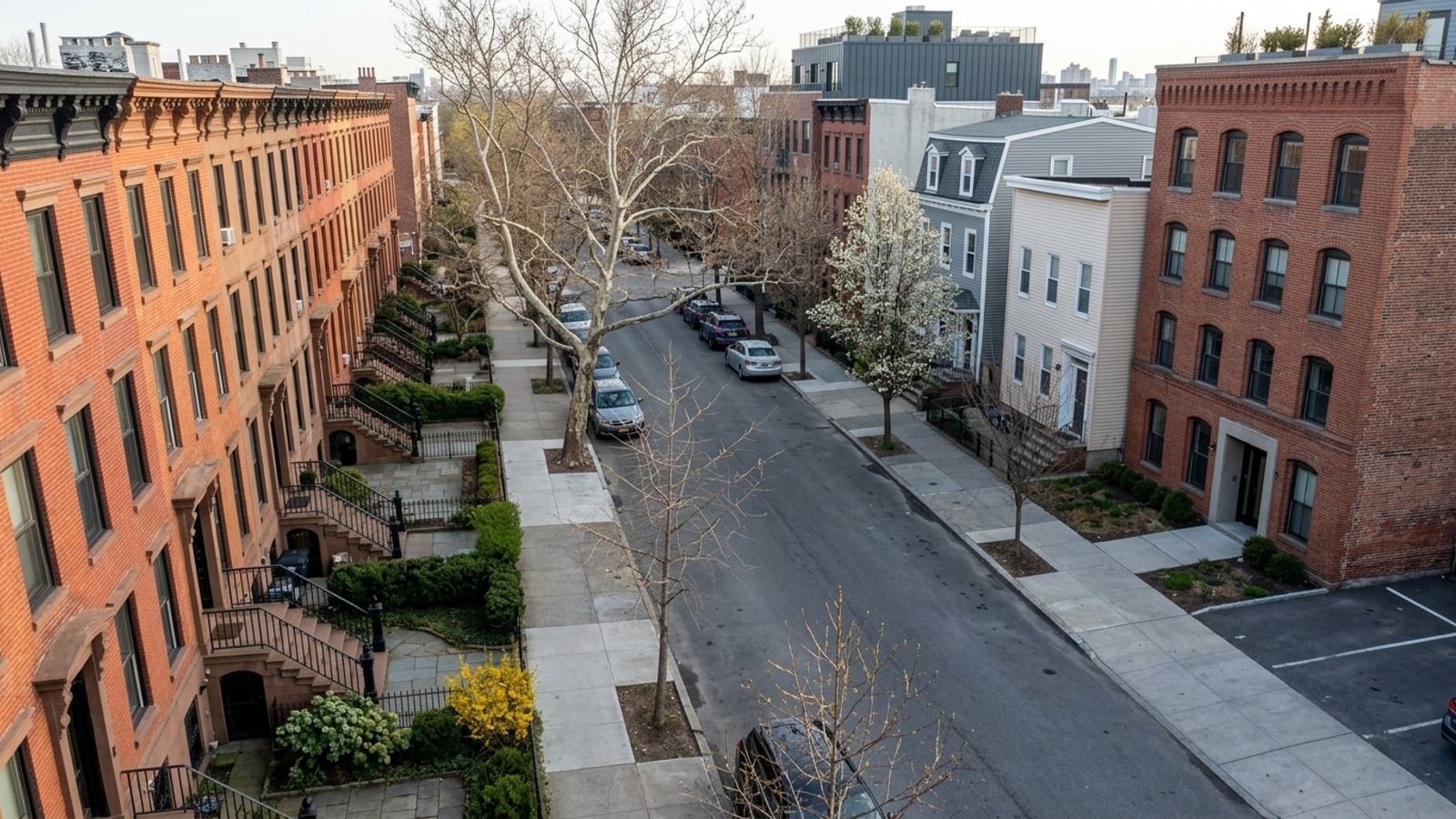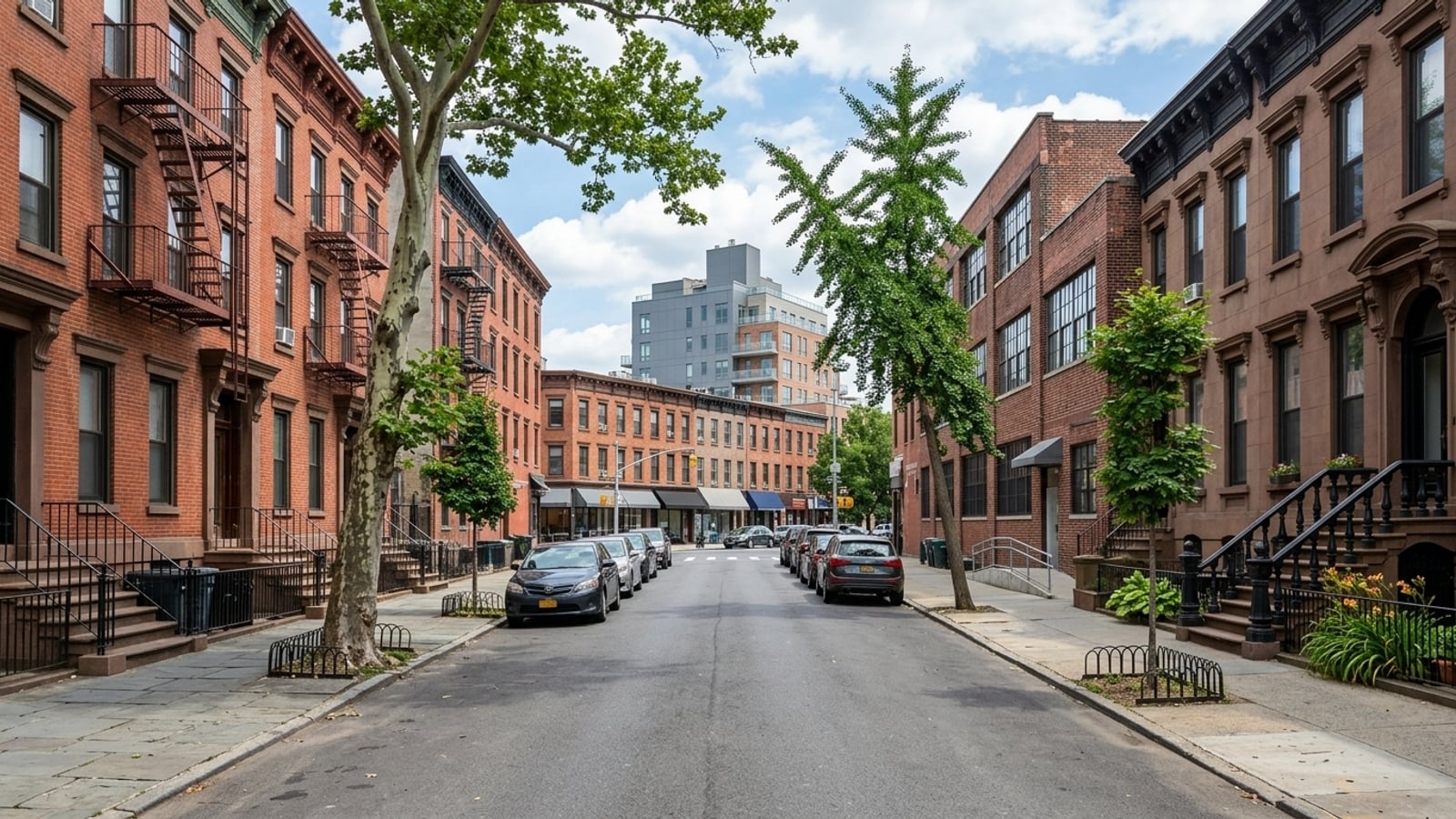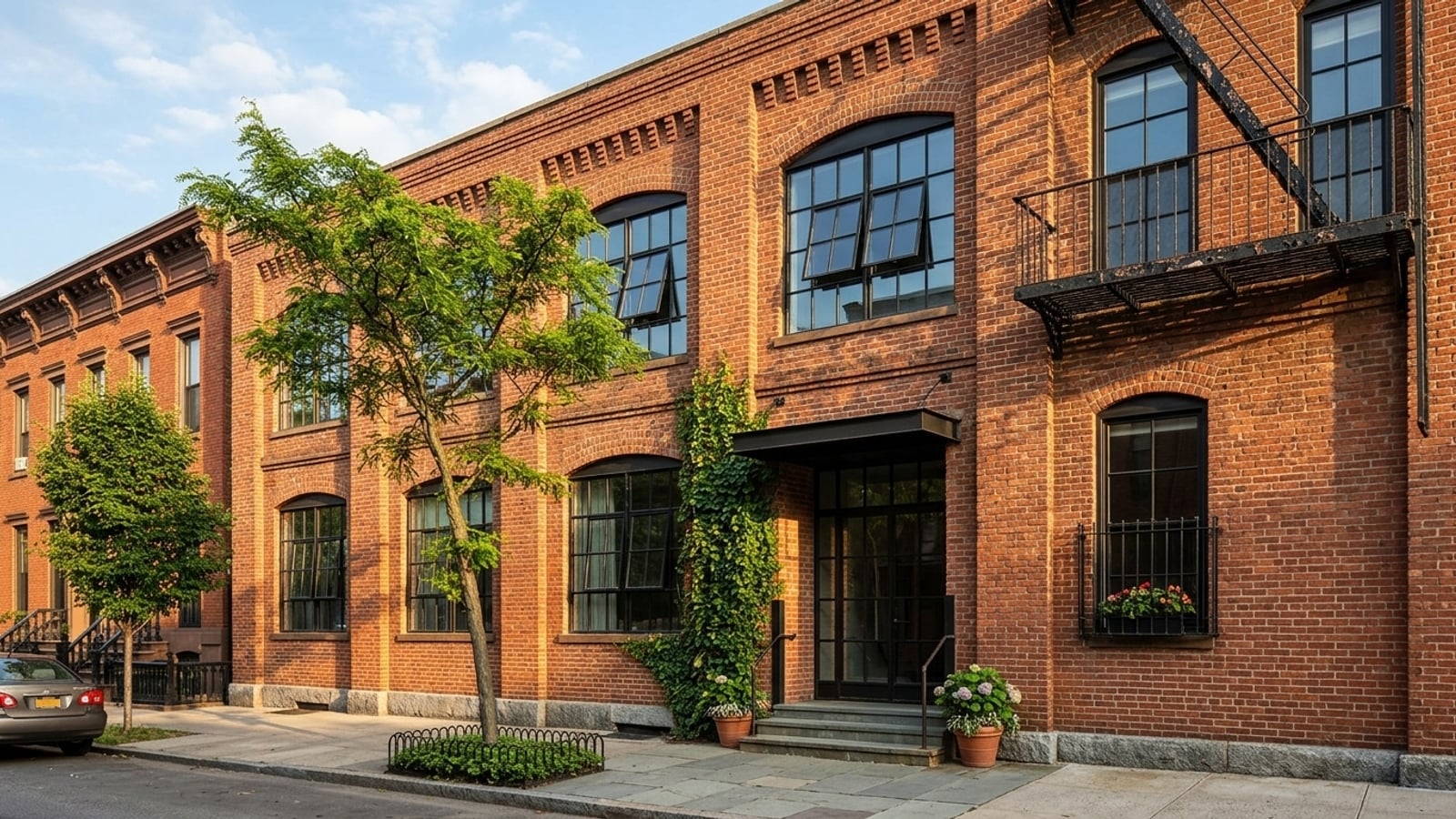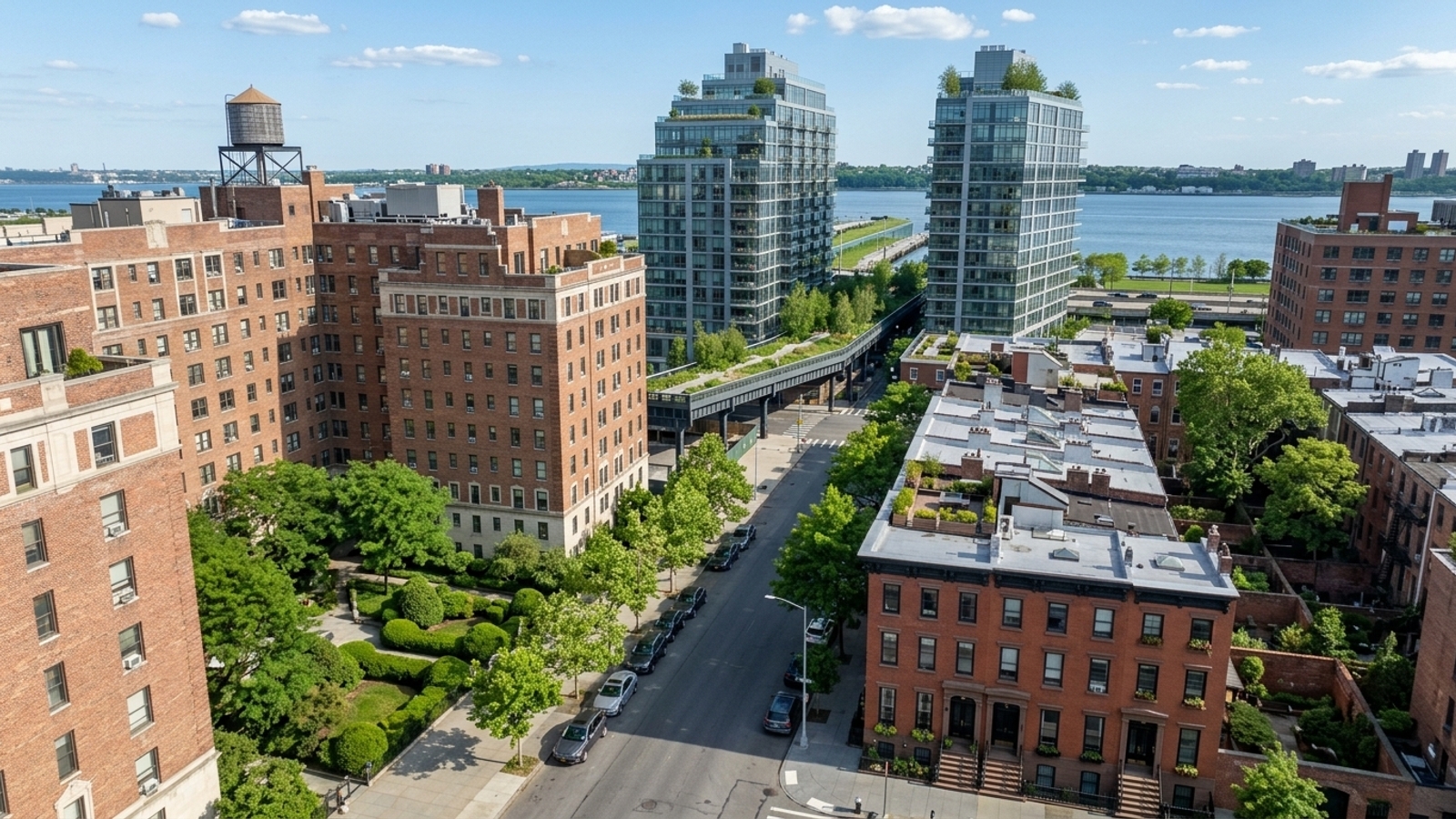
Chelsea spans the west side of Manhattan from roughly 14th Street to 30th Street. The housing stock shifts block by block, moving from glass condo towers near the Hudson River to 19th-century rowhouses in the center and loft conversions to the east. If you are buying a home in Chelsea, New York, NY, our breakdown details the local purchasing process.
Choosing a place to buy here comes down to the kind of building you want and the transit lines you need. The neighborhood's layout means you'll trade off between new construction, historic architecture, and proximity to major subway hubs.
Key Takeaway
The condo-heavy blocks of West Chelsea are where the market has softened most, with condos making up nearly all sales and prices down from a year ago, which gives buyers room to negotiate. If you prefer prewar or 19th-century architecture, look at the Chelsea Historic District or London Terrace instead, where co-op boards and landmark rules trade some flexibility for older buildings.
Who This Guide Is For
You're planning to buy a home in Chelsea and deciding which part of the neighborhood, and which kind of building, to focus your search on.
Chelsea Housing Market Outlook
In Chelsea, the part of the neighborhood you pick matters mainly because it decides the type of building you can buy. Condos are where the market has softened: they accounted for 143 of 155 total home sales in the 90 days ending September 30, 2026. The median condo sale price sits at $1,600,000, roughly 13.5% below the same period a year earlier.
At a median $1,714 per square foot, that median buys approximately 930 square feet of space. Buyers currently see about 5.1 months of supply and a median 69 days on the market, which gives you time and a reason to ask for terms on listings that have sat for a few months.
Despite those extra days on market, Chelsea condos still recently closed near their list price. The discount is already built into the asking prices, so don't expect deep cuts off the initial listing. About 12.1% of condos still sold above list, meaning well-priced units draw competition. Since the market data doesn't break out figures for individual sub-areas, the profiles below compare buildings, rules, and transit access rather than block-level prices.
West Chelsea: New Condos Near the High Line
The blocks west of Tenth Avenue hold most of Chelsea's newer development. The 2005 Special West Chelsea District rezoning allowed for residential towers and commercial development to replace former industrial sites.
This area runs alongside the High Line and borders Hudson River Park to the west. Because condos dominate these blocks, this is where buyers will see the most room to negotiate on terms for units that have lingered on the market.
West Chelsea Gallery District
Roughly spanning West 18th to 28th Streets between Tenth and Eleventh Avenues, this district mixes glass condo towers, loft conversions, and art galleries. The High Line park, which opened its first section in 2009 on a former freight rail line, runs directly through these blocks. Hudson River Park sits just across the West Side Highway.
The downside is that the blocks nearest the river flooded during Hurricane Sandy in 2012, and the closest subway stops are an avenue or more east. Look up any address on the NYC Flood Hazard Mapper, and ask the building where its mechanical systems sit and what flood insurance the association carries.
Northwest Chelsea near Hudson Yards
Moving north toward West 28th and 30th Streets brings you closer to the newest construction and the Hudson Yards development. This section offers the shortest walk to the 34th Street-Hudson Yards subway station, which officially opened in 2015 to extend the 7 train to the far west side.
What you give up is immediate quiet. Blocks here are still being built out, and construction can run for years next door. Search NYC DOB NOW for active construction permits on and next to the building before you commit.
Central Chelsea: Prewar and Historic Buildings
The middle avenues of Chelsea hold the neighborhood's oldest housing stock. Moving east from Ninth Avenue, the glass towers give way to 19th-century rowhouses and large prewar apartment complexes.
Sales move differently here because co-op boards and landmark regulations control the process. Rather than negotiating price cuts on sitting condos, buyers in central Chelsea face formal application rules and limited inventory.
Chelsea Historic District
This area covers parts of the West 20s, roughly between Eighth and Tenth Avenues. Designated by the NYC Landmarks Preservation Commission in 1970, the district features 19th-century architecture, including Cushman Row on West 20th Street, a group of Greek Revival townhouses dating to around 1840.
Exterior changes, such as windows, stoops, and rooftop additions, require Landmarks Preservation Commission approval. Townhouses trade so rarely that there were fewer than 10 sales in the recent 90-day window. Request the Landmarks Preservation Commission permit history before making an offer on any house.
London Terrace
Covering a full block on West 23rd and 24th Streets between Ninth and Tenth Avenues, this prewar complex opened in 1930. At the time of its completion, it was billed as one of the largest apartment buildings in the world.
What you give up is the flexibility of a condo. Many units here are co-ops that require a board application, financial review, and building-specific rules. Ask for the maximum financing allowed, any flip tax, the sublet policy, and the board's financial statements.
Penn South
Located between Eighth and Ninth Avenues in the West 20s, Penn South is a large limited-equity co-op. Buying an apartment here works through the co-op's own process rather than the open market.
You generally can't buy here the way you buy a condo. There's a waitlist and set eligibility rules, and limited-equity resale terms mean you don't keep market gains when you sell. Confirm the current waitlist status directly with the co-op.
East and South Chelsea: Loft Buildings and Subway Hubs
The eastern and southern edges of Chelsea are the most commercially active parts of the neighborhood. These blocks blend loft conversions, prewar co-ops, and newer condos with retail and wholesale businesses.
Transit access defines this side of Chelsea. The major subway lines and PATH trains cluster along Seventh Avenue, Sixth Avenue, and 14th Street, making these areas practical for daily commuters.
Flower District and Seventh Avenue
This section covers West 26th to 29th Streets between Sixth and Seventh Avenues, along with the Seventh Avenue corridor. Flower wholesalers have clustered on West 28th Street since the late 19th century. Commuters have a short walk to the 1 train on Seventh Avenue, the F/M and PATH at 23rd Street and Sixth Avenue, and the major 34th Street hubs.
These are working commercial blocks with early-morning deliveries and street activity. Walk the block around 6 a.m. on a weekday before you make an offer to see the delivery traffic firsthand.
Lower Chelsea Near 14th Street
Running from West 14th to 18th Streets around Eighth and Ninth Avenues, this area borders the Meatpacking District. Housing includes prewar walk-ups, co-ops, and some condos. Residents have direct access to the A/C/E/L subway station at 14th Street and Eighth Avenue, as well as Chelsea Market, which occupies the former Nabisco factory complex where the Oreo cookie was first produced in 1912.
Weekends are a different story. Being at the High Line's southern end and next to Chelsea Market means heavy visitor foot traffic, with some late-night spillover from the Meatpacking District. Visit on a Friday night and on a Saturday afternoon to check the crowd levels.
How to Choose a Part of Chelsea
Your search should start by determining whether you need a condo or if you're open to a co-op with board approval. Condo-first buyers should read the West Chelsea and east and south Chelsea sections, while co-op-open buyers should review central Chelsea. You'll also need to decide if you want a newer building with amenities or prewar and 19th-century construction.
Transit needs play a major role. If you want several subway lines within a short walk, focus on the Flower District and Seventh Avenue or lower Chelsea near 14th Street. If you rely on the 7 train, northwest Chelsea near Hudson Yards is the closest option.
If you can wait on a list or handle a longer approval process, Penn South and central Chelsea co-ops stay in play. If not, stick to condo listings anywhere in Chelsea that have been on the market longer than the median days on market, as that's where you'll have the most room to negotiate on terms.
Buying a Home in Chelsea
Purchasing property in Manhattan involves specific ownership structures and closing costs that alter your final budget. Because the typical Chelsea sale sits well above $1 million, buyers face transaction fees that don't apply in lower price brackets.
Comparing building types and anticipating state taxes will help you compare listings accurately. We can help you review building financials and estimate closing costs on specific units.
Condo or co-op in Chelsea
Condos dominate the current Chelsea market, making up 143 of the 155 total sales in the recent 90-day window. The 12 non-condo sales are too few to report separately, so co-op pricing has to come from building-level comparable sales. Practical differences between the two include board approval, financing limits, sublet policies, flip-tax rules, and whether you pay common charges or maintenance.
A co-op board can turn down a buyer after the contract is signed, so build the board timeline into your closing date. Ask the managing agent for current maintenance or common charges and the most recent financial statements.
Closing costs and the mansion tax
New York State imposes a 1% mansion tax on residential real property purchases of $1,000,000 or more. At the median condo price in Chelsea, nearly every transaction in the neighborhood triggers this tax, which the buyer pays at closing.
In new-development sponsor sales, the buyer may also be asked to pay the transfer taxes that the seller usually pays. Ask your attorney to review the offering plan to confirm who pays transfer taxes before signing a contract.
At a Glance
- Condo median sale price: $1,600,000 (condo, 90 days ending 2026-09-30, Redfin)
- Condo median sale price change vs a year earlier: -13.5% (condo, 90 days ending 2026-09-30)
- Condos sold: 143 (condo, 90 days ending 2026-09-30)
- Condo median price per square foot: $1,714 (condo, 90 days ending 2026-09-30)
- Condo median days on market: 69 (condo, 90 days ending 2026-09-30)
- Condo sale-to-list ratio: 99.2% (condo, 90 days ending 2026-09-30)
- Condos sold above list price: 12.1% (condo, 90 days ending 2026-09-30)
- Condo months of supply: 5.1; condos for sale: 238 (condo, 90 days ending 2026-09-30)
- All homes median sale price: $1,694,525, -8.4% vs a year earlier (all homes, 90 days ending 2026-09-30)
- All homes sold: 155; median days on market: 69 (all homes, 90 days ending 2026-09-30)
- All homes sale-to-list ratio: 99.2%; sold above list: 12.5% (all homes, 90 days ending 2026-09-30)
- All homes months of supply: 5.2; homes for sale: 265; median price per square foot: $1,708 (all homes, 90 days ending 2026-09-30)
- Co-ops and townhouses: fewer than 10 sales each in the window, so no separate figures are reported
Frequently Asked Questions
What is Chelsea like in New York?
Chelsea's housing ranges from 19th-century rowhouses to prewar complexes, a postwar co-op, and glass condo towers along the High Line. The neighborhood is anchored by the High Line, Hudson River Park, numerous art galleries, and Chelsea Market.
Where are Chelsea's boundaries in Manhattan?
Chelsea generally runs from West 14th Street to West 30th Street, and from around Sixth Avenue west to the Hudson River. The neighborhood borders Hudson Yards, the Flatiron District, the Meatpacking District, and the West Village. Definitions vary by source, as Manhattan Community District 4 covers a much larger area extending up to 59th Street.
How can I check crime data for a Chelsea address?
You can review local statistics using NYPD CompStat 2.0 and the NYC Open Data NYPD complaint map. Look up the specific precinct covering your address and compare the same time periods year over year. Precinct totals cover multiple blocks and neighborhoods.
Sources
- Redfin: Data Center
- Manhattan Community Board 4
- NYC Zoning Resolution: Special West Chelsea District
- Friends of the High Line Fact Sheet
- NYC Planning: Resilient Neighborhoods West Chelsea
- Historic Districts Council: Chelsea Historic District
- Architectural Trust: London Terrace
- Wikipedia: 23rd Street Station (PATH)
- Scouting, NY: Flower District
- Wikipedia: Chelsea Market
- NYS Department of Taxation and Finance: Real Estate Transfer Tax