


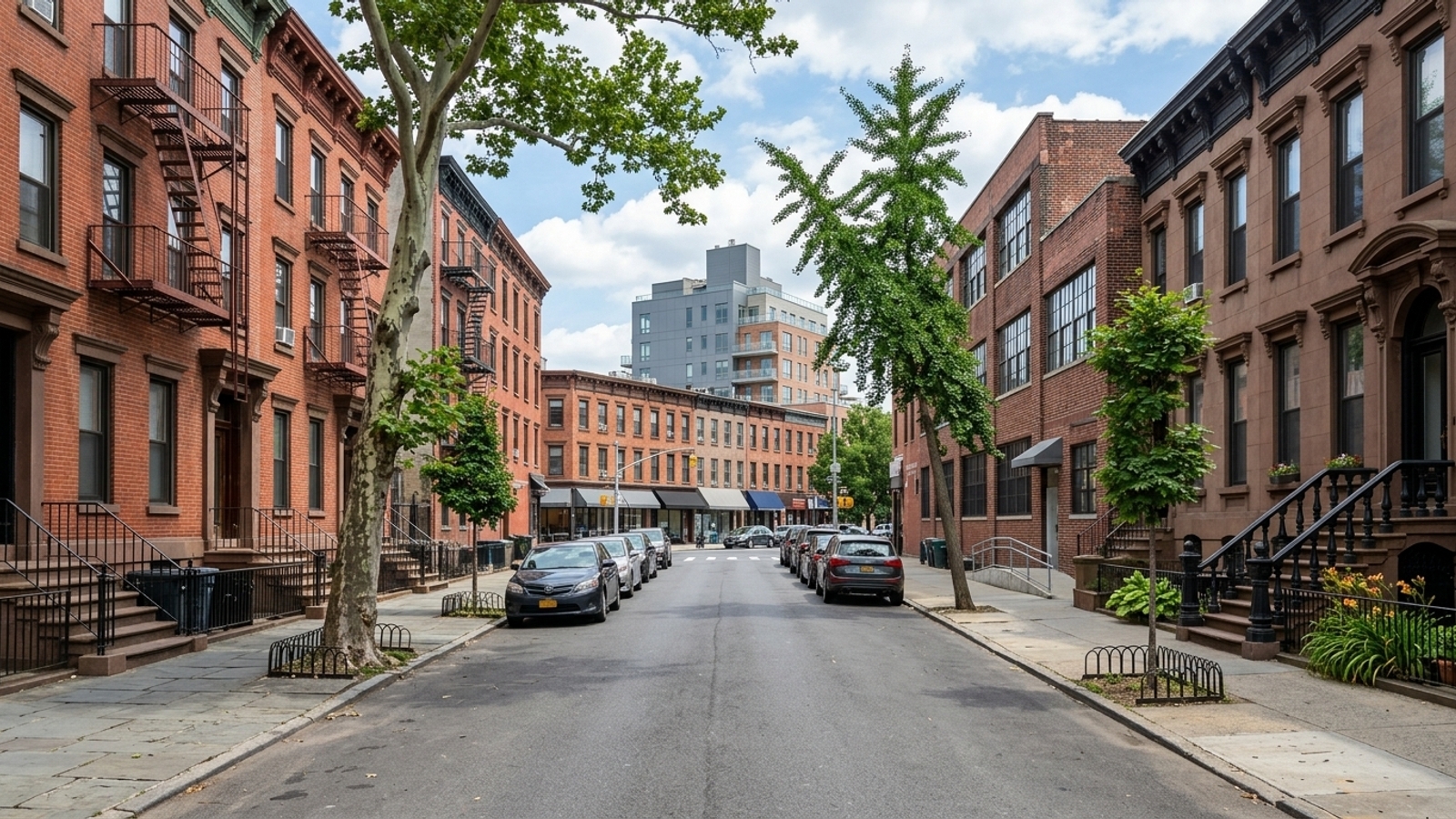
The median sale price for homes across the best neighborhoods in Williamsburg, Brooklyn is currently around $1,874,000. Properties are spending roughly 49 days on the market before closing.
If you're weighing Bedford Avenue vs Williamsburg real estate, the core question is whether you want to live on the neighborhood's main commercial corridor or on the quieter blocks surrounding it. That decision comes down to what kind of property you're after and how much street-level activity you're willing to absorb on a daily basis.
Where Bedford Avenue Fits Into Williamsburg
Bedford Avenue cuts straight through the neighborhood and acts as a dividing line between the northern and southern sections. Step out your front door onto the avenue and you're in dense foot traffic. Move a few blocks east or west and the streetscape shifts - either to quieter residential blocks or to the large-scale waterfront developments closer to the river.
Both locations have real transit advantages for commuters heading into Manhattan or around Brooklyn, but your specific address determines which subway line or ferry stop becomes part of your routine.
Transit Access and Commuting
The L train station at North 7th Street sits right on Bedford Avenue - and it's the busiest subway station in Brooklyn outside of Downtown Brooklyn. That's not a small distinction if you're commuting daily.
Live a bit deeper into Williamsburg and you'll likely lean on the Metropolitan Avenue/Lorimer Street complex instead. That station serves both the G and the L at all times, which gives you a transfer option the Bedford Avenue stop doesn't. The East River Ferry is also in the picture for both locations, with North Williamsburg Landing serving the broader area.
Housing Costs and Property Styles
About 156 homes are currently in inventory across the Williamsburg market. Sellers are doing well - recent data shows homes closing at roughly 99.7% of list price.
The contrast between living on the avenue and living on the surrounding blocks shows up clearly in both building types and price points. The waterfront and the inland streets are genuinely different markets with different architectural characters.
Current Prices and Rents
The Williamsburg median sale price sits at roughly $1.87 million across the board, though co-ops can be found closer to $503,000. Renters are looking at median asking rents around $4,750 per month.
Major real estate trackers don't break out a separate median for Bedford Avenue specifically. That said, listings directly on the corridor have historically come in lower per unit than the new condo towers on the water - the building stock is just older and smaller in scale.
Walk-Ups vs. Waterfront Towers
The housing along Bedford Avenue itself is mostly older walk-up apartment buildings and converted industrial lofts. It's the part of Williamsburg that still reads like Williamsburg used to look.
The broader neighborhood is a different story - attached houses, glassy new condo towers, and everything in between. The East River waterfront has seen extensive luxury high-rise construction, with developments like 420 Kent and 325 Kent Avenue going up alongside the Domino Park redevelopment.
Daily Life, Shopping, and Parks
Restaurants, cafes, and bars now account for 45% of the storefronts on Bedford Avenue. The corridor has shifted well past local grocers and bodegas - national retailers like Apple, Whole Foods, Patagonia, Nike, and Madewell now line the street.
Going deeper into Williamsburg means trading that immediate retail access for closer proximity to specific parks and a quieter street environment. The neighborhood has major green space on both its northern and western edges.
Retail on the Main Strip
Bedford Avenue is the commercial spine of the neighborhood and is consistently recognized as one of the most expensive retail strips in the country. If you live on the avenue, that's all right outside your door.
Residents a few blocks over still walk to Bedford for shopping. They just don't live with the commercial foot traffic on their own block, which is either a drawback or a relief depending on your personality.
Green Spaces and Waterfront Access
Your park changes depending on where in Williamsburg you land. McCarren Park sits at the extreme northern edge, bordering Greenpoint - it's most convenient if you're near North 7th through 12th Streets.
Domino Park anchors the southern waterfront near South 2nd and 3rd Streets, about a 10-minute walk from the Bedford Avenue L stop, and it sits much closer to the Williamsburg Bridge.
Frequently Asked Questions
What is the difference in home prices between Bedford Avenue and the rest of Williamsburg?
Specific median prices aren't tracked exclusively for Bedford Avenue, but the broader Williamsburg median sale price is currently around $1.87 million. Homes directly on the avenue tend to be in older walk-ups, which generally price lower per unit than the multi-million dollar luxury condos on the waterfront.
What types of properties are available on Bedford Avenue compared to Williamsburg?
Bedford Avenue is dominated by older walk-up apartment buildings and converted industrial lofts. The broader Williamsburg area offers a wider variety - attached houses inland, and new high-rise luxury condo towers along the East River waterfront.
Do homes on Bedford Avenue sell faster than properties located deeper in Williamsburg, Brooklyn?
Local data doesn't separate days on market for the avenue versus the rest of the neighborhood, so there's no clean answer. What we do know is that across all of Williamsburg, homes currently spend roughly 49 days on the market.
Is noise a major drawback when buying a condo directly on Bedford Avenue versus a quieter side street in Williamsburg?
Yes, it's a real factor. Bedford Avenue is a dense commercial corridor where restaurants and bars make up 45% of the storefronts, and the L train stop at North 7th Street brings heavy daily foot traffic.
Are monthly HOA fees and property taxes generally higher for buildings on the Bedford Ave corridor compared to the Williamsburg waterfront?
Fees are typically higher on the waterfront. The new luxury high-rises there come with extensive amenities, while Bedford Avenue's older walk-up buildings generally have fewer shared facilities and lower carrying costs to match.
Is buying an investment property near the Bedford Avenue L train a better strategy than buying in East Williamsburg?
It depends on your budget and goals. The Bedford Avenue L stop is the busiest subway station in Brooklyn outside of Downtown, with immediate access to major retail like Whole Foods and Apple. Areas further east offer different housing styles and access to the G train at Metropolitan Avenue/Lorimer Street. Neither is the obvious answer without knowing more about what you're trying to accomplish.


