Undivided Real Estate

Why Tribeca Endures as Manhattan's Benchmark for Luxury Living

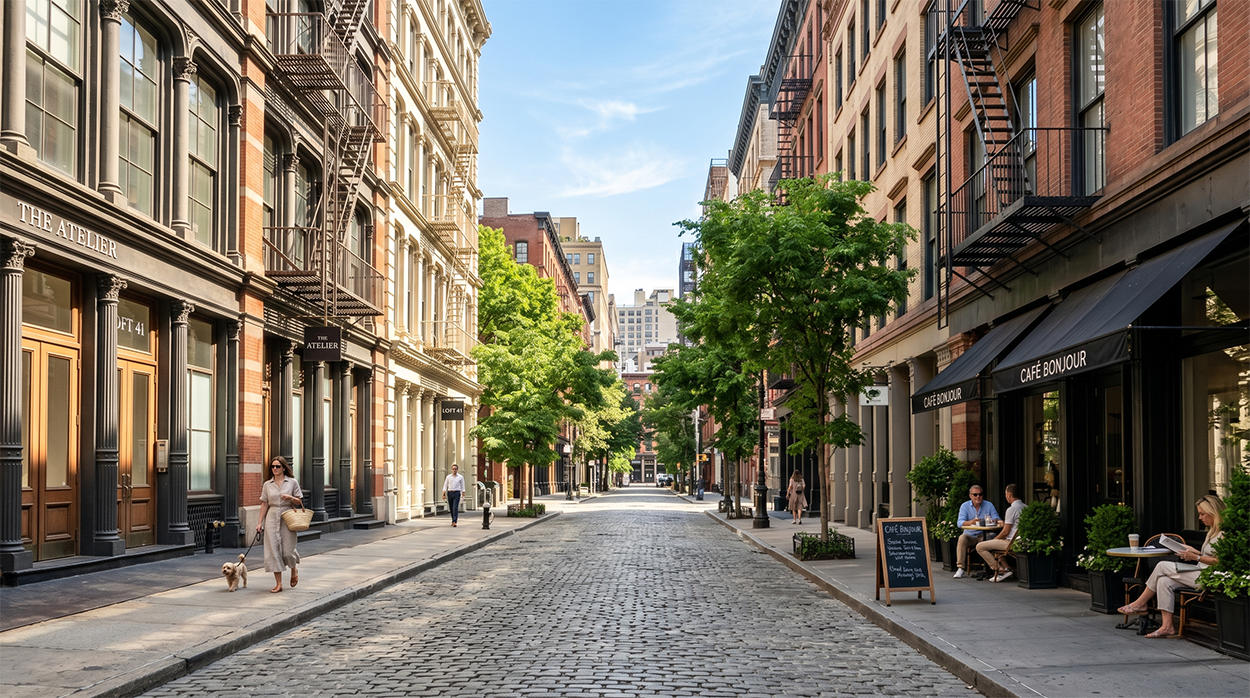
Tribeca neighborhood cobblestone street view with shops and dinin

Overview

Where Is TriBeCa?

Tribeca (short for "Triangle Below Canal Street") sits at the western edge of Lower Manhattan. Its rough boundaries are Canal Street and SoHo to the north, Broadway and the Civic Center to the east, Vesey and Murray Streets and the Financial District to the south, and the Hudson River and Hudson River Park to the west.

Why Sophisticated Buyers Are Choosing Tribeca Right Now

Tribeca occupies a singular position in the Manhattan hierarchy: a low-rise, cobblestone enclave of cast-iron lofts and landmark conversions that consistently prices at the top of the borough while still trading well below comparable Hudson Yards or Billionaires' Row product on a per-foot basis when adjusted for square footage and ceiling height. For buyers who prioritize space, architectural integrity, and durable scarcity, it remains the benchmark against which other downtown neighborhoods are measured.

Condo Median Price per Sq Ft
$2,030
New Development Median Price per Sq Ft
$2,400–$3,500+
Property Types
Lofts, Condos, Co-ops, Townhomes
Average Days on Market
120-180
Walk Score
100
Transit Score
100
Nearby Business Districts
FiDi, SoHo, Hudson Yards, Midtown

Neighborhood Map

Tribeca delivers a Manhattan value proposition built around scarcity: oversized loft floor plates rarely available in newer construction, two protected historic districts that constrain new supply, and a riverfront location that pairs Hudson River Park access with immediate connectivity to Midtown and Brooklyn. For the analytical buyer, it is a market where square footage, ceiling height, and light typically deliver more usable luxury per dollar than vertical Midtown alternatives, even at headline prices.
Investment Analysis:
What the Numbers Tell Us About Tribeca


Price & ROI Trends
  • Tribeca consistently ranks among the highest-priced neighborhoods in Manhattan, with median sale prices typically running 2.5x to 3x the borough median, reflecting its concentration of full-floor lofts, penthouses, and townhome inventory.
  • The median sale price for Tribeca homes sits in the $3.5M–$4.0M range, compared with a Manhattan-wide median of approximately $1.22M, a premium driven primarily by unit size rather than per-foot pricing extremes.
  • The average price per square foot in Tribeca is approximately $2,030, placing it ahead of SoHo (~$1,930) and well ahead of Flatiron (~$1,400), though notably below the headline trophy pricing at 220 Central Park South or 432 Park.
  • Tribeca's high entry pricing tempers gross rental yields relative to neighborhoods like Flatiron or NoMad, with stabilized yields typically running 2.5%–3.5% on full-floor product, while appreciation has historically carried the total return.
  • Loft conversions and prewar buildings tend to deliver the most durable long-term value, while ground-up new development can command meaningful premiums but is subject to a wider initial pricing band.
Financial Fundamentals
  • The Tribeca neighborhood features a deep mix of condominiums, including converted lofts, ground-up new construction, and a smaller co-op contingent, giving buyers more flexibility on ownership structure than is typical for an established luxury market.
  • Cash dominates transactions at this price tier. A meaningful majority of Tribeca closings are all-cash, a dynamic that runs especially strong given the neighborhood's concentration of finance, tech, and high-net-worth international buyers.
  • Days on market in Tribeca typically run between 120 and 180 days, reflecting the discretionary nature of the buyer pool and the limited substitution available for full-floor loft product, rather than weak demand.
  • Two historic districts, Tribeca West and Tribeca North, govern significant portions of the neighborhood, with board and Landmarks oversight that supports long-term building quality and protects the architectural character that drives much of Tribeca's pricing.
Long-Term Value Proposition
  • Tribeca's long-term appreciation story is anchored by permanent supply constraints. Landmarked cast-iron and warehouse buildings cannot be replicated, and ground-up replacement cost on comparable floor plates has continued to rise, supporting durable price floors on the existing loft inventory.
  • Apartments with direct Hudson River views or immediate Washington Market Park proximity have historically commanded premiums of 15% to 25% over comparable interior-facing units a few blocks east.
  • Tribeca occupies the top of Manhattan's pricing hierarchy alongside the Upper East Side and trophy Central Park product, but offers an architectural and lifestyle profile, low-rise, loft-scale, riverfront, that no other neighborhood in the borough can replicate.
  • For buyers with a 5 to 10 year horizon, the combination of constrained supply, top-tier school zoning, continued Hudson River Park investment, and the established presence of trophy buyers supports a constructive long-term thesis even at current price levels.

Lifestyle Profile:
What Day-to-Day Life in Tribeca Delivers

Everyday Comforts and Quality of Life
  • Hudson River Park, Washington Market Park, and Bogardus Plaza anchor the neighborhood with a depth of green space and waterfront access that is uncommon south of Madison Square Park.
  • Residential floor plates in Tribeca tend to run materially larger than the Manhattan median, with 11–14 foot ceilings, oversized windows, and column-grid layouts that accommodate dedicated home offices, gallery walls, and true entertaining space.
  • The neighborhood is home to a concentration of top-rated public and independent schools, including P.S. 234 Independence School and P.S. 150 Tribeca Learning Center, an important factor for the long-tenure family buyer that anchors much of Tribeca's demand.
Convenience for Professionals on the Move
  • Tribeca's location at the western edge of Lower Manhattan delivers efficient access to FiDi, Hudson Yards, and Midtown via the 1, 2, 3, A, C, E, and N, Q, R, W lines at Canal and Chambers Streets.
  • Many Tribeca condominiums offer full-service amenity packages: 24/7 doorman and concierge, private fitness centers, residents' lounges, screening rooms, and parking with EV charging in select buildings.
  • Proximity to the West Side Highway and the Holland Tunnel supports straightforward regional travel, including roughly 35 minutes to Newark, 30 to LaGuardia, and 50 to JFK outside peak hours.
Streamlined Living and Efficiency
  • A walkable concentration of Whole Foods on Greenwich Street, specialty grocers, premium dry cleaners, and Equinox, Tribeca Pilates, and SoulCycle reduces friction in daily routines without requiring a car.
  • Residential buildings frequently prioritize practical features such as in-unit laundry, dedicated storage units, package rooms, and modern building systems calibrated to support remote and hybrid work.
  • For buyers balancing demanding schedules with school-age children, Tribeca's compact footprint and concentration of services and schools within walking distance is one of the most efficient configurations available in Manhattan.

Real Estate Listings in Tribeca

The Tribeca real estate market offers a distinctive mix of converted cast-iron lofts, prewar warehouse conversions, and a smaller but well-regarded slate of ground-up new developments. Limited residential inventory, two protected historic districts, and a concentration of full-floor and duplex product help support steady demand, particularly for well-located buildings with contemporary amenity packages. Compared with neighboring downtown districts, Tribeca continues to attract buyers focused on long-term primary-residence ownership rather than purely investment-driven acquisition.

Key Features Often Found in Tribeca Properties
  • Loft-scale floor plates with 11–14 foot ceilings, original columns and beams, and oversized industrial windows.
  • A mix of authentic prewar architectural detail and high-specification contemporary finishes, depending on the age and renovation history of the building.
  • Private outdoor space, including terraces, setbacks, and rooftop access in select buildings, with availability concentrated in newer construction.
  • Full-service amenity packages with 24/7 doorman, concierge, fitness, lounge, and increasingly screening rooms, golf simulators, and children's playrooms.
  • Top-rated public school zoning, including P.S. 234, alongside proximity to Pre-K–12 independent schools.

Together, these characteristics make Tribeca a primary-residence neighborhood first and an investment market second, with long-term value driven by architecture, school zoning, and protected supply.

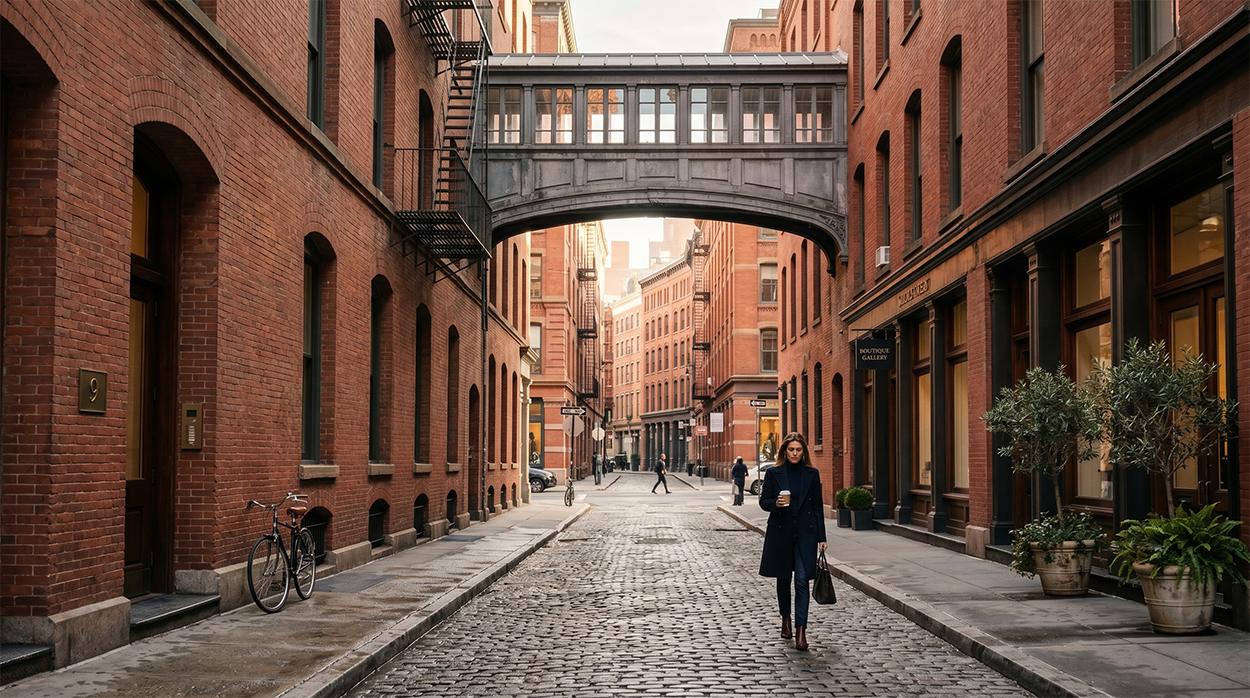
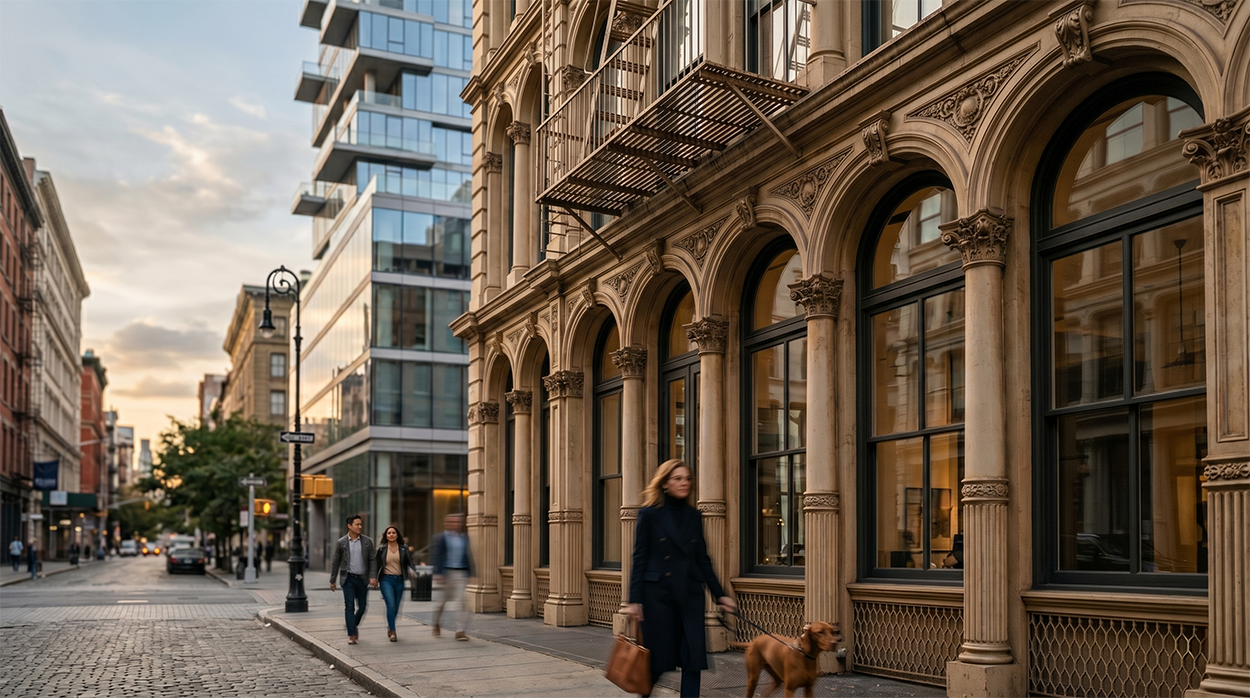
Tribeca Neighborhood classic and modern architecture
Living in Tribeca:
Tribeca Shopping, Dining & Attractions
Parks & Green Spaces
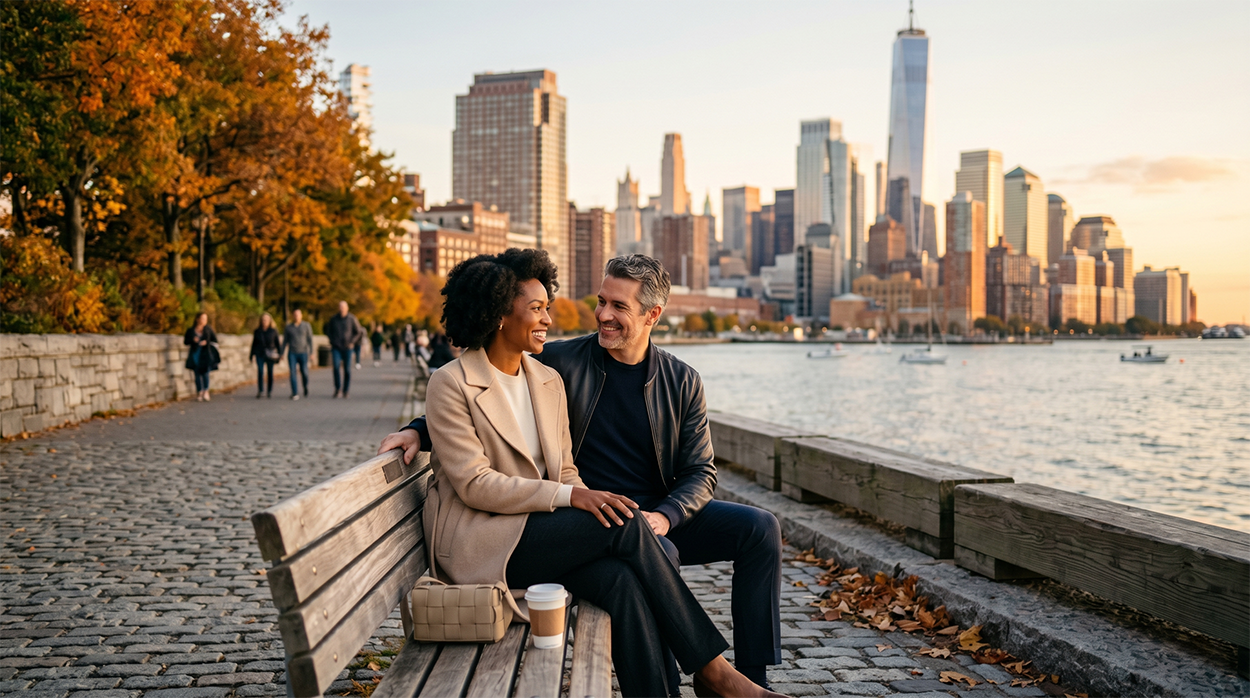
  • Hudson River Park runs the full western edge of the neighborhood, offering protected bike and running paths, piers with seating and seasonal programming, and direct waterfront access to the West Village and Battery Park City.
  • Washington Market Park and Bogardus Plaza anchor the interior of the neighborhood with landscaped seating, a playground, and a calendar of community programming, including Tribeca's seasonal greenmarket.
Dining & Social Scene
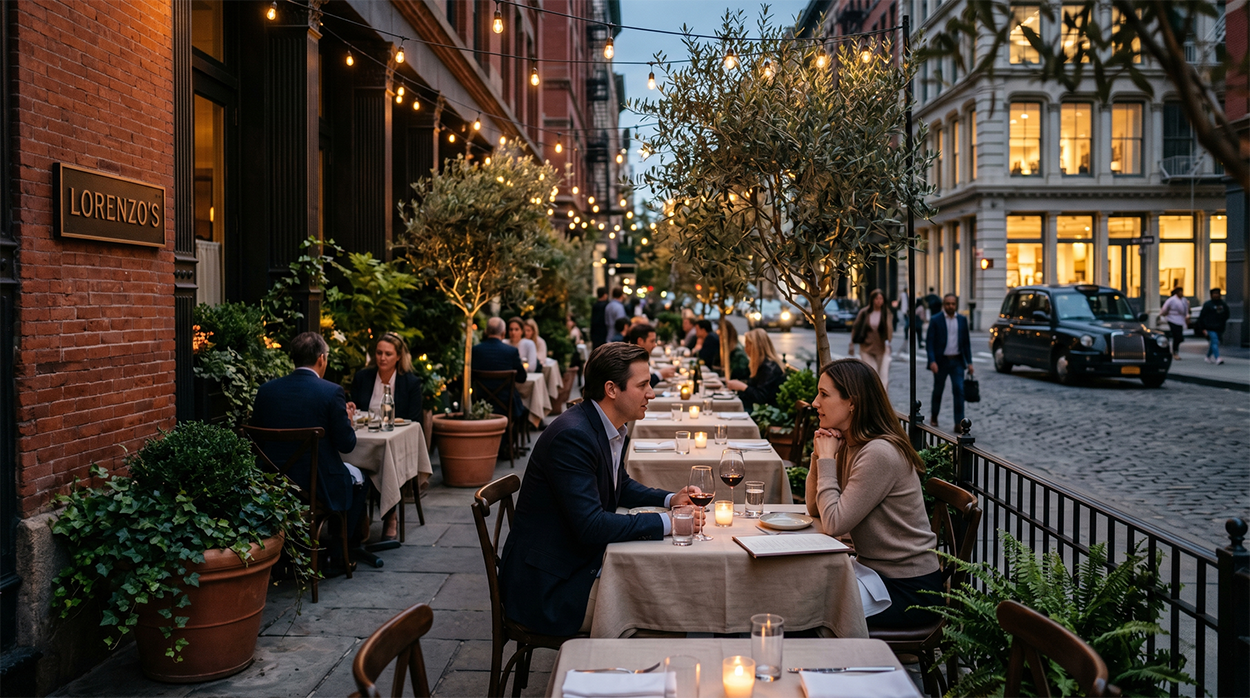
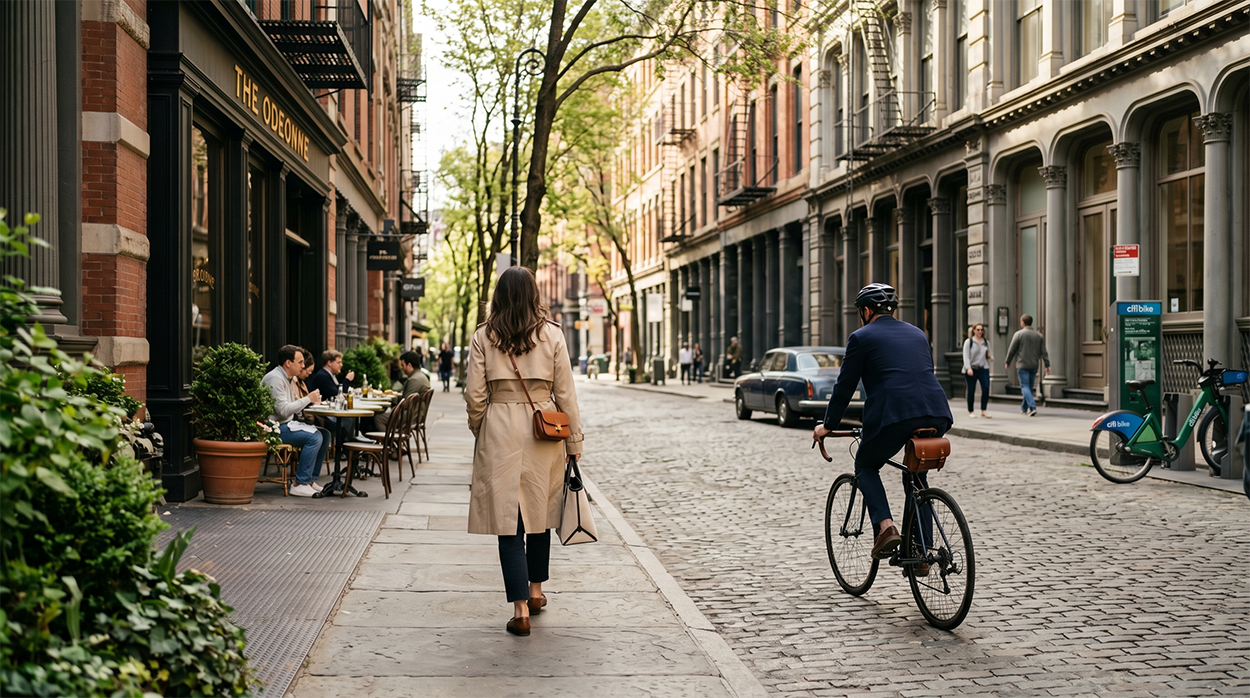
  • Tribeca's dining scene is one of the most established in Manhattan, with destination restaurants such as The Odeon, Locanda Verde, Frenchette, Bâtard, and Nobu Downtown alongside a deep bench of design-forward newer openings.
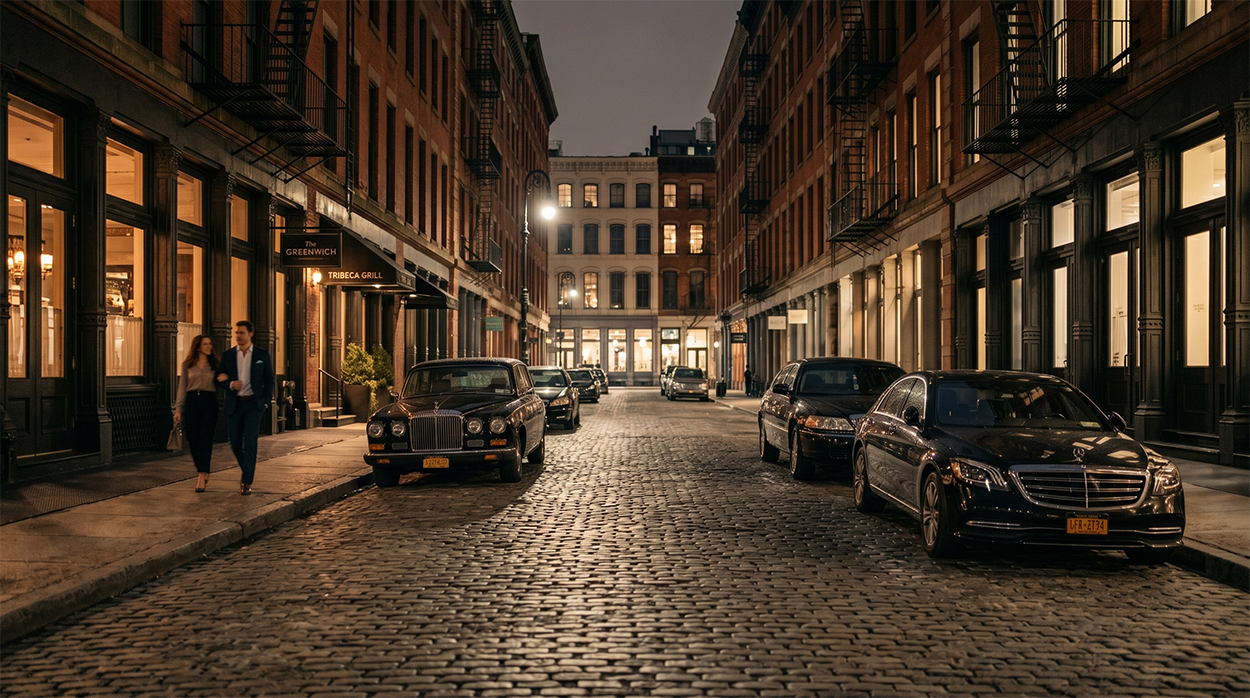
  • Boutique hotel bars at Greenwich Hotel and The Roxy contribute a refined, residential-feeling nightlife profile that contrasts with the higher-tempo SoHo and West Village corridors immediately adjacent.
Shopping & Local Culture
  • Tribeca's retail mix favors quiet luxury and design over flagship traffic: independent boutiques, design showrooms, gallery spaces, and specialty grocers concentrated along Hudson, Greenwich, and Franklin Streets.
  • The Tribeca Festival, formerly Tribeca Film Festival, anchors the cultural calendar each spring, with screenings, panels, and outdoor programming throughout the neighborhood.
  • Cultural and recreational venues, including the Mmuseumm, the Children's Museum of the Arts, and easy access to the Battery Park City Esplanade, ensure consistent options beyond dining and retail.
Transportation & Accessibility

Multiple subway lines at:

  • Chambers Street: 1, 2, 3 and A, C, E
  • Franklin Street: 1
  • Canal Street: A, C, E and N, Q, R, W and 6 and J, Z
  • Park Place / World Trade Center: 2, 3 and E and PATH to New Jersey
  • Direct access to the West Side Highway and the Holland Tunnel supports regional driving and airport access.
  • Citi Bike stations throughout the neighborhood and a fully protected bike network along Hudson River Park.
  • Street parking is metered and limited; multiple monthly and transient garages serve the neighborhood, with EV charging in select buildings and at public garages.
  • Approximately 30 minutes to LaGuardia, 35 minutes to Newark, and 50 minutes to JFK outside peak hours.
Comparison Snapshot: Tribeca vs. SoHo
Feature Tribeca SoHo
Median $/Sq Ft $2.0K $1.9K
Lifestyle Appeal Low-rise, residential-feeling waterfront loft district with top public schools and a refined dining scene. High-energy retail and gallery corridor with similar cast-iron architecture and a more transient daytime population.
Commute to Midtown by Train 18 minutes 20 minutes
FAQs
What is Tribeca known for?
Tribeca is known for its cast-iron and prewar warehouse architecture, its loft-scale residential inventory, and its concentration of destination restaurants, top-rated public schools, and the annual Tribeca Festival. The neighborhood's two historic districts, Tribeca West and Tribeca North, protect much of the building stock that drives its character.
Is Tribeca a good place to live?
Yes. Tribeca offers a rare combination in Manhattan: oversized residential floor plates, top-rated public school zoning, direct Hudson River Park access, and a low-rise, walkable street grid that supports both family-oriented and high-performing professional households.
Is Tribeca expensive compared to other Manhattan neighborhoods?
Tribeca consistently ranks among the most expensive neighborhoods in Manhattan, with a median price per square foot above $2,000 and median sale prices materially above the borough-wide median. Pricing reflects the neighborhood's scarcity of comparable loft inventory, protected historic supply, and depth of full-service buyer demand rather than speculative new-development pricing.