Undivided Real Estate

Why SoHo Endures as Manhattan's Cast-Iron Standard for Loft Living

Soho Manhattan | Undivided Value Index

Overview

Where Is SoHo?

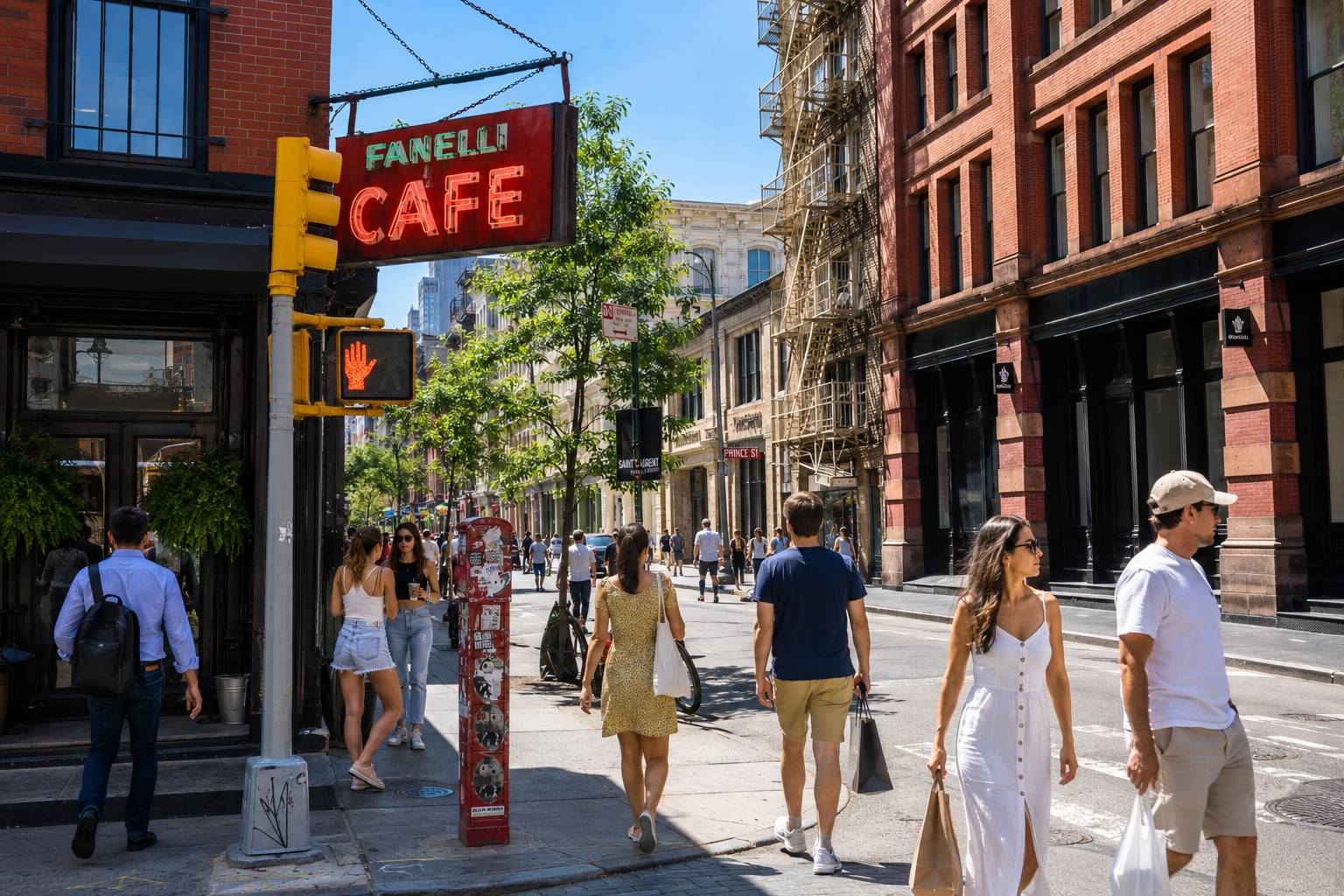
SoHo (short for "South of Houston") and its connected northern counterpart NoHo ("North of Houston") together form a unified cast-iron district at the heart of Lower Manhattan. SoHo's rough boundaries are Houston Street to the north, Lafayette Street and the Bowery edge to the east, Canal Street and Tribeca to the south, and Sixth Avenue and Hudson Square to the west. NoHo extends the district directly north of Houston Street, bounded by Astor Place and the East Village to the north, the Bowery to the east, Houston Street to the south, and Broadway to the west.

Why Sophisticated Buyers Are Choosing SoHo Right Now

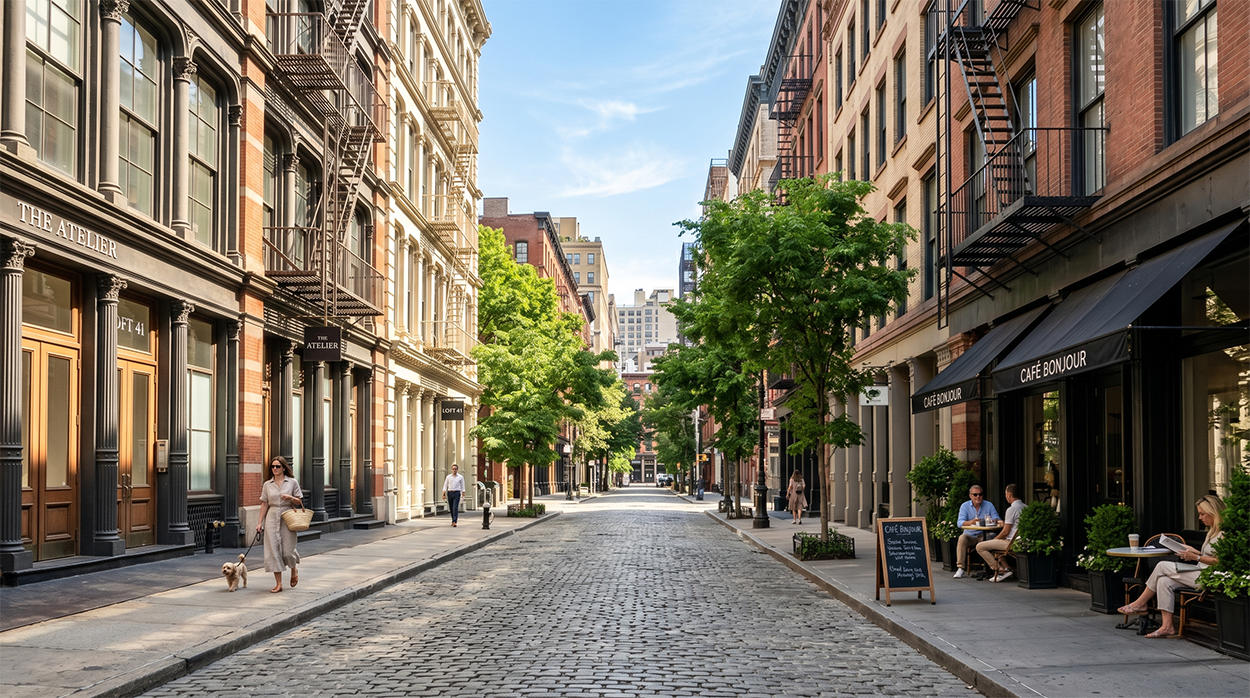
SoHo, together with its smaller northern counterpart NoHo, holds a singular position in the Manhattan luxury market: the world's largest concentration of cast-iron architecture, two designated historic districts that hard-cap new supply, and a residential inventory built almost entirely of oversized lofts that cannot be replicated in modern construction. For buyers who prioritize architectural integrity, central downtown position, and durable scarcity, it remains one of the few neighborhoods in Manhattan where cultural cachet, design heritage, and protected inventory reinforce each other rather than trade off.

Condo Median Price per Sq Ft
$1,930
New Development Median Price per Sq Ft
$2,200–$3,200+
Property Types
Lofts, Condos, Co-ops, Townhomes
Average Days on Market
100-160
Walk Score
100
Transit Score
100
Nearby Business Districts
Tribeca, Hudson Square, FiDi, Midtown

Neighborhood Map

SoHo delivers a Manhattan value proposition built around irreplaceable architecture: oversized cast-iron loft floor plates with column-grid layouts and 12–14 foot ceilings that newer construction cannot match, the protections of the SoHo-Cast Iron Historic District and the NoHo Historic District that constrain new supply, and a central downtown position that places residents within minutes of Tribeca, the West Village, the Financial District, and Midtown. For the analytical buyer, it is a market where architectural scarcity, flagship-grade retail and dining, and downtown connectivity converge to deliver a distinctive form of value-driven luxury.
 

Investment Analysis:
What the Numbers Tell Us About SoHo


Price & ROI Trends
  • SoHo consistently ranks among Manhattan's highest-priced neighborhoods, with median sale prices typically running 2x to 2.5x the borough median, reflecting its concentration of oversized loft floor plates and the protected supply that defines the cast-iron district.
  • The median sale price for SoHo and NoHo homes typically sits in the $2.8M–$3.5M range, compared with a Manhattan-wide median of approximately $1.22M, with the premium driven primarily by unit size and ceiling height rather than per-foot pricing extremes.
  • The average price per square foot in SoHo is approximately $1,930, placing it modestly below Tribeca (~$2,030) but well ahead of neighboring Hudson Square and the Lower East Side, and consistently above Flatiron (~$1,400).
  • SoHo's high entry pricing tempers gross rental yields relative to higher-velocity neighborhoods like Murray Hill or NoMad, with stabilized yields typically running 2.5%–3.5% on full-floor loft product, while appreciation has historically carried the total return.
  • Original cast-iron loft conversions and prewar buildings tend to deliver the most durable long-term value, while a small slate of contemporary new development on the NoHo and Bowery edges can command meaningful premiums and is subject to a wider initial pricing band.
Financial Fundamentals
  • The SoHo and NoHo market features a deep mix of converted cast-iron lofts, a meaningful co-op contingent in the older loft buildings, and a smaller slate of ground-up condominiums, giving buyers more flexibility on ownership structure than is typical for an established luxury district.
  • Cash dominates transactions at this price tier. A meaningful share of SoHo closings are all-cash, a dynamic supported by the neighborhood's concentration of finance, fashion, technology, and high-net-worth international buyers.
  • Days on market in SoHo typically run between 100 and 160 days, reflecting the discretionary nature of the buyer pool and the limited substitution available for true loft product, rather than weak demand.
  • Two historic districts, the SoHo-Cast Iron Historic District and the NoHo Historic District, govern the majority of the residential building stock, with Landmarks Preservation oversight that supports long-term building quality and protects the architectural character that drives much of the pricing premium.
Long-Term Value Proposition
  • SoHo's long-term appreciation story is anchored by permanent supply constraints. Landmarked cast-iron buildings cannot be replicated, and ground-up replacement cost on comparable column-grid floor plates has continued to rise, supporting durable price floors on the existing loft inventory.
  • Apartments on quieter streets such as Greene, Wooster, and Mercer have historically commanded premiums over comparable units on the higher-traffic Broadway and Houston corridors, with similar pricing dynamics on the lower-traffic NoHo blocks east of Lafayette.
  • SoHo and NoHo occupy a top tier of Manhattan's downtown pricing hierarchy alongside Tribeca and the West Village, but offer an architectural and retail profile, cast-iron, gallery-led, flagship-anchored, that no other downtown neighborhood in the borough can replicate.
  • For buyers with a 5 to 10 year horizon, the combination of constrained supply, sustained global flagship retail demand, and a deep international buyer pool supports a constructive long-term thesis even at current price levels.

Lifestyle Profile:
What Day-to-Day Life in SoHo Delivers

Everyday Comforts and Quality of Life
  • Petrosino Square, Vesuvio Playground along Thompson Street, and the green corridor at Astor Place anchor the neighborhood, with Washington Square Park immediately north of NoHo and Hudson River Park a short walk west of SoHo, providing a depth of park access uncommon for a market built around protected cast-iron building stock.
  • Residential floor plates in SoHo and NoHo tend to run materially larger than the Manhattan median, with 12–14 foot ceilings, oversized cast-iron windows, and original column-grid layouts that accommodate dedicated home offices, gallery walls, and true entertaining space.
  • The neighborhood draws from a strong slate of public and independent schools, including P.S. 130 Hernando De Soto and proximity to top downtown independent options, an important factor for the long-tenure family buyer increasingly active in the loft market.
Convenience for Professionals on the Move
  • SoHo and NoHo's central downtown position delivers efficient access to Tribeca, Hudson Yards, Midtown, and Brooklyn via the 6, N, Q, R, W, B, D, F, M, A, C, E, and 1 trains running through Canal, Spring, Prince, Bleecker, Broadway-Lafayette, and Houston Street stations.
  • Many SoHo and NoHo condominiums offer full-service amenity packages: 24/7 doorman and concierge, private fitness centers, residents' lounges, and parking with EV charging in select buildings, alongside a number of boutique buildings with concierge-only or self-managed service profiles.
  • Proximity to the Holland Tunnel, the Williamsburg Bridge, and the Manhattan Bridge supports straightforward regional travel, with approximate drive times of 35 minutes to Newark, 25 to LaGuardia, and 45 to JFK outside peak hours.
Streamlined Living and Efficiency
  • A walkable concentration of Whole Foods on Houston Street, specialty grocers along Prince and Spring, premium dry cleaners, and Equinox, SoulCycle, and CorePower Yoga reduces friction in daily routines without requiring a car.
  • Residential buildings frequently prioritize practical features such as in-unit laundry, dedicated storage units, package rooms, and modernized building systems calibrated to support remote and hybrid work in loft-scale floor plates.
  • For buyers balancing demanding schedules with frequent travel or hybrid work, SoHo and NoHo's compact footprint and high concentration of services, dining, and transit within walking distance is one of the most efficient configurations available in Manhattan.

Real Estate Listings in SoHo

The SoHo and NoHo real estate market offers a distinctive mix of converted cast-iron lofts, prewar warehouse conversions, and a smaller but well-regarded slate of ground-up new developments along the Bowery and NoHo edges. Limited residential inventory, two protected historic districts, and a concentration of full-floor and duplex product help support steady demand, particularly for well-located buildings with contemporary amenity packages. Compared with neighboring downtown districts, SoHo continues to attract a balance of long-term primary-residence buyers and globally mobile pied-à-terre owners.

Key Features Often Found in Tribeca Properties
  • Loft-scale floor plates with 12–14 foot ceilings, original cast-iron columns and beams, and oversized arched or industrial windows characteristic of the historic district.
  • A mix of authentic 19th-century cast-iron and prewar warehouse detail paired with high-specification contemporary finishes, depending on the age and renovation history of the building.
  • Private outdoor space, including rear-yard gardens, terraces, setbacks, and rooftop access in select buildings, with availability concentrated in newer NoHo and Bowery-edge construction.
  • A range of service models from white-glove full-service condominiums with 24/7 doorman, concierge, fitness, and lounge amenities to boutique loft buildings with concierge-only or self-managed profiles.
  • Proximity to top public school zoning and Pre-K–12 independent schools, alongside flagship-grade retail and dining within a one to two block radius of most residential buildings.

Together, these characteristics make SoHo a uniquely positioned downtown market, where long-term value is driven by irreplaceable architecture, protected supply, and the gravitational pull of global flagship retail and gallery culture.

Soho Neighborhood 6
Living in SoHo:
SoHo Shopping, Dining & Attractions
Parks & Green Spaces
  • Petrosino Square at the junction of Lafayette, Cleveland Place, and Kenmare anchors the eastern edge of SoHo with seasonal landscaping, a rotating public art program, and outdoor seating, while Vesuvio Playground on Thompson Street provides a dedicated play area on the neighborhood's western side.
  • Washington Square Park immediately north of NoHo and Hudson River Park a short walk west of SoHo together provide expansive park access at the district's edges, supplemented by the green corridor at Astor Place and the small public spaces along the Bowery.
Dining & Social Scene
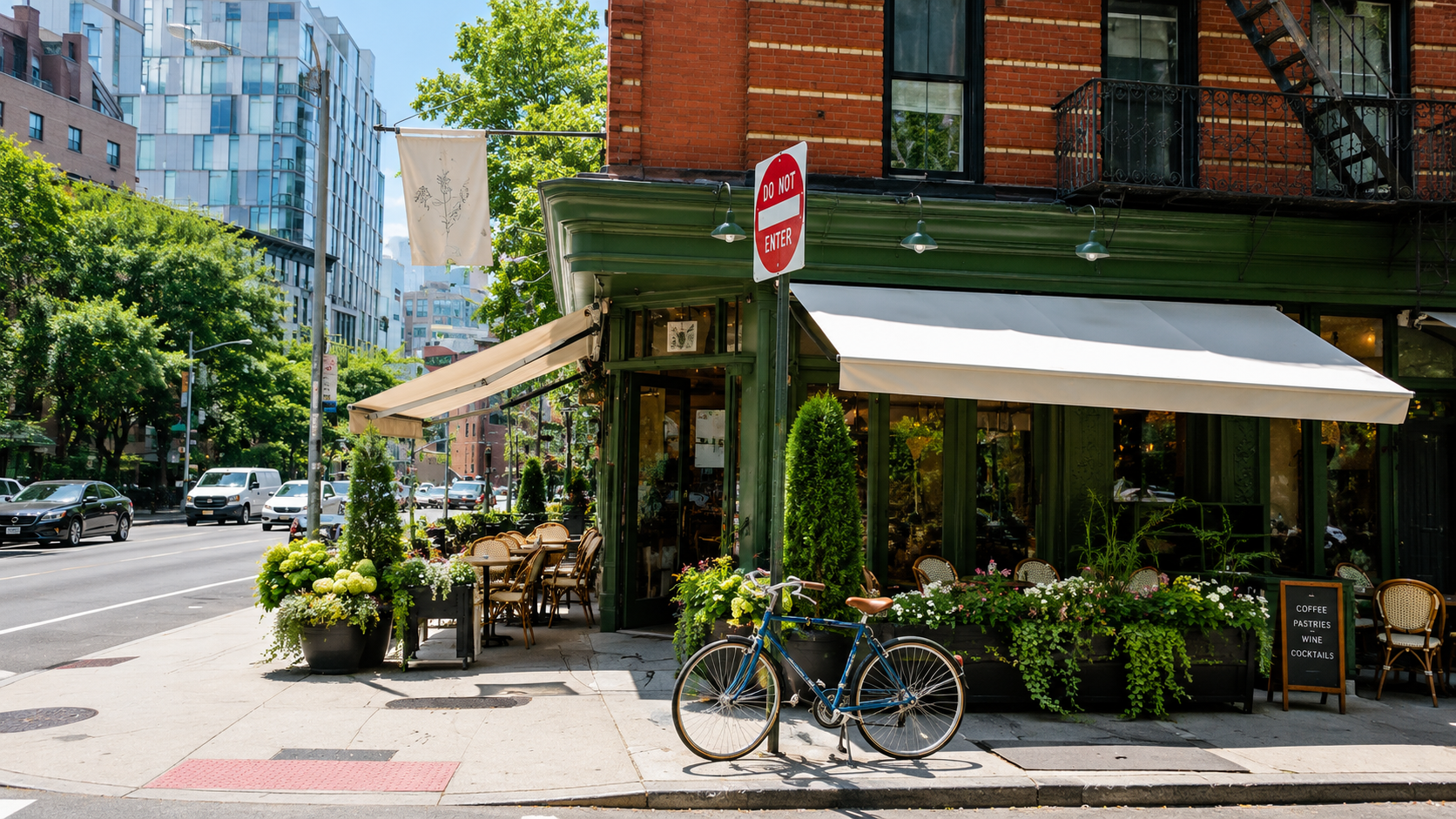
  • The SoHo and NoHo dining scene is one of the most concentrated in Manhattan, with destination restaurants such as Balthazar, Raoul's, Lure Fishbar, The Mercer Kitchen, Dame, and Acme alongside a deep bench of design-forward newer openings throughout the cast-iron district.
  • Boutique hotel bars at The Mercer, Crosby Street Hotel, and The Bowery Hotel contribute a refined nightlife profile, while a long-standing concentration of cocktail bars, wine bars, and music venues across NoHo and the Bowery supports a higher-tempo evening scene than neighboring Tribeca.
Shopping & Local Culture
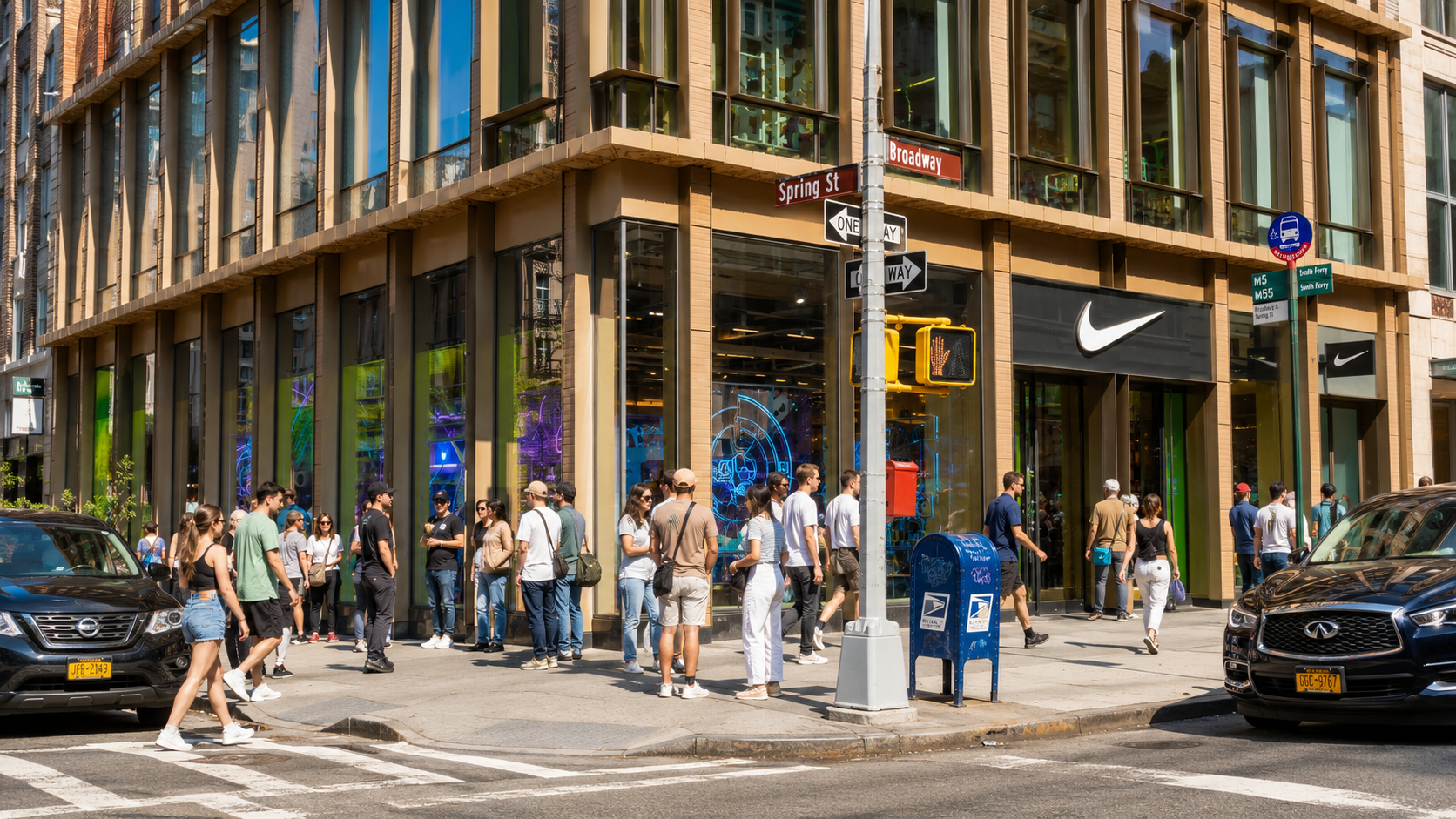
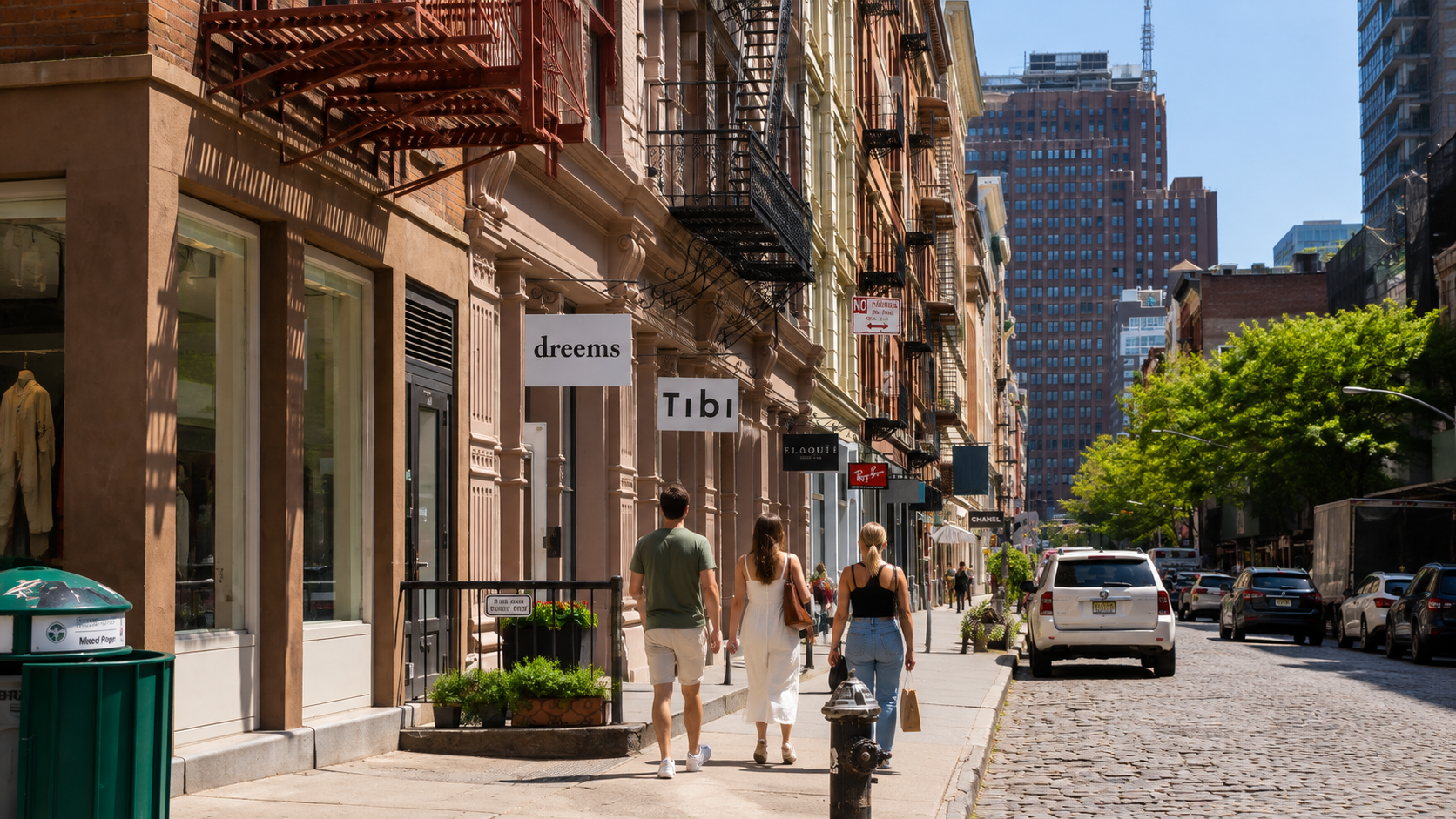
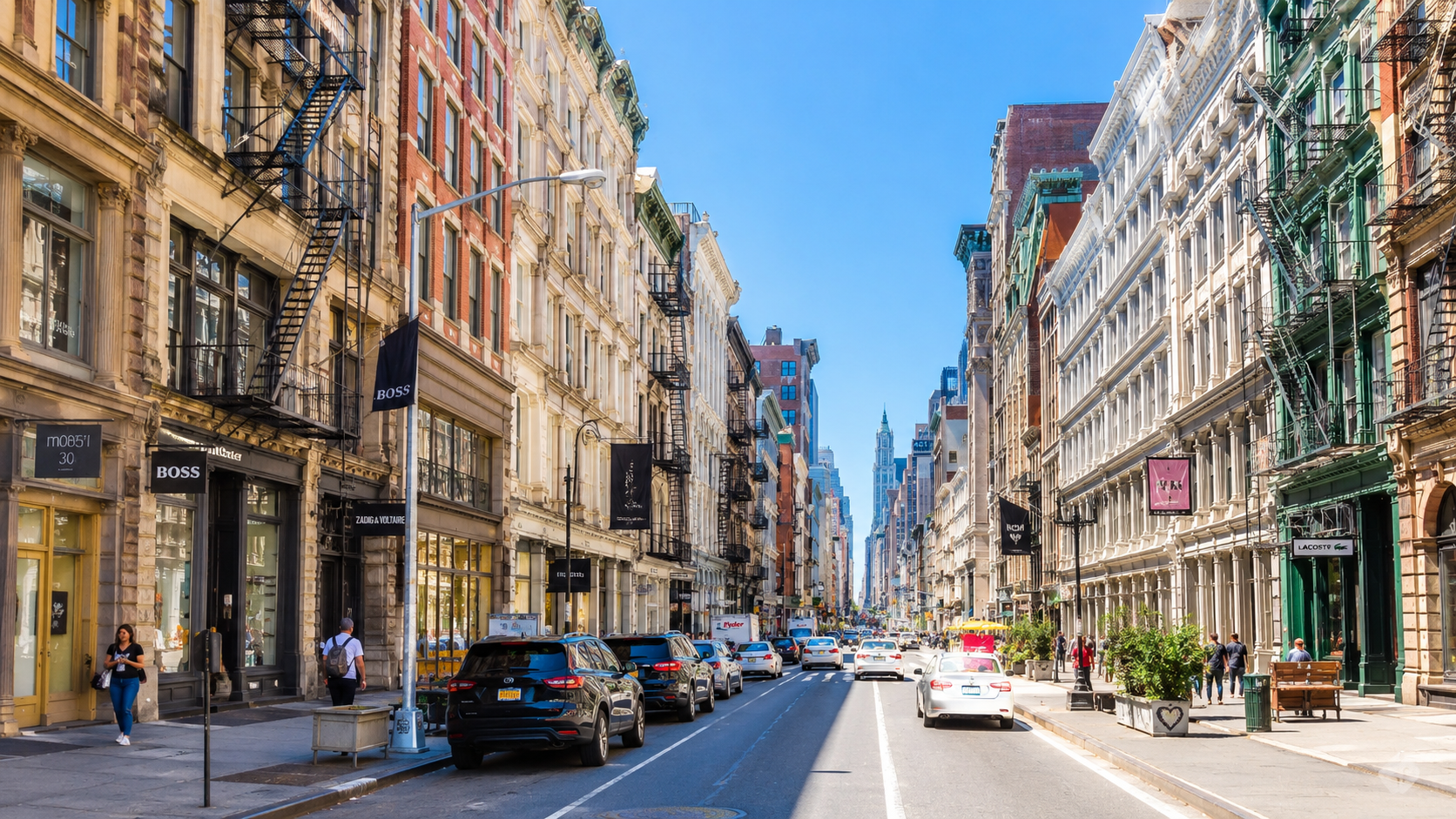
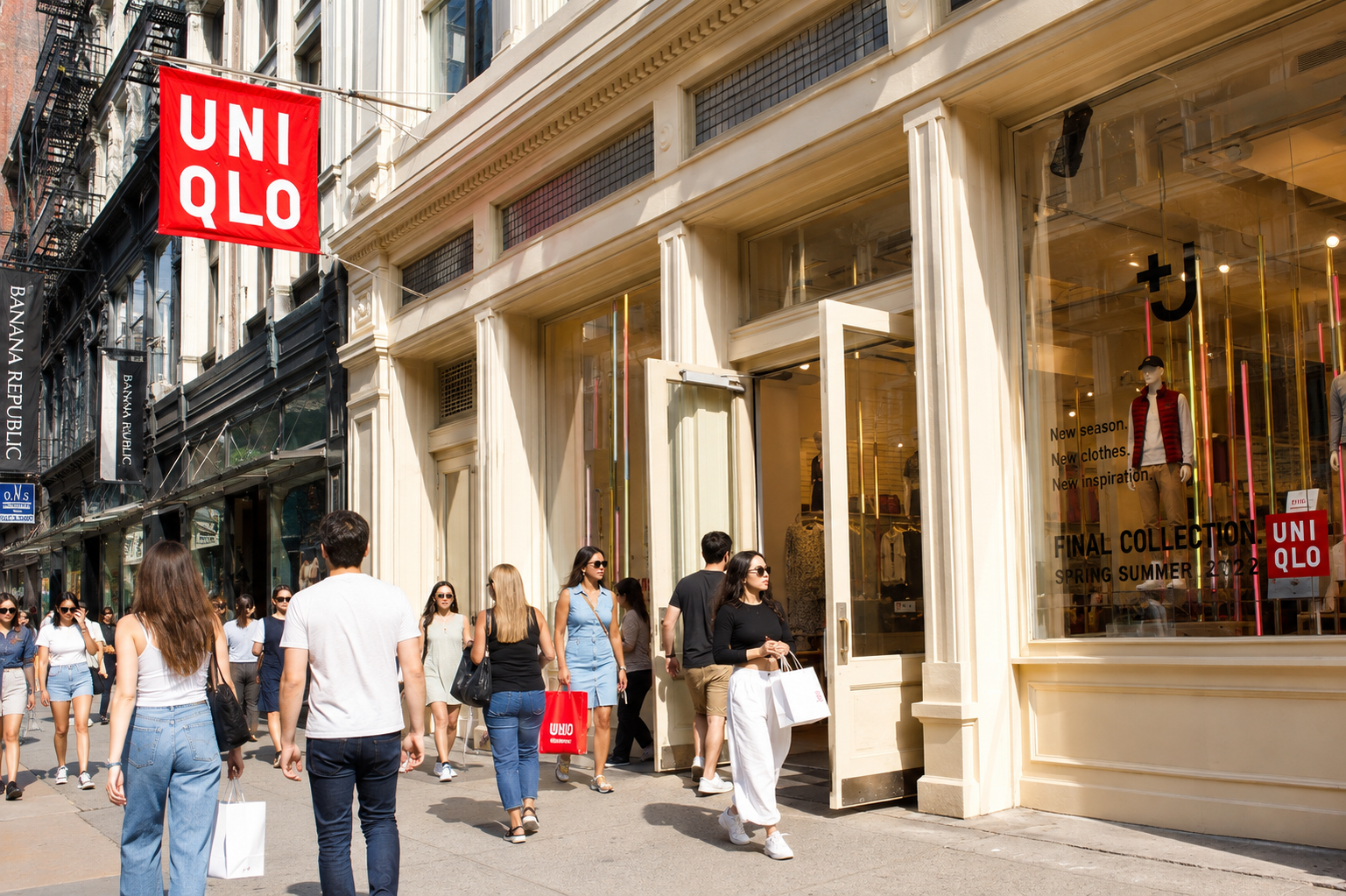
  • SoHo is one of the world's most concentrated luxury and flagship retail corridors, with global flagships along Broadway, Prince, Spring, and Greene Streets, including Chanel, Apple, Louis Vuitton, Prada, and an extensive bench of independent design, beauty, and home boutiques.
  • NoHo and the Bowery contribute design showrooms, gallery spaces, and a strong concentration of independent dining and bar concepts, alongside cultural anchors such as the New Museum at the Bowery edge.
  • Cultural and recreational venues including the Drawing Center, the New Museum, the Children's Museum of the Arts, and a year-round calendar of gallery openings ensure consistent options beyond flagship retail and dining.
Transportation & Accessibility
Multiple subway lines at:
  • Canal Street: 6 and N, Q, R, W and J, Z and A, C, E
  • Spring Street: 6 and C, E
  • Prince Street: N, R, W
  • Broadway-Lafayette / Bleecker Street: B, D, F, M and 6
  • Houston Street: 1
  • Astor Place: 6
  • Direct access to the Holland Tunnel and the Manhattan and Williamsburg Bridges supports regional driving and airport access from both sides of the district.
  • Citi Bike stations throughout SoHo and NoHo and a connected bike network along Lafayette, Centre Street, and Sixth Avenue provide reliable bicycle access across downtown.
  • Street parking is metered and limited; multiple monthly and transient garages serve the district, with EV charging in select buildings and at public garages along Houston Street and the Bowery.
  • Approximately 25 minutes to LaGuardia, 35 minutes to Newark, and 45 minutes to JFK outside peak hours.
Comparison Snapshot: SoHo vs. Tribeca
Feature SoHo Tribeca
Median $/Sq Ft $1.9K $2.0K
Lifestyle Appeal High-energy retail and gallery corridor with cast-iron architecture, flagship-grade shopping, and a denser daytime population. Low-rise, residential-feeling waterfront loft district with top public schools and a quieter, more refined dining scene.
Commute to Midtown by Train 20 minutes 18 minutes
FAQs
What is SoHo known for?
SoHo is known for the world's largest concentration of cast-iron architecture, its global flagship retail corridor along Broadway and Prince Streets, its protected historic district, and a residential market built almost entirely around loft-scale floor plates. Together with neighboring NoHo, the district forms one of Manhattan's most architecturally distinctive zones, and a long-standing center of gallery, design, and creative-industry activity.
Is SoHo a good place to live?
Yes. SoHo and NoHo offer a rare combination in Manhattan: oversized cast-iron loft floor plates, protected historic supply, a central downtown position with deep transit access, and immediate proximity to flagship retail, destination dining, and Washington Square Park. The district supports both family-oriented households drawn to the loft layouts and high-performing professional buyers prioritizing central location and architecture.
Is SoHo expensive compared to other Manhattan neighborhoods?
SoHo consistently ranks among the most expensive neighborhoods in Manhattan, with a median price per square foot near $1,930 and median sale prices materially above the borough-wide median. Pricing reflects the neighborhood's scarcity of comparable cast-iron loft inventory, protected historic supply, and depth of full-service and international buyer demand rather than speculative new-development pricing.