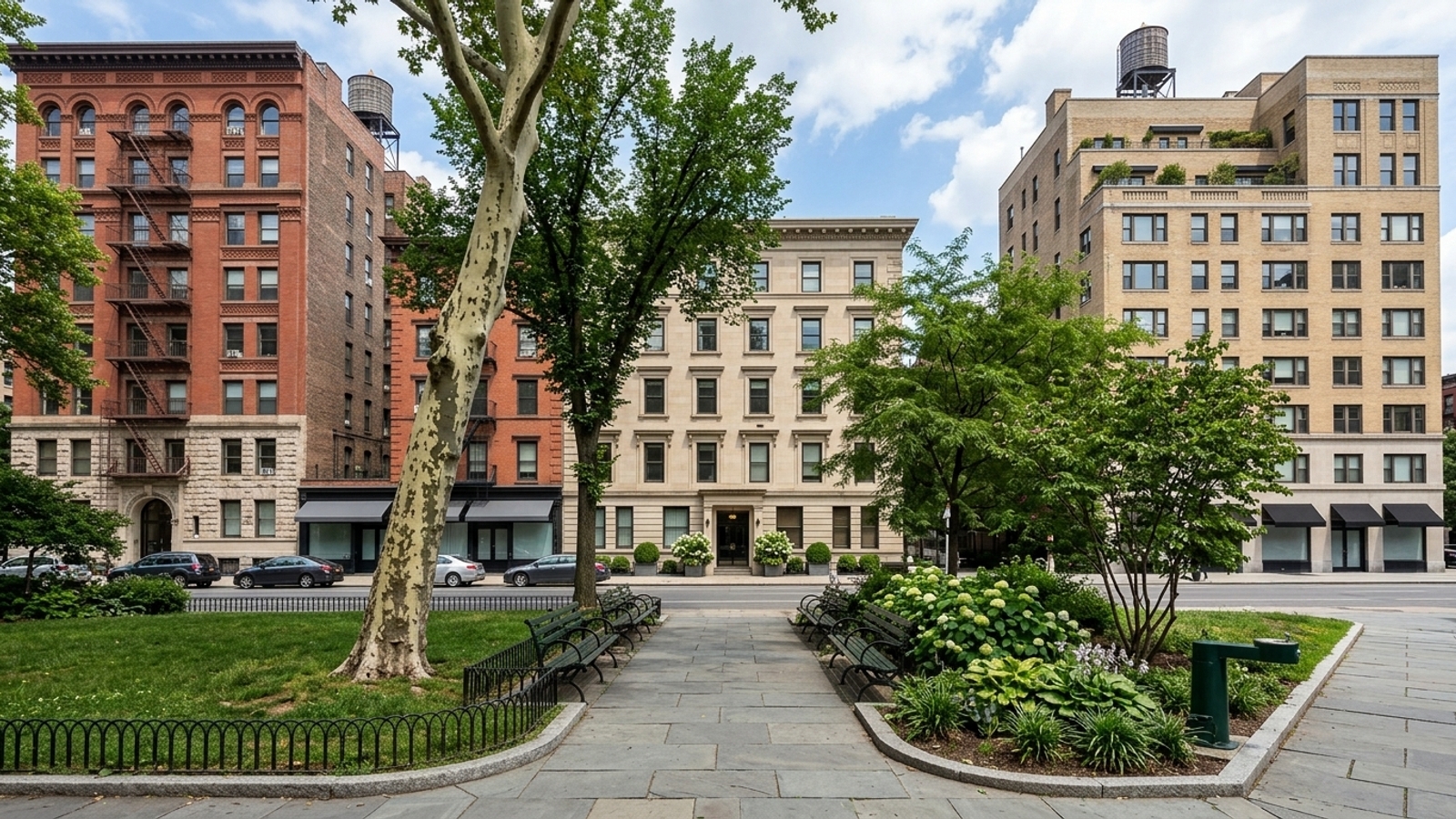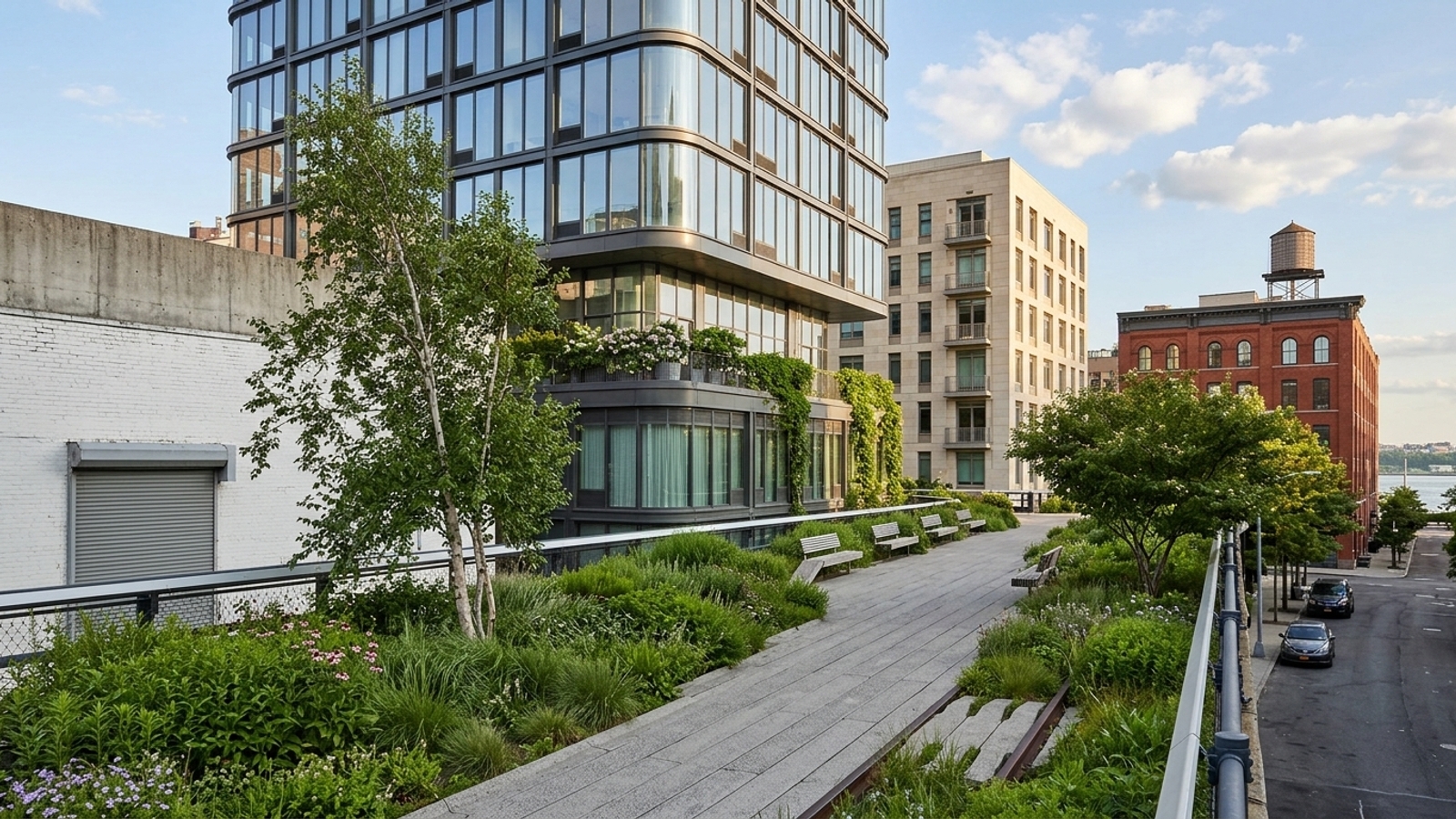
Chelsea's real estate market divides sharply between brand-new glass towers and 19th-century brick rows. If you're shopping at the top of the market in this Manhattan neighborhood, you're mostly looking at new-construction condominiums. The highest prices concentrate along the western edges, where developers have built around old rail lines and river views.
The historic blocks command high figures when something becomes available, but the bulk of the neighborhood's top-tier inventory sits in the newer corridors. A West Chelsea condo and a Chelsea Historic District townhouse are priced on entirely different bases, so matching a building to what you want requires knowing which type dominates which corridor.
Key Takeaway
Chelsea's highest prices are in the new-condo towers of West Chelsea along the High Line and the Hudson River. If you'd rather own a historic house, the Chelsea Historic District townhouse blocks are the alternative, though they rarely come up for sale. Chelsea's condo median fell steeply over the past year, so the most expensive buildings are also where buyers currently have the most room to negotiate.
Who This Guide Is For
You have a budget at the upper end of Chelsea's market and are deciding which part of the neighborhood, and which kind of building, is worth paying top price for right now.
Why Chelsea's Top Real Estate Is Mostly Condos
Chelsea's most expensive homes are new condos, and that market is currently repricing. Condominiums accounted for 143 of the 155 homes sold in the 90 days ending September 30, 2026. During that window, the condo median sale price fell 13.5% year over year to $1,600,000, a steeper drop than the 8.4% decline recorded for all homes in the neighborhood.
With 5.1 months of supply and a 69-day median time on market, the priciest part of Chelsea is now also where buyers have the most negotiating room. The historic townhouse and prewar co-op blocks trade too rarely to price from neighborhood data at all.
The market data does not report sub-area or townhouse figures, so you have to rely on building-level checks rather than neighborhood averages. The areas below are grouped by the trade-offs you make between new construction and historic character, not ranked by price.
Chelsea Housing Market at a Glance
- Median sale price, all homes: $1,694,525, down 8.4% year over year (90 days ending 2026-09-30)
- Median sale price, condos: $1,600,000, down 13.5% year over year (90 days ending 2026-09-30)
- Median price per square foot: $1,714 for condos and $1,708 for all homes (90 days ending 2026-09-30)
- Homes sold: 155 all homes, of which 143 were condos (90 days ending 2026-09-30)
- Median days on market: 69 for all homes and 69 for condos (90 days ending 2026-09-30)
- Sale-to-list ratio: 99.2% for all homes and 99.2% for condos (90 days ending 2026-09-30)
- Share sold above list price: 12.5% of all homes and 12.1% of condos (90 days ending 2026-09-30)
- Months of supply: 5.2 for all homes and 5.1 for condos (90 days ending 2026-09-30)
- Homes for sale (inventory): 265 all homes, of which 238 were condos (90 days ending 2026-09-30)
These are Chelsea-wide figures and do not split by sub-area.
Most Expensive Areas in Chelsea for New Condos
The highest asking prices in Chelsea, NY, concentrate in three new-development corridors on the neighborhood's western side. This is where developers have built high-rise amenities near the water and the park, and where you pay a premium for the newest buildings and the most direct views.
Because this segment holds most of Chelsea's available inventory, it's also where prices are falling and supply is deepest. You get modern construction and high-end finishes, but you're buying in the exact segment where sellers face the most competition from other listings. That trade-off is worth understanding before you fall for a floor plan.
West Chelsea and the High Line
Architect-designed condo towers line the High Line between roughly West 18th and West 28th streets, making this the most expensive part of Chelsea. The Special West Chelsea District zoning rules shaped this corridor, allowing developers to transfer development rights from properties near the High Line and build higher along the park.
Recent recorded sales show how high prices can go here. An October 2026 sponsor-unit sale at One High Line (500 West 18th Street) closed for $13.5 million for a 3,800-square-foot layout, pricing out to roughly $3,500 per square foot.
Other 2026 closings in the area ranged widely, clustering roughly between $2,100 and $4,400 per square foot depending on the specific building and floor. Chelsea's condo median of $1,714 per square foot (for the 90 days ending September 30, 2026) is your yardstick. If a tower's resale units trade well above that median, you're paying for the building itself, not just the neighborhood.
One recognizable example is 520 West 28th Street, an 11-story residential building with steel bands and rounded glass corners designed by Zaha Hadid Architects beside the High Line. The downside: High Line frontage means tourist foot traffic right below your windows, and a building-level premium can erode in a falling condo market. Check the building's own resale history on ACRIS before paying a new-development price.
The Hudson River Edge Along Eleventh Avenue
Full-floor and river-facing units along Eleventh Avenue and the West Side Highway sell primarily on their Hudson exposure. Buyers pay top dollar to be directly across from Hudson River Park and the water. There's no specific market-data figure for this strip because the neighborhood data doesn't break down by single avenues.
The same exposure that sells the view puts these blocks closest to flood risk. Ask your insurance broker for a flood insurance quote, and ask the managing agent where the building's mechanical systems sit before you make an offer, since that detail affects flood-loss scenarios more than the listing sheet will show.
West Side Highway traffic noise and flood-zone exposure come with the view. Both factors affect your insurance costs and your future resale value.
The Hudson Yards Border, West 28th to 30th Streets
The northern edge of Chelsea sits next to Hudson Yards, where the massive Western Rail Yard phase is still being built out. In 2025, the city approved funding for a $2 billion platform over the active Long Island Rail Road tracks west of Eleventh Avenue. That clears the way for the second phase of Hudson Yards, which will include about 4,000 apartments, an office tower, and a school. As of 2026, the deck construction itself has not yet begun.
Newer towers in this northern section trade on their close access to Hudson Yards shopping, offices, and the 7 train extension. Buying here is a bet on a border area that is still being completed, and years of nearby construction can mean noise, scaffolding, and lost views. New towers also keep adding competing condo supply in a segment that already holds most of Chelsea's inventory.
Historic and Prewar Areas with the Fewest Sales
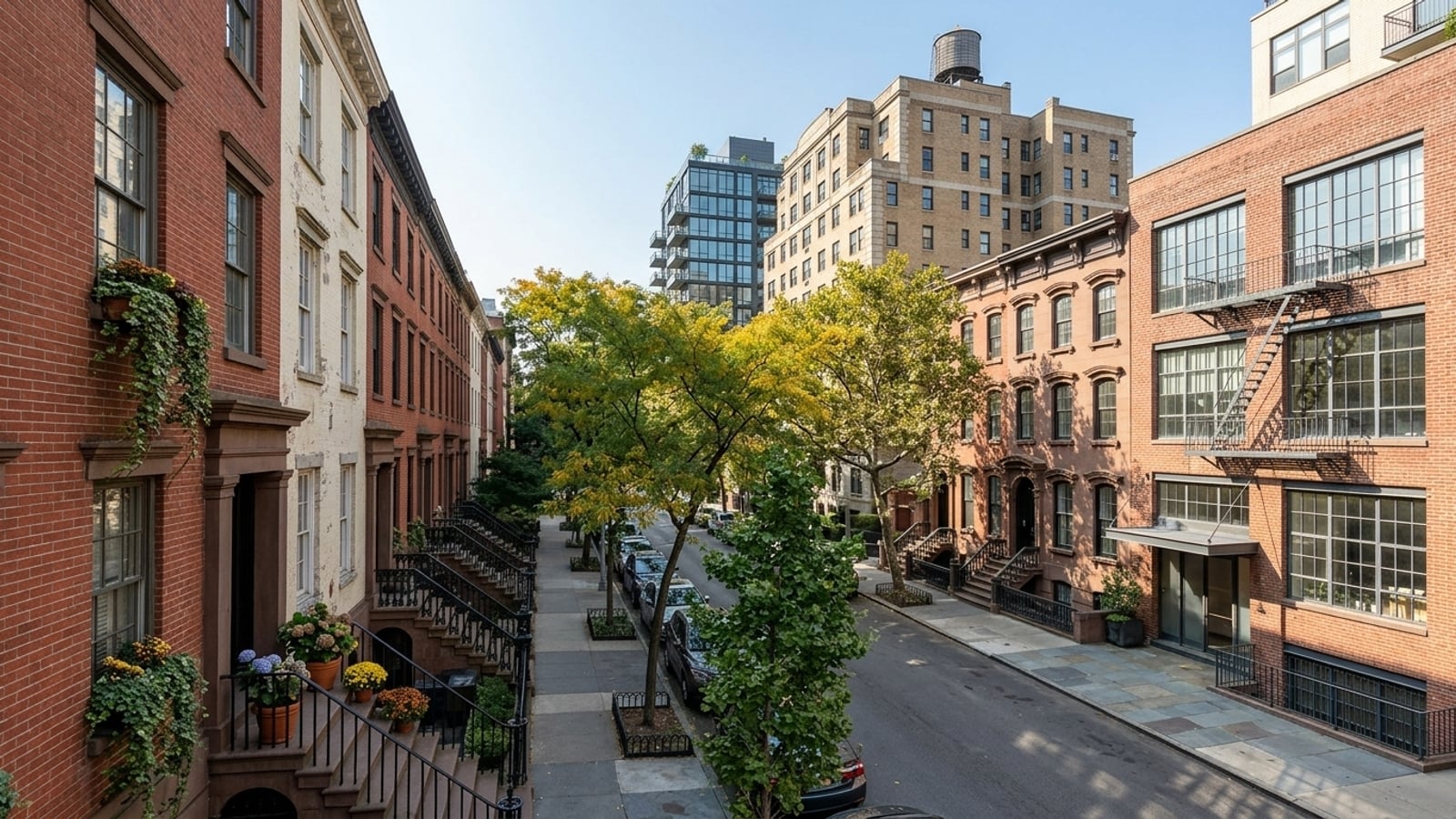
The older sections of Chelsea offer an entirely different housing market. Instead of glass towers, these blocks hold 19th-century townhouses and prewar cooperative apartments. You get historic character and scarcity, but you lose the ability to anchor your price to a reliable neighborhood median.
Sales in these historic areas happen so rarely that the market data doesn't report a figure for them. Buyers looking for older homes have to price their offers based on individual building histories and recent comparable sales on the specific block.
Chelsea Historic District
The townhouse rows on the West 20s between Ninth and Tenth avenues trace back to Clement Clarke Moore's estate. The original historic district centers on the area Moore divided into residential lots beginning in the 1830s. He's the man credited with "A Visit from St. Nicholas" and gave the land for the nearby General Theological Seminary.
Townhouse sales are so rare here that the market data has no townhouse figure for the recent window. You have to build your pricing from individual recorded sales on ACRIS, which means a long search and very few comparables when trying to determine fair value. Exterior changes in a historic district also require Landmarks Preservation Commission approval, so factor that into any renovation plans before you bid.
Eastern Chelsea, Sixth to Eighth Avenues
This section is defined by prewar co-ops and loft conversions. It includes the massive London Terrace complex at 405 West 23rd Street, which was among the largest apartment buildings in the world when it opened in 1930. The complex took up an entire block and featured doormen dressed as London bobbies.
Chelsea had fewer than 10 co-op sales in the 90 days ending September 30, 2026, which is too few to report a reliable price. Any value comparison has to come from the building's own sales history measured against the condo price-per-square-foot benchmark.
Co-op boards set their own down-payment, financing, and post-closing liquidity rules and can turn down an application. Many buildings also charge a flip tax. Ask the managing agent for the building's requirements before you fall for an apartment.
How Much Room to Negotiate at the Top of the Market
Chelsea's market figures show that buyers have time and room to negotiate. The median days on market sits at 69 days, meaning sellers wait more than two months for a contract. You rarely have to decide in a single weekend, and bidding wars are the exception: only 12.5% of all homes sold above list price.
The neighborhood has 5.2 months of supply, meaning more than five months of listings available at the current sales pace. At that sale-to-list ratio, a home listed for $2,500,000 closes near $2,480,000 on average. That median hides wide variation, especially in new developments where sponsors might hold firm on price but offer concessions instead.
New-development sponsors may negotiate on closing costs or transfer taxes rather than dropping the official purchase price. Ask the sponsor exactly what they're willing to cover, and compare the real all-in costs between buildings before you sign anything.
How to Narrow Your Chelsea Shortlist
The right home in Chelsea, NY, depends on a few specific questions. Do you want new construction with amenities, or a prewar or 19th-century home with original details? New construction points to the condo corridors; older homes point to the historic and prewar areas.
Is a river or High Line view worth extra homework on flood zones, highway noise, and nearby construction? If yes, focus on the Hudson River edge and the Hudson Yards border. Are you prepared for a co-op board application, or do you need the flexibility of a condo? If a board is a dealbreaker, skip eastern Chelsea and focus entirely on the condo corridors.
Consider how much negotiating room you need to make the numbers work. If you want a new-construction condo where sellers are more likely to negotiate, start with West Chelsea and the High Line. If you want a single-family townhouse with original 19th-century details, start with the Chelsea Historic District. If you want a prewar apartment and you're comfortable with a board application, start with eastern Chelsea from Sixth to Eighth avenues.
Before you make an offer, complete these final checks:
- Pull the building's recorded sales on ACRIS and compare the closed price per square foot with Chelsea's condo median before offering.
- Ask the managing agent for current monthly common charges and real estate taxes; don't rely on listing estimates.
- Look up your exact address on FEMA's Flood Map Service Center to confirm its flood zone status, and ask your insurance broker for a flood insurance quote.
- Check whether the building is in a designated historic district with the Landmarks Preservation Commission before planning any exterior work.
- For co-ops, ask the managing agent for the board's minimum down payment, post-closing liquidity requirement, sublet policy, and flip tax.
- Search NYC Department of Buildings permits for lots around the building to see what construction is planned.
- For new development, ask the sponsor which closing costs and transfer taxes they will cover, and review the latest offering plan amendment with your attorney.
- Confirm school assignment for the exact address with the NYC DOE school search; zoning can change by building.
Chelsea, NYC Most Expensive Areas FAQs
Is Chelsea One of the Most Expensive Neighborhoods in NYC?
Yes, Chelsea ranks among the higher-priced areas in Manhattan. The neighborhood's median sale price for all homes was $1,694,525 over the 90 days ending September 30, 2026. You can compare this figure against Manhattan-wide and other neighborhood medians by checking the Q3 2026 market report.
What Is Chelsea, NY Famous For?
Chelsea is known for the High Line park and the West Chelsea gallery district. It's also famous for Chelsea Market, a food hall and office complex redeveloped in the late 1990s. The market occupies the 1890s National Biscuit Company (Nabisco) factory complex, which is where the Oreo cookie was invented.
Is Chelsea NYC Safe?
You can review local crime statistics through the NYPD's weekly CompStat reports. The 10th Precinct covers most of Chelsea, and its report for the week of October 5 through October 11, 2026, recorded 2 robberies and 1 burglary, with year-to-date robbery complaints down 24.4% compared to 2025. Check the official CompStat page to see year-over-year changes by specific crime categories.
Does Chelsea NYC Flood?
Certain blocks near the Hudson River fall within designated flood zones. Following Hurricane Sandy in 2012, preliminary FEMA maps placed parts of West Chelsea, including West Street and 11th and 12th avenues, in Flood Zone A, with the waterfront in the higher-risk Zone V. Confirm the status of any specific address on the FEMA Flood Map Service Center before making an offer.
What Is Considered Chelsea, and Is It in Manhattan?
Yes, Chelsea is located on Manhattan's West Side. It's generally bounded by 14th Street to the south, the Hudson River to the west, Sixth Avenue to the east, and runs north into the West 30s. The area falls within Manhattan Community District 4, though exact boundaries can vary depending on the source.
How Did Chelsea New York Get Its Name?
The neighborhood takes its name from a farmstead purchased by retired British Army officer Captain Thomas Clarke in 1750. Clarke named his property "Chelsea" after London's Royal Chelsea Hospital for veterans. The estate was eventually inherited by his grandson, Clement Clarke Moore.
Do You Pay the Mansion Tax When Buying in Chelsea?
Yes, if your purchase price is $1,000,000 or more. Given that condo median, a large share of Chelsea purchases cross that threshold. For 2026, the New York State and NYC mansion tax is a one-time, buyer-paid tax that ranges from 1.00% up to 3.90% for purchases of $25 million or more. Confirm the exact tax tier for your purchase price with a real estate attorney.
Can You Rent Out a Chelsea Condo as a Short-Term Rental?
Under NYC's Local Law 18, you cannot rent out an entire apartment for fewer than 30 days. Hosts must live in the unit, be present during the stay, limit occupancy to two guests, and register with the Mayor's Office of Special Enforcement. Also ask the condo board for the building's own leasing minimums and sublet rules.
Sources
- Redfin: Data Center
- NYC Landmarks Preservation Commission: Chelsea Historic District Extension Designation Report
- Dezeen: Zaha Hadid Architects completes 520 West 28th Street condos in New York
- NYC Zoning Resolution: Special West Chelsea District
- NYC Department of City Planning: Resilient Neighborhoods West Chelsea
- NYPD: 10th Precinct CompStat Report
- The Real Deal: New York top real estate deals Wednesday Oct 14 2026
- NYC Paycheck Calculator: NYC Mansion Tax Guide
- NYC 311: Short-Term Rental Registration
- NYC Parks: Clement Clarke Moore Park History
- Manhattan Community Board 4: By-Laws
- NYC Council: Legislation Details Resolution 960
- Daytonian in Manhattan: 1931 London Terrace Apartments
- Wikipedia: Chelsea Market