You've seen the headlines: rent freezes, tax reform proposals, mayor-elect Mamdani's housing agenda, and ongoing questions about housing supply, affordable housing, and market-rate development.
But beneath the noise, NYC's property market is quietly resetting, not collapsing.
The question isn't whether the market will move again. It's how fast.
In this article, we'll explore what Mayor-elect Zohran Mamdani's housing plan really means for the real estate housing market, how high mortgage rates have frozen supply and demand, and which neighborhoods are best positioned for a rebound based on current housing market predictions for 2026.
The Mamdani Effect: What a New Mayor Means for NYC Real Estate
When Zohran Mamdani took office, his message was clear: housing first. Some headlines warned that a Mamdani win would send jitters through NYC’s luxury real estate market. But in reality, his proposed rent freeze affects roughly one million rent-stabilized units (about a third of apartments in New York City for rent) but doesn't touch luxury or free-market apartments.
Key Policy Initiatives
Rent Guidelines Board Appointments
- The mayor can appoint like-minded members to the city's Rent Guidelines Board
- Symbolically powerful, focused on sentiment more than statistics
- Impacts approximately one million rent-stabilized units
- Central to Mamdani housing policy and Mamdani affordable housing goals
Property Tax Reform
- Could reshape fairness long term
- Requires State approval in Albany, which means it could take years, not months
- Still faces political hurdles despite mayoral support
- Part of broader Zohran Mamdani housing policy agenda
Millionaire's Tax Proposal
- Faces stiff resistance but reinforces the tone at City Hall: one focused on equity and affordability
- Would require state legislature cooperation
- Part of broader Mamdani's plan for revenue generation
Housing Development Goals
- Pledges to build 200,000 new affordable housing units over ten years
- Largest proposed municipal housing initiative since the de Blasio era
- Aims to triple current subsidized housing construction rates
- Addresses critical housing supply constraints
The Reality Check
Expect plenty of policy headlines but real change will move slowly. Understanding Mamdani policies is important, but for now, the biggest market mover isn't politics… it's borrowing costs. The mayor will need cooperation from Albany for any changes to city tax rates, and plenty of other barriers prevent the construction of subsidized housing at the scale that Mamdani wants.
While discussions around a rent freeze in Mamdani proposals and rent control in New York City dominate news cycles, the reality is that Mamdani’s policies will take time to implement and primarily affect rent-stabilized units rather than the broader luxury market or commercial sector.

Mortgage Rates: The Big Wildcard
At the end of 2025, average 30-year mortgage rates hover around 6.2%, nearly double 2021 levels. This dramatically impacts New York City housing prices and buyer affordability.
The Rate Lock Phenomenon
About 70% of homeowners are locked into rates below 5%, creating a kind of "rate-lock" gridlock. It's not that people don't want to move. They can't afford to.
Current Market Dynamics:
- Nationally, only 2.8% of homes sold in 2025
- In New York, that's roughly ten sales for every thousand homes
- Affordability crushed one side, supply froze on the other
- This isn't a crash, it's a stalemate
2026 Rate Projections
But 2026 could shift the balance. Here's what leading forecasters predict as part of their housing market forecast and mortgage rates predictions:
|
Organization |
2026 Rate Forecast |
Key Factors |
|
National Association of Home Builders |
6.4% average |
Expects inflation to fall back to 2% by 2027 |
|
National Association of Realtors |
6.0% by year-end |
Lower rates expected in 2026 instead of 2025 |
|
Wells Fargo |
6.23% average |
Gradual easing expected |
|
Fannie Mae |
Below 6.0% by year end |
Fed rate cuts anticipated |
Source: US News and World Report
Federal Reserve Chair Jerome Powell says it best: "Uncertainty {in the US economy} is remarkably high."
However, economists forecast interest rates easing into the 5s if inflation cools, and Powell has his term ending midyear, an event that could speed that up depending on policy direction. Many analysts asking will mortgage rates continue to fall point to Federal Reserve policy shifts as the key variable in their 2026 housing market predictions.
The Affordability Impact
Even a one-point drop in rates restores nearly 10% more buyer power, enough to kick-start demand quickly. If that happens, New York's rebound won't be gradual; it'll be sharp and competitive. This is a critical factor in the housing market outlook for 2026.
The Market Stalemate: Why Prices Didn't Crash
Still, the question everyone's asking: will housing prices drop in 2026? The answer is nuanced. The market isn't weak, it's stuck.
Key Factors Constraining the Market
Supply-Side Dynamics:
- Sellers are clinging to their low-rate loans
- Homeowners with sub-5% mortgages hesitant to move
- Record-low inventory across all NYC boroughs
- Limited housing supply affecting home sales
Demand-Side Constraints:
- Buyers are waiting for lower rates so their monthly costs make sense
- Current rates still more than double 2021 averages
- Purchasing power significantly reduced
- Home price appreciation has outpaced income growth
The Quiet Correction
The result: record-low inventory, flat prices, and a quiet correction by inactivity rather than panic. Manhattan medians are steady, but one in three condo resales closed at a loss between 2024 and 2025. It's a stalemate, not a sell-off.
The city feels frozen, but beneath the surface…pressure is building. This reality shapes every prediction of real estate market performance heading into 2026.
Where Savvy Buyers (and Sellers) Can Win
And that's where savvy players are finding openings.
Resale Market Opportunities
In the resale market, withdrawn or long-sitting listings are trading 4–10% below their last asking prices. Off-market outreach and quick decisions are winning deals others never see, especially for cash buyers and investors.
Key Strategies:
- Target properties that have been on market 90+ days
- Look for recent price reductions
- Consider properties withdrawn and relisted
- Move quickly when opportunity arises
New Development Market
In new development, inventory is at a 10-year low, around 3,600 unsold units. Developers prefer quiet incentives rather than public price cuts when marketing new apartments for sale in NYC.
Common Developer Concessions:
- Transfer tax credits
- Closing cost concessions
- Mortgage buydowns
- Free amenity memberships
- Included parking or storage
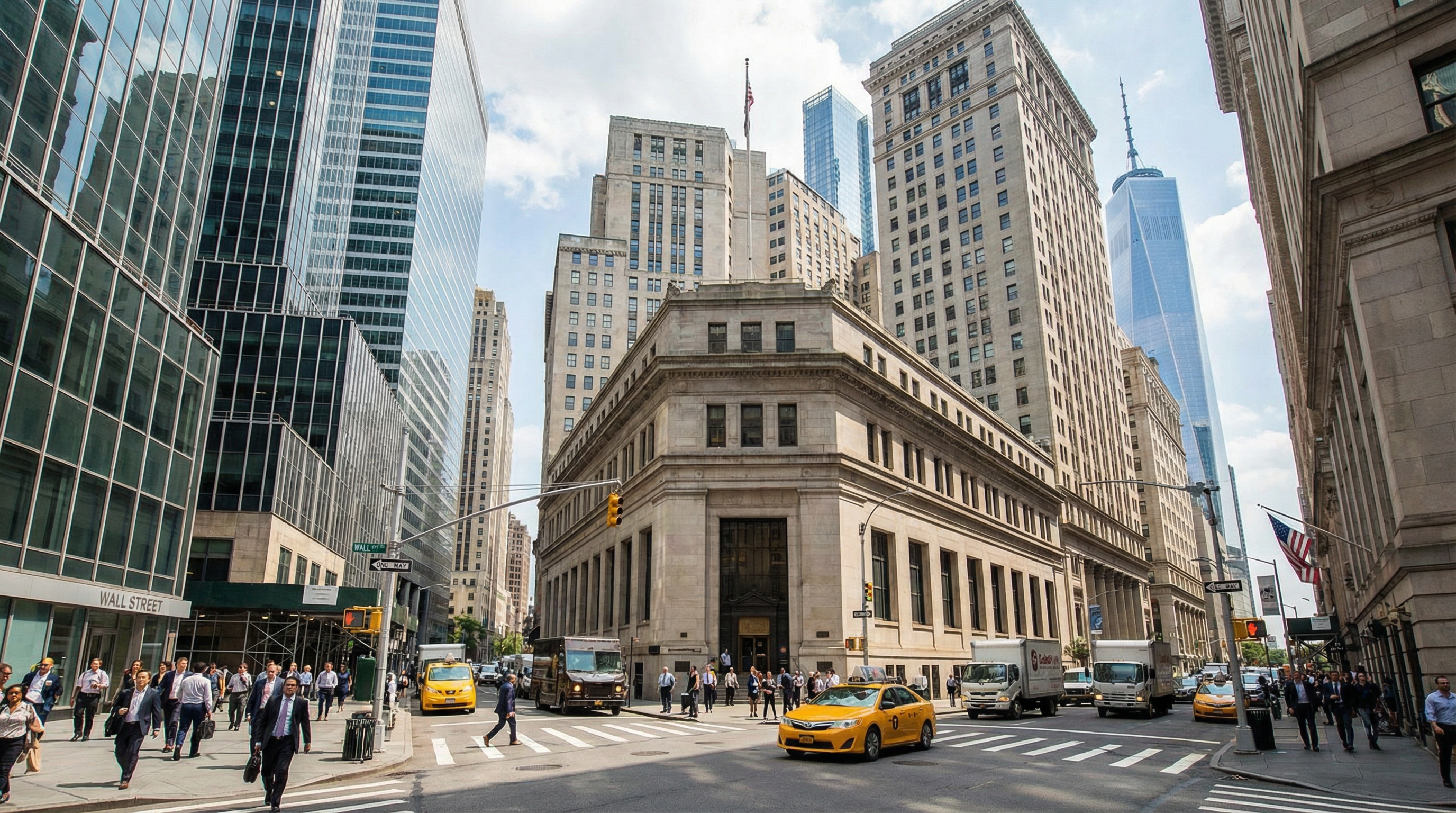
The Financial District holds about 20% of those remaining units, making it one of the most opportunity-rich areas for purchasing a condo in the current market. This area also offers opportunities in retail space and commercial space for rent in New York for investors looking beyond residential.
Guidance for Sellers
For sellers, it's simple: price for today and move on, or hold for tomorrow's thaw. When rates ease, demand will roar back and it'll happen fast.
Best Neighborhoods to Buy in NYC: 2026 Outlook
Understanding the best neighborhoods in NYC to buy a house requires looking beyond current headlines to fundamental growth drivers. These are the best neighborhoods in NYC to buy based on infrastructure investment, job creation, and market positioning.
1. Kips Bay (East Side)
Kips Bay is quietly rising on the strength of the $1.6 billion SPARC Life Sciences campus, which will bring thousands of jobs in healthcare and biotech right into the neighborhood.
Major Advantages:
- Long-term investment tends to lift local housing demand
- Especially attractive for those who want to live near work
- Prices still lower than neighboring Gramercy or Murray Hill
- A rare gap in Manhattan that could close fast as development accelerates
2. Far West Side (Hudson Yards / Manhattan West)
After a few soft years, the Far West Side is showing new life.
Recent Developments:
- Massive office and retail developments like Hudson Yards and Manhattan West finally filling up
- New restaurants, hotels, and public spaces creating neighborhood energy
- Second wave of buyer confidence expected as rates fall
- Strong appeal to international and corporate buyers who prefer newer, amenity-rich buildings
3. Hudson Square (Between SoHo and Tribeca)
Hudson Square has quietly become one of Manhattan's most interesting mixed-use neighborhoods.
Key Attractions:
- Anchored by Google's St. John's Terminal campus
- Disney's new headquarters at 4 Hudson Square
- Transformation from industrial zone to tech-media hub
- Limited number of condos in the area
- Solid long-term appreciation play for buyers priced out of Tribeca or SoHo
4. South Brooklyn (Crown Heights, Prospect-Lefferts Gardens, Flatbush)
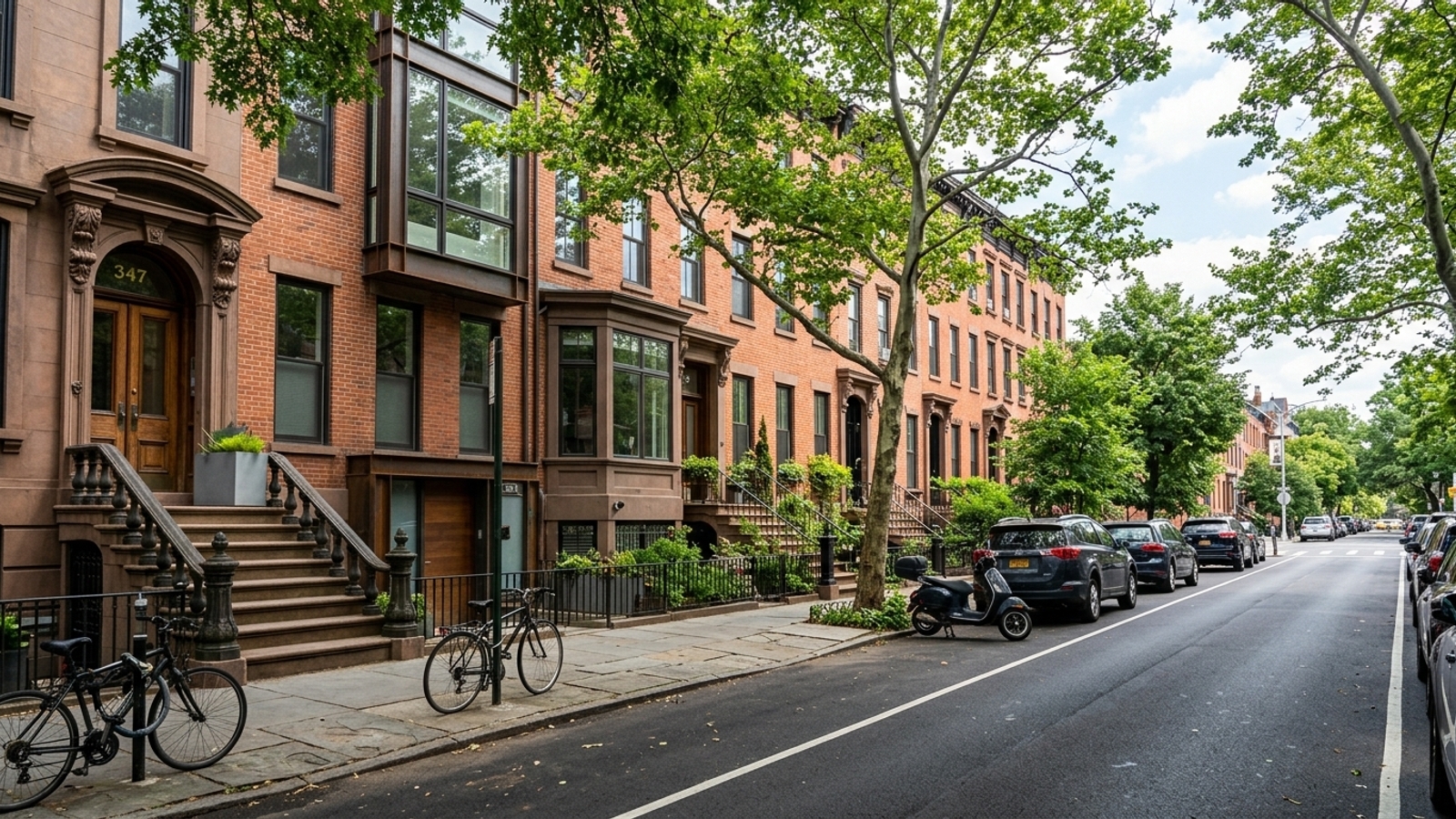
Just south of Prospect Park, these neighborhoods have become the affordable alternative to Park Slope.
Market Indicators:
- Brownstones and tree-lined streets
- Easy subway access
- Forecasts suggest 5–8% annual gains in select pockets
- Infrastructure improvements underway
- Interborough Express (proposed transit line connecting Brooklyn and Queens) moving forward
5. Astoria (Queens)
Astoria's waterfront is booming again.
Growth Drivers:
- New mixed-use projects like Halletts Point
- Parks, shops, and thousands of new residents coming to the East River edge
- Quick commute to Midtown
- Vibrant dining scene
- Still-reasonable prices
- One of the few NYC neighborhoods where value, lifestyle, and location align
6. Mott Haven (South Bronx)
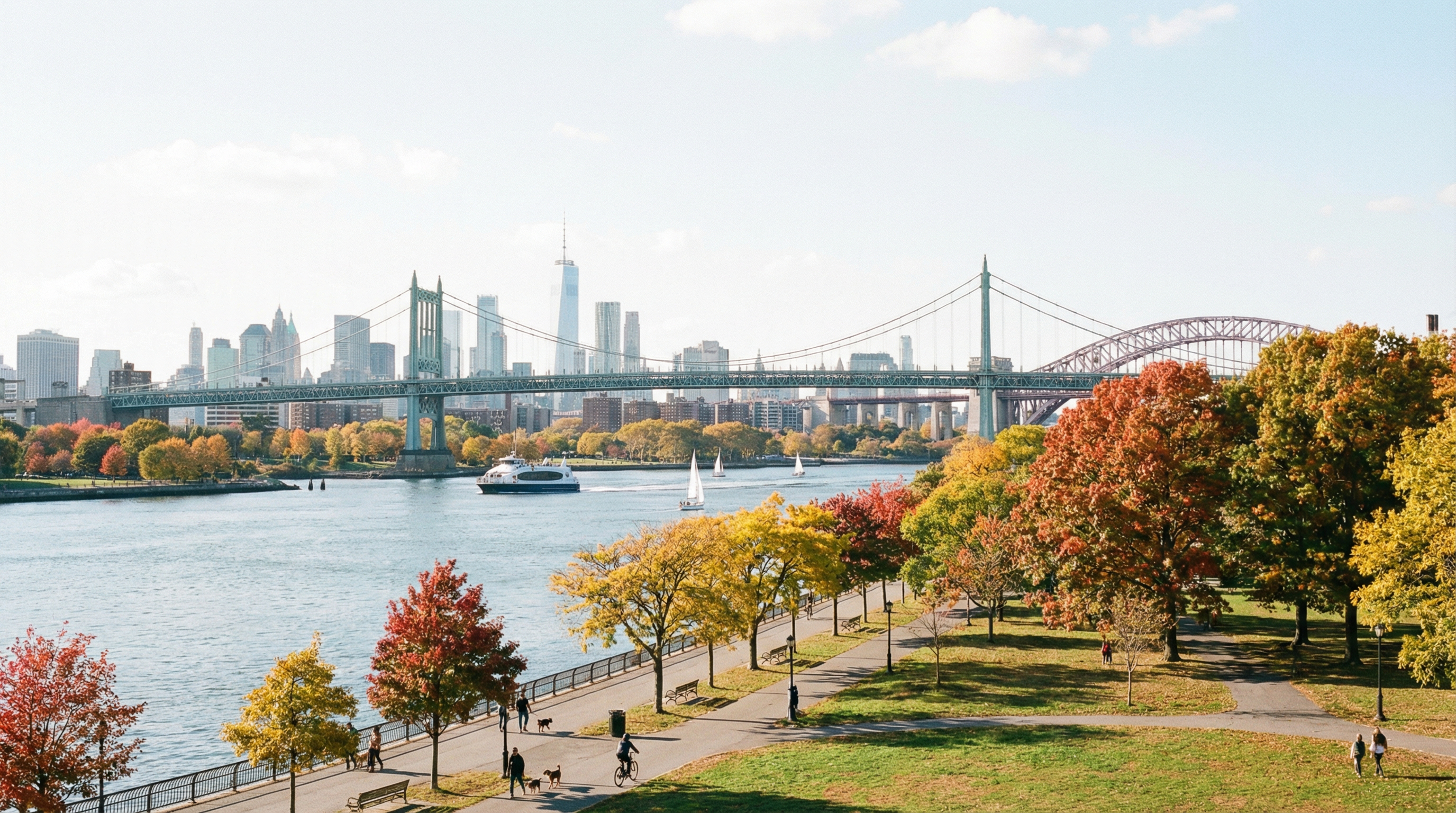
The South Bronx waterfront is fast becoming the city's next frontier.
Early-Stage Opportunity:
- Just one subway stop from Manhattan
- Surge of new rental and condo developments
- Growing gallery and restaurant scene
- Investors and first-time buyers eyeing the area for long-term upside
- One of the few places where you can still buy with real appreciation potential
Office-to-Residential Conversions: Transforming the Skyline
Beyond neighborhood-specific opportunities, the skyline itself is transforming. In 2025 alone, more than four million square feet of office space were converted into housing, roughly seventeen thousand new units, mostly rentals. Through August 2025, 4.1 million square feet across 15 conversions had begun, already surpassing last year's full total of 3.3 million square feet across 10 projects.
This trend directly impacts both New York commercial real estate news and residential housing development, as underutilized office buildings find new life as residential properties.
Neighborhood Transformation:
- Midtown South turning from 5 o'clock ghost town into 24/7 neighborhood
- Financial District experiencing similar renaissance
- It's not just more housing, it's a quiet rebirth of the city's core
- Creates opportunities for both space for rent and residential units
Market Outlook: The Thaw Ahead
As 2025 winds down, the story of New York real estate isn't about collapse, it's about compression. High rates, low supply, cautious buyers.
But every time this city pauses, it doesn't just recover, it rebounds with speed. This historical pattern informs our 2026 housing market forecast and housing market predictions 2026.
Action Plan for Buyers
- Use this lull to find value before the rush
- Focus on neighborhoods with strong fundamentals
- Consider properties with seller concessions
- Position yourself to move quickly when rates drop
- Look for condos for sale in Manhattan NYC with motivated sellers
Strategy for Sellers
- Price for today's market or time your rebound carefully
- Consider offering incentives to attract serious buyers
- Work with agents who understand current NYC condo sales dynamics
- Remember: when the thaw begins, it'll move faster than anyone expects
The Bottom Line
You can freeze transactions, but you can't freeze New York. 2026 looks like the thaw we've been waiting for.
According to Mukul Lalchandani, founder of Undivided, "New York remains the #1 long-term market for real estate investors, no matter what's happening in the short term. While the headlines chase the moment, the smart money always looks ahead."
Although understanding the dynamics of the market is one thing. Using the data to make informed decisions when it comes time to buy or sell is a bit more complicated. Luckily, Undivided can help…
Ready to Get Started?
Here's what you'll get:
✓ Curated Listings
We handpick properties that fit you, saving you time by showing homes that match what you want.
✓ Luxury Amenities
We highlight top-tier amenities so your new home delivers the prestige and quality you expect.
✓ Market insights
We provide detailed market comps and insights to guide your decision-making with confidence and clarity.